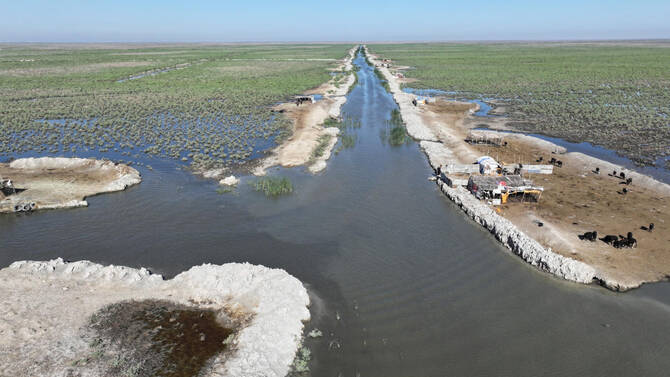
DHI QAR, Iraq: Iraq’s buffalo population has more than halved in a decade as the country’s two main rivers, the Tigris and Euphrates, suffer severe droughts that endanger the livelihood of many farmers and breeders.
“People have left ... We are a small number of houses remaining,” said farmer Sabah Ismail, 38, who rears buffalo in the southern province of Dhi Qar.
“The situation is difficult ... I had 120 to 130 buffalo; now I only have 50 to 60. Some died, and we sold some because of the drought,” said Ismail while tending his herd.
Buffalo have been farmed for centuries in Iraq for their milk, and are mentioned in ancient Sumerian inscriptions from the region.
According to Iraqi marshland experts, the root causes of the water crisis driving farmers out of the countryside are climate change, upstream damming in Turkiye and Iran, outdated domestic irrigation techniques and a lack of long-term management plans.
The country has also endured decades of warfare, from conflict with Iran in the 1980s, through two Gulf Wars to the recent rise and fall of the Daesh group.
Located within the cultivable lands known as the Fertile Crescent that have been farmed for millennia, the Iraqi landscape has suffered from upstream damming of the Tigris and Euphrates and lower rainfall, threatening the lifestyle of farmers like Ismail and leading many to move to the cities.
Iraqi marshland expert Jassim Assadi told Reuters that the number of buffalo in Iraq had fallen since 2015 from 150,000 to fewer than 65,000.
The decline is “mostly due to natural reasons: the lack of needed green pastures, pollution, illness ... and also farmers refraining from farming buffalos due to scarcity of income,” Assadi said.
A drastic decline in crop production and a rise in fodder prices have also left farmers struggling to feed their animals.
The difficulty of maintaining a livelihood in Iraq’s drought-stricken rural areas has contributed to growing migration toward the country’s already-choked urban centers.
“This coming summer, God only knows, the mortality rate may reach half,” said Abdul Hussain Sbaih, 39, an Iraqi buffalo breeder.


![]()

Droughts in Iraq endanger buffalo, and farmers’ livelihoods
Short Url
https://arab.news/yb8mc
Droughts in Iraq endanger buffalo, and farmers’ livelihoods
- “People have left ... We are a small number of houses remaining,” said farmer Sabah Ismail
- Buffalo have been farmed for centuries in Iraq for their milk


Latest updates


© 2026 SAUDI RESEARCH & PUBLISHING COMPANY, All Rights Reserved And subject to Terms of Use Agreement.