

Starbucks earnings disappoint as CEO Niccol’s strategy faces US hurdles

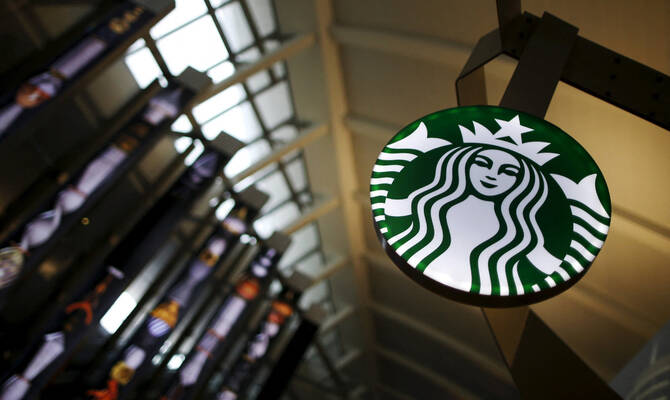
A Starbucks store is seen inside the Tom Bradley terminal at LAX airport in Los Angeles, California, United States. (Reuters/File)
Short Url
Updated 30 April 2025
Follow

Starbucks earnings disappoint as CEO Niccol’s strategy faces US hurdles

  • Starbucks is paring down promotions and discounts, and relying less on its loyalty program as it invests in broader marketing

Starbucks faces challenges in reviving its business, CEO Brian Niccol said on Tuesday, after the coffee giant posted disappointing global comparable sales and profit with inflation and economic uncertainty driving up costs and dampening US demand.
Investors have placed their bets on Niccol’s turnaround strategy for the brand, whose sales have fallen for four straight quarters, by reducing production and service times and investing in stores to improve customer experience.
“Our financial results don’t yet reflect our progress, but we have real momentum with our ‘Back to Starbucks’ plan,” Niccol said in a statement.
Starbucks paused rolling out its Siren System store revamp program, launched under former CEO Laxman Narasimhan, because it was capital heavy, said Niccol, who had helped revive Chipotle Mexican Grill as CEO of the burrito chain.
The company will focus on investing in improving front-end delivery instead of kitchen equipment, Niccol said on a post-earnings call. “The equipment doesn’t solve the customer experience that we need to provide.”
Niccol said Starbucks was improving service speed with the right staffing and deployment, and that its refreshed marketing was resonating with customers.
Starbucks will also review its US store portfolio as it rolls out labor-focused technological changes including a pilot program that allows customers to schedule their mobile orders, he said.
However, consumers are growing more cautious as US President Donald Trump’s erratic trade tariffs have created economic uncertainty and threaten to fuel inflation. US restaurant visits and spending weakened in February and March.
Starbucks’ shares fell 6.5 percent in extended trading. The stock, which had surged in the months following Niccol’s appointment as CEO, is down about 7 percent so far this year.
North American same-store sales fell 1 percent for the fiscal second quarter ended March 30, worse than the 0.24 percent drop estimated by analysts in an LSEG poll. The company said sales in Canada returned to growth in the quarter.

TURNAROUND TIMELINE
It may take time for traffic to reaccelerate because changes in stores and reinstating its coffee house roots could take at least another three to six months, said Bernstein analyst Danilo Gargiulo.
Starbucks is paring down promotions and discounts, and relying less on its loyalty program as it invests in broader marketing.
The average ticket, or amount spent by customers per visit, was up 3 percent in the second quarter.
The company said it will localize and move production as needed to mitigate the impact of US tariffs on imports from China.
The company’s international business improved slightly, with sales unchanged in China, its second-largest market, after four straight quarters of decline. Starbucks said it was committed to growing business in China long-term.
International comparable sales rose 2 percent, compared with estimates of a 1.13 percent drop.
Gross margin fell 590 basis points in the quarter and the company reported adjusted earnings per share of 41 cents, missing estimates of 49 cents.
Total same-store sales declined 1 percent in the second quarter, compared with analysts’ average estimate of a 0.26 percent fall. Comparable sales had declined 4 percent in the preceding three-month period.


Arts festival’s decision to exclude Palestinian author spurs boycott

Randa Abdel Fattah. (Photo/Wikipedia)
Updated 12 January 2026
Follow

Arts festival’s decision to exclude Palestinian author spurs boycott

  • A Macquarie University academic who researches Islamophobia and Palestine, Abdel-Fattah responded saying it was “a blatant and shameless act of anti-Palestinian racism and censorship,” with her lawyers issuing a letter to the festival

SYDENY: A top Australian arts festival has seen ​the withdrawal of dozens of writers in a backlash against its decision to bar an Australian Palestinian author after the Bondi Beach mass shooting, as moves to curb antisemitism spur free speech concerns.
The shooting which killed 15 people at a Jewish Hanukkah celebration at Sydney’s Bondi Beach on Dec. 14 sparked nationwide calls to tackle antisemitism. Police say the alleged gunmen were inspired by Daesh.
The Adelaide Festival board said last Thursday it would disinvite Randa ‌Abdel-Fattah from February’s ‌Writers Week in the state of South Australia because “it ‌would not ​be ‌culturally sensitive to continue to program her at this unprecedented time so soon after Bondi.”

FASTFACTS

• Abdel-Fattah responded, saying it was ‘a blatant and shameless act of anti-Palestinian racism and censorship.’

• Around 50 authors have since withdrawn from the festival in protest, leaving it in doubt, local media reported.

A Macquarie University academic who researches Islamophobia and Palestine, Abdel-Fattah responded saying it was “a blatant and shameless act of anti-Palestinian racism and censorship,” with her lawyers issuing a letter to the festival.
Around 50 authors have since withdrawn from the festival in protest, leaving it in doubt, local media reported.
Among the boycotting authors, Kathy Lette wrote on social media the decision to bar Abdel-Fattah “sends a divisive and plainly discriminatory message that platforming Australian Palestinians is ‘culturally insensitive.'”
The Adelaide Festival ‌said in a statement on Monday that three board ‍members and the chairperson had resigned. The ‍festival’s executive director, Julian Hobba, said the arts body was “navigating a complex moment.”

 a complex and ‍unprecedented moment” after the “significant community response” to the board decision.
In the days after the Bondi Beach attack, Jewish community groups and the Israeli government criticized Prime Minister Anthony Albanese for failing to act on a rise in antisemitic attacks and criticized protest marches against Israel’s war in ​Gaza held since 2023.
Albanese said last week a Royal Commission will consider the events of the shooting as well as antisemitism and ⁠social cohesion in Australia. Albanese said on Monday he would recall parliament next week to pass tougher hate speech laws.
On Monday, New South Wales state premier Chris Minns announced new rules that would allow local councils to cut off power and water to illegally operating prayer halls.
Minns said the new rules were prompted by the difficulty in closing a prayer hall in Sydney linked to a cleric found by a court to have made statements intimidating Jewish Australians.
The mayor of the western Sydney suburb of Fairfield said the rules were ill-considered and councils should not be responsible for determining hate speech.
“Freedom ‌of speech is something that should always be allowed, as long as it is done in a peaceful way,” Mayor Frank Carbone told Reuters.