

Ancient wells in Saudi Arabia’s Northern Borders showcase early human ingenuity, resilience

1 / 5
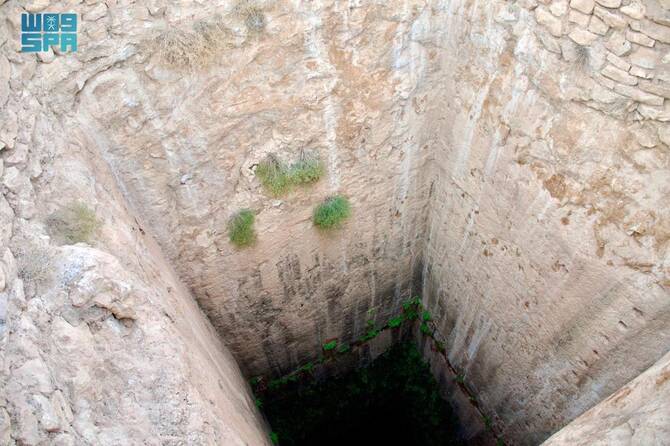
Ancient hand-dug wells are prominent landmarks in the desert of the Northern Borders region, proof of early human ingenuity in harsh conditions. (SPA)
2 / 5
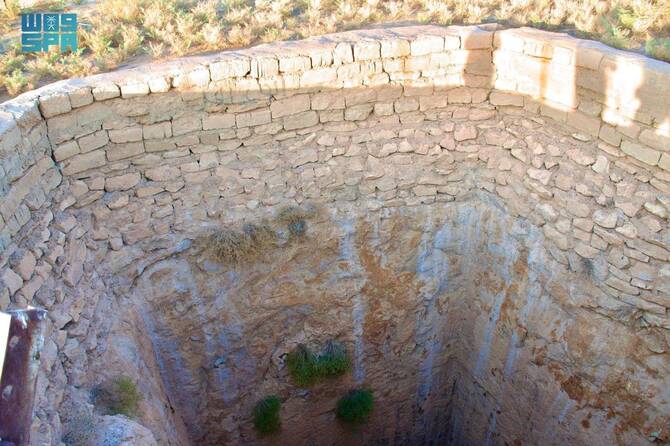
Ancient hand-dug wells are prominent landmarks in the desert of the Northern Borders region, proof of early human ingenuity in harsh conditions. (SPA)
3 / 5
Ancient hand-dug wells are prominent landmarks in the desert of the Northern Borders region, proof of early human ingenuity in harsh conditions. (SPA)
4 / 5
Ancient hand-dug wells are prominent landmarks in the desert of the Northern Borders region, proof of early human ingenuity in harsh conditions. (SPA)
5 / 5
Ancient hand-dug wells are prominent landmarks in the desert of the Northern Borders region, proof of early human ingenuity in harsh conditions. (SPA)
Short Url
Updated 28 April 2025
Follow

Ancient wells in Saudi Arabia’s Northern Borders showcase early human ingenuity, resilience

  • Ancestors painstakingly dug these wells by hand to reach deep groundwater, reinforcing the walls with stones and using simple tools
  • Scattered across the region, the wells tell the story of human adaptation and the enduring bond with the land

RIYADH: Ancient hand-dug wells are prominent landmarks in the desert of Saudi Arabia’s Northern Borders region, proof of early human ingenuity and resilience in harsh conditions, according to the Saudi Press Agency.

Ancestors painstakingly dug these wells by hand to reach deep groundwater, reinforcing the walls with stones and using simple tools, such as buckets, to draw water, which was later transported in animal-carried “rawiya” containers.

Scattered across the region, the wells tell the story of human adaptation and the enduring bond with the land, documenting their ability to overcome natural challenges.

Researcher and historian Abdulrahman Al-Tuwaijri said the region has more than 2,000 ancient wells, dug thousands of years ago, evidence of successive civilizations and a long human presence in the desert.

He said that more than 300 wells in Linah village alone were vital for sustaining life, reflecting the region’s rich history and enduring human spirit.

While many well sites later evolved into modern villages, the ancient wells remain heritage landmarks and tourist attractions, raising cultural awareness and promoting tourism.

These wells, mirrors of local history, are a human legacy that must be preserved to inspire future generations to value their forefathers’ efforts in building life in the desert, the SPA reported.


Saudi outdoor skiing and hiking destination Trojena covered in snow

Updated 18 December 2025
Follow

Saudi outdoor skiing and hiking destination Trojena covered in snow

  • The resort, located on Jebel Al-Lawz in Tabuk Province, reaches an elevation of up to 2,600 meters
  • National Center for Meteorology forecasts snow in northern parts of Riyadh region and Al-Qassim Province on Thursday

RIYADH: Snow blanketed parts of northern Saudi Arabia on Wednesday, as cold weather and heavy rain affected several cities and other parts of the Kingdom.

Trojena, a mountain destination for hiking and skiing that is located on Jebel Al-Lawz in Tabuk Province and reaches an elevation of up to 2,600 meters, was covered in snow and experienced some light rainfall.

Light-to-moderate rain also fell in Bir Bin Hermas, Al-Ayinah, Ammar, and Shaqra and its suburbs, the Saudi Press Agency reported.

The National Center for Meteorology said there was a chance of more snow on Thursday in northern parts of Riyadh region and Al-Qassim Province, following the snowfall in Tabuk and Hail regions on Wednesday.