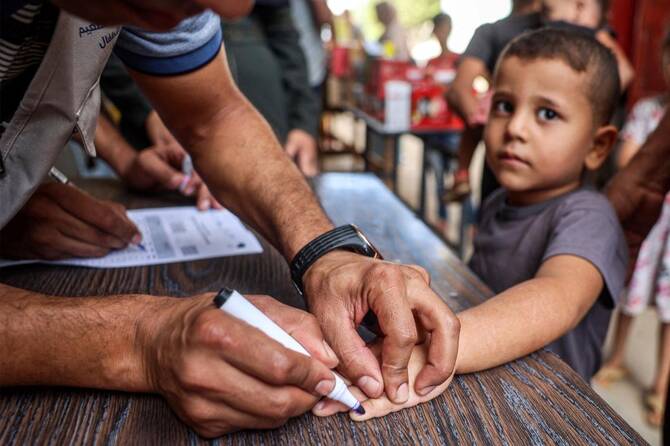
LONDON: Global aid funding cuts, led by the United States, are disrupting efforts to vaccinate children against deadly diseases almost as much as the COVID-19 pandemic did, the United Nations said on Thursday.
Outbreaks of infectious diseases, including measles, meningitis and yellow fever, have been increasing globally.
Emergency and routine vaccinations meanwhile were significantly affected in nearly half of countries at the start of April due to the funding cuts, according to reports from World Health Organization offices in 108 largely low and lower-middle income countries.
Cuts to funding also reduced vaccine supplies and hampered disease surveillance, the WHO and UNICEF said in a joint release with Gavi, the Vaccine Alliance.
“Setbacks (are) at a similar level to what we saw during COVID-19. We cannot afford to lose ground in the fight against preventable disease,” said Catherine Russell, UNICEF executive director. COVID-19 caused what was called the largest backslide in childhood vaccination in a generation, and aid funding cuts, led by the US – formerly the world’s largest donor – risked the same outcome, the joint release said.
They called for funding for childhood immunization to be maintained ahead of Gavi’s funding round, which will be launched in June. The group is seeking $9 billion for its work from 2026-2030.
Sania Nishtar, Gavi’s chief executive officer, said it was possible to fight the rise of infectious diseases but only if the group is fully funded.
Measles cases have increased year-on-year since 2021, while meningitis surged in Africa last year and yellow fever cases also rose after declines in the last decade, the agencies said. Last month, an internal US government document showed it would follow its cuts to UNICEF and the WHO, part of wider plans to streamline and focus foreign aid to align with the “America First” policy, by canceling its contribution of around $300 million annually to Gavi.
Last week, the US State Department told Reuters it had nominated Mark Lloyd, assistant administrator for global health, to Gavi’s 28-person board. The US seat had previously been vacant.
Both the US State Department and Gavi declined to comment about what this could mean for US funding.

Aid funding cuts disrupt child vaccinations almost as much as pandemic, says UN
Short Url
https://arab.news/c5vz2
Aid funding cuts disrupt child vaccinations almost as much as pandemic, says UN
- Outbreaks of infectious diseases, including measles, meningitis and yellow fever, have been increasing globally
- Cuts to funding also reduced vaccine supplies and hampered disease surveillance
TikTok to comply with ‘upsetting’ Australian under-16 ban
SYDNEY: TikTok said Friday it will comply with Australia’s imminent ban on under-16s joining social media on the day it comes into force, but told users the changes “may be upsetting.”
Australia’s world-first legislation comes into effect December 10, curbing the world’s most popular social media platforms and websites, including TikTok, Instagram, and YouTube.
Companies face fines of Aus$49.5 million ($32 million) if they fail to take “reasonable steps” to comply.
TikTok will block under-16s in Australia on the day the law comes into effect, it said, meaning they will no longer be able to hold or create an account.
“Teens with an existing account will be notified that they will no longer be able to use their existing account, which will become inactive,” it said.
“If they previously published content, it will no longer be available for others to view on TikTok.”
The social media giant said youngsters who have been blocked can submit an appeal to prove their age, including by facial images, credit card authorization or official ID.
“We understand that these changes may be upsetting, but they are necessary to ensure that TikTok complies with Australian law,” the company said in a statement.
Teens who fall under the law will have a choice of confirming their age, downloading their information, deleting their account, or asking for a reminder to recover their TikTok accounts when they turn 16.
TikTok urged parents to “have conversations” with their teens to ensure they are truthful about their age.
“We understand that these changes may be upsetting, but they are necessary to ensure that TikTok complies with Australian law.”
An Internet rights group last week launched a legal challenge to halt the ban.
The Digital Freedom Project said it had challenged the laws in Australia’s High Court, calling them an “unfair” assault on freedom of speech.
Australia’s restrictions have generated interest around the world as regulators wrestle with the potential dangers of social media.
Malaysia indicated it was planning to block children under 16 from signing up to social media accounts next year, while New Zealand will introduce a similar ban.
Australia’s world-first legislation comes into effect December 10, curbing the world’s most popular social media platforms and websites, including TikTok, Instagram, and YouTube.
Companies face fines of Aus$49.5 million ($32 million) if they fail to take “reasonable steps” to comply.
TikTok will block under-16s in Australia on the day the law comes into effect, it said, meaning they will no longer be able to hold or create an account.
“Teens with an existing account will be notified that they will no longer be able to use their existing account, which will become inactive,” it said.
“If they previously published content, it will no longer be available for others to view on TikTok.”
The social media giant said youngsters who have been blocked can submit an appeal to prove their age, including by facial images, credit card authorization or official ID.
“We understand that these changes may be upsetting, but they are necessary to ensure that TikTok complies with Australian law,” the company said in a statement.
Teens who fall under the law will have a choice of confirming their age, downloading their information, deleting their account, or asking for a reminder to recover their TikTok accounts when they turn 16.
TikTok urged parents to “have conversations” with their teens to ensure they are truthful about their age.
“We understand that these changes may be upsetting, but they are necessary to ensure that TikTok complies with Australian law.”
An Internet rights group last week launched a legal challenge to halt the ban.
The Digital Freedom Project said it had challenged the laws in Australia’s High Court, calling them an “unfair” assault on freedom of speech.
Australia’s restrictions have generated interest around the world as regulators wrestle with the potential dangers of social media.
Malaysia indicated it was planning to block children under 16 from signing up to social media accounts next year, while New Zealand will introduce a similar ban.
© 2025 SAUDI RESEARCH & PUBLISHING COMPANY, All Rights Reserved And subject to Terms of Use Agreement.


