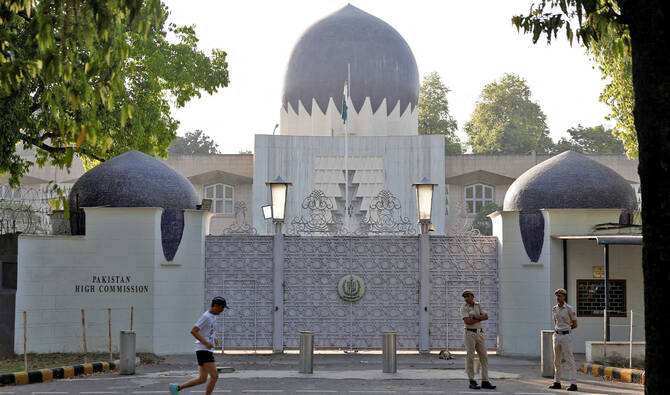
MUMBAI: India has summoned the top Pakistani diplomat in New Delhi, local media reported on Thursday, a day after it announced measures to downgrade ties with Islamabad as relations between the nuclear-armed rivals plummeted following a deadly militant attack in Kashmir.
A day after suspected militants killed 26 men at a tourist destination in Kashmir in the worst attack on civilians in the country in nearly two decades, Indian Foreign Secretary Vikram Misri said there was cross-border involvement in the attack and New Delhi would suspend a six-decade old river-sharing treaty as well as close the only land crossing between the neighbors.
India will also pull out its defense attaches in Pakistan and also reduce staff size at its mission in Islamabad to 30 from 55, Misri said.
India has summoned the top diplomat in the Pakistan embassy in New Delhi, local media reported, to give notice that all defense advisers in the Pakistani mission were persona non grata and given a week to leave, one of the measures Misri announced on Wednesday.
Prime Minister Narendra Modi has called for an all-party meeting with opposition parties on Thursday, to brief them on the government’s response to the attack.
In Islamabad, Prime Minister Shehbaz Sharif was scheduled to hold a meeting of the National Security Committee to discuss Pakistan’s response, Foreign Minister Ishaq Dar said in a post on X.
The Indus water treaty, mediated by the World Bank, split the Indus River and its tributaries between the neighbors and regulated the sharing of water. It had so far withstood even wars between the neighbors.
India would hold the treaty in abeyance, Misri said.
Diplomatic ties between the two countries were weak even before the latest measures were announced as Pakistan had expelled India’s envoy and not posted its own ambassador in New Delhi after India revoked the semi-autonomous status of Kashmir in 2019.
Tuesday’s attack is seen as a setback to what Indian Prime Minister Narendra Modi and his Hindu nationalist Bharatiya Janata Party have projected as a major achievement in revoking the special status Jammu and Kashmir enjoyed and bringing peace and development to the long-troubled Muslim-majority region.


![]()

India calls all-party meet, summons top Pakistani diplomat after Kashmir attack on tourists
Short Url
https://arab.news/2jvhu
India calls all-party meet, summons top Pakistani diplomat after Kashmir attack on tourists
- The development follows the killing of 26 people at a tourist resort in Indian-administered Kashmir
- New Delhi has further downgraded diplomatic ties, alleging cross-border involvement from Pakistan
Latest updates


© 2026 SAUDI RESEARCH & PUBLISHING COMPANY, All Rights Reserved And subject to Terms of Use Agreement.