SEOUL: Boeing’s Chinese customers are refusing delivery of new planes built for them due to tariffs, the US planemaker has confirmed, as a third Boeing jet started returning to the US on Thursday.
“Due to the tariffs, many of our customers in China have indicated that they will not take delivery,” CEO Kelly Ortberg said during a first quarter earnings call on Wednesday.
Ortberg said China was the only country where Boeing was facing this issue and the planemaker would redirect new jet supply to other customers eager for earlier deliveries due to a global shortage of new commercial planes.
Before President Donald Trump’s global trade offensive, commercial jets were traded duty-free worldwide under a 1979 civil aviation agreement.
A Chinese airline taking delivery of a Boeing jet could now be hit hard by the retaliatory tariffs imposed by Beijing on the import of US goods. A new 737 MAX has a market value of around $55 million, according to IBA, an aviation consultancy.
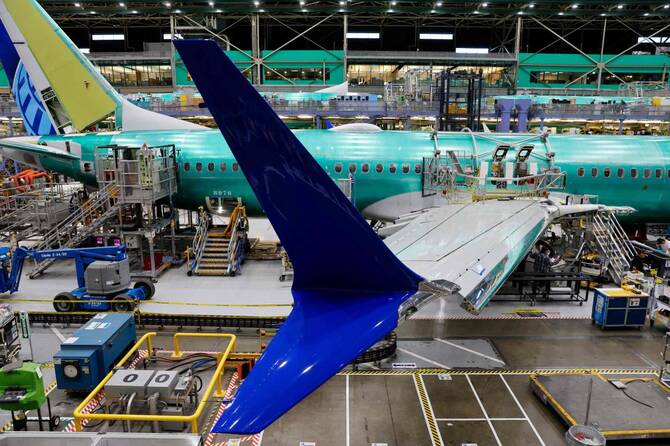
Two 737 MAX 8s, which had been ferried to China in March for delivery to Xiamen Airlines, returned to Boeing’s production hub in Seattle in the past week.
A third 737 MAX 8 left Boeing’s Zhoushan completion center near Shanghai for the US territory of Guam on Thursday, data from flight trackers AirNav Radar and Flightradar24 showed.
The plane was initially built for national carrier Air China, according to the Aviation Flights Group tracking database. Air China did not immediately respond to a request for comment.
It had been ferried from Seattle on April 5, in the period between Trump first announcing tariffs on China and Beijing starting to enforce its own ramped up tariffs on US goods.
Guam is one of the stops such flights make on the 5,000-mile (8,000-km) journey across the Pacific between Seattle and Zhoushan, where planes are ferried by Boeing for final work and delivery to a Chinese carrier.
The Chinese government has not commented on why the planes were being returned.
Order book
CFO Brian West said that China represents around 10 percent of Boeing’s backlog of commercial planes.
Boeing had planned to deliver around 50 new planes to China during the rest of the year, West said, and was assessing options for re-marketing the 41 already built or in-process airplanes.
“For the nine airplanes not yet in the production system, we’re engaged with our customers to understand their intentions for taking delivery and if necessary, we have the ability to assign those positions to other customers,” Ortberg said.
“We’re not going to continue to build aircraft for customers who will not take them,” Ortberg said.
Tracking data from Aviation Flights Group shows 36 built aircraft for Chinese customers at various stages of production and testing are now in the US, including the three returned planes.
Boeing data shows 130 unfilled orders for China-based airlines and lessors, including 96 of its best-selling 737 MAX model. Industry sources say a significant portion of the more than 760 unfilled orders for which Boeing has yet to name a buyer are for China.
The tariff war comes as Boeing has been recovering from an almost five-year import freeze on 737 MAX jets into China and a previous round of trade tensions.
West said the issue is a short-term challenge, and that either China starts taking planes again, or Boeing prepares the jets for re-marketing.
“Customers are calling, asking for additional airplanes,” he said.
Washington signaled openness to de-escalating the trade war this week, stating that high tariffs between the United States and China are not sustainable.
However, analysts say that confusion over changing tariffs could leave many aircraft deliveries in limbo, with some airline CEOs suggesting they would defer plane delivery rather than pay duties.


![]()

Boeing confirms Chinese customers rejecting new jets due to tariffs
Short Url
https://arab.news/r9kmf
Boeing confirms Chinese customers rejecting new jets due to tariffs
- Two 737 MAX 8s, which had been ferried to China in March for delivery to Xiamen Airlines, returned to Boeing’s production hub in Seattle in the past week
- A third 737 MAX 8 left Boeing’s Zhoushan completion center near Shanghai for the US territory of Guam on Thursday


Latest updates


© 2026 SAUDI RESEARCH & PUBLISHING COMPANY, All Rights Reserved And subject to Terms of Use Agreement.