EU-Pakistan Business Network to launch in May

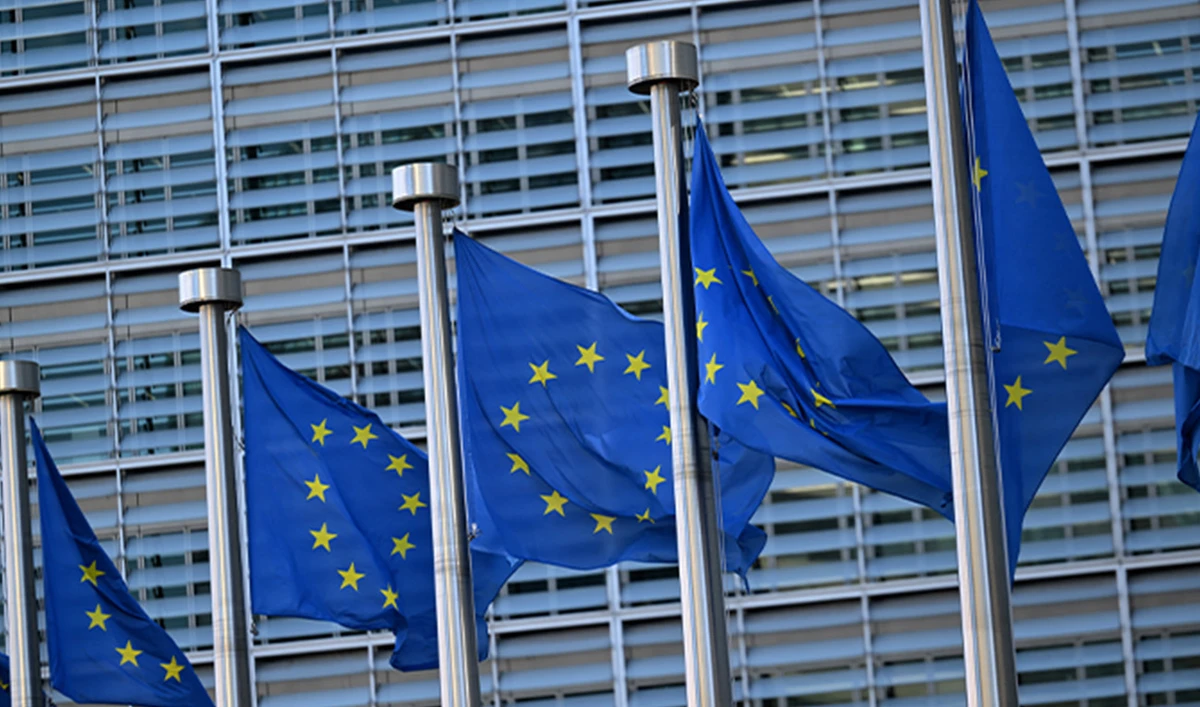
This photograph taken on March 19, 2025 shows European flags outside the EU headquarters in Brussels. (AFP/File)
Short Url
Updated 23 April 2025
Follow

EU-Pakistan Business Network to launch in May

  • First high-level EU-Pakistan Business Forum to strengthen economic and business ties, unlock investment and trade to be held in May
  • Pakistan is largest beneficiary of the EU’s GSP+ trade scheme, Pakistan businesses have increased exports to EU market by 108 percent since 2014

ISLAMABAD: The first high-level EU-Pakistan Business Forum (EU-PKBF), designed to strengthen economic and business ties and unlock investment and trade will be held in May, the EU press office said on Wednesday, adding that the platform would also mark the official launch of the EU-Pakistan Business Network.

Pakistan has become the largest beneficiary of the EU’s GSP+ trade scheme in recent years, with its businesses increasing their exports to the EU market by 108 percent since the launch of the trade scheme in 2014. In October 2023, the EU unanimously voted to extend GSP+ status until 2027 for developing countries, including Pakistan.

“The Forum will also mark the official launch of the EU-Pakistan Business Network, a dynamic initiative aimed at bringing together all EU businesses active in Pakistan allowing to channel their collective voice,” the EU said, saying the EU-PKBF would be held from May 14-15.

The forum will include business-to-government sessions with high-level government officials and offer business-to-business opportunities. 

“Finally, in view of Pakistan benefiting from the EU’s Global Gateway offer: the EU’s largest investment program outside of the EU that aims to leverage 300 billion EUR of investment until 2027, the Forum will facilitate Business-2-Financial Institutions matchmaking and unveil new projects and investment opportunities.”

The business forum will see participation from high-level policymakers such as Prime Minister Shehbaz Sharif and the ministers of finance and commerce as well as EU and Pakistani business leaders and investors, who will get a “common space to exchange on opportunities and challenges of doing business in Pakistan, including in the sectors of textiles and apparel, agriculture and agri-business, pharmaceuticals and health care equipment, and renewable energy/connectivity.”


Pakistan weekly inflation rises 5.19% year on year as Ramadan begins

Updated 10 sec ago
Follow

Pakistan weekly inflation rises 5.19% year on year as Ramadan begins

  • Out of 51 items, prices of 17 items increased, 12 items decreased and 22 remained stable
  • The Sensitive Price Index for the week ending on Feb. 19 increased by 1.16 percent, data shows

KARACHI: Short-term inflation, measured by the Sensitive Price Index (SPI), rose 5.19 percent year-on-year in the week ending Feb 19, the statistics bureau said on Friday, reflecting higher prices of perishable food items at the start of Ramadan.

The SPI, which comprises 51 essential items collected from 50 markets in 17 cities, is computed on a weekly basis to assess the price movement of essential commodities at a shorter interval of time to review the price situation in the country.

The SPI for the week ending on Feb. 19 increased by 1.16 percent, the year-on-year trend depicted an increase of 5.19 percent, according to the Pakistan Bureau of Statistics (PBS) data.

The development came as the holy fasting month of Ramadan began in the South Asian country on Feb. 19, which often sees an increase of prices of fruit, vegetables and other necessary items.

“During the week, out of 51 items, prices of 17 (33.33%) items increased, 12 (23.53%) items decreased and 22 (43.14%) items remained stable,” the PBS said.

Major increase was observed in the prices of Bananas (16.05%), Electricity Charges for Q1 (15.41%), Garlic (5.86%), Chicken (5.49%), Onions (3.83%), Tomatoes (3.82%), Diesel (2.69%), Petrol (1.93%), Beef (1.03%), LPG (0.75%), Mutton (0.69%) and Long Cloth (0.28%), according to the PBS.

The items whose prices decreased included Eggs (11.78%), Potatoes (2.24%), Wheat Flour (2.02%), Pulse Masoor (1.47%), Sugar (0.96%), Vegetable Ghee 2.5Kg (0.72%), Pulse Gram (0.58%), Cooking Oil 5 Litre (0.19%), Gur (0.16%), Vegetable Ghee 1Kg (0.11%), Rice (0.08%) and Mustard Oil (0.07%).