

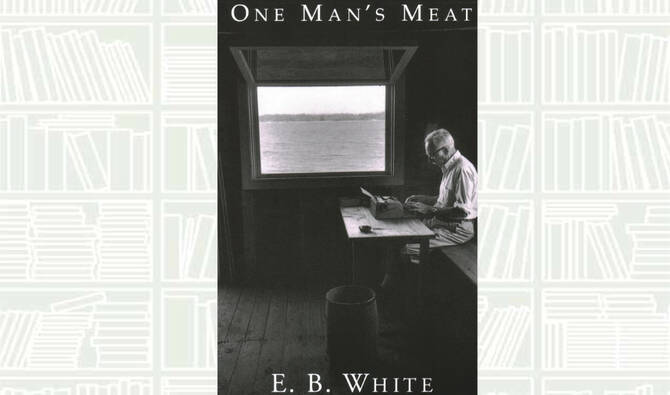

E.B. White’s 1941 essay “Once More to the Lake” (from his collection “One Man’s Meat”) is a masterclass in how nostalgia can warp our grip on time.
Returning to a childhood vacation spot in Maine — now with his son in tow — White confronts a haunting truth: Places outlive people, even as they mirror our mortality.
At its heart, the essay is about doubling. Watching his son fish and swim in the same waters, White slips into a surreal haze torn between seeing himself as father and child. The lake’s stillness tricks him into believing nothing has changed — until modernity intrudes.
Those once-quiet mornings? Now punctured by motorboats, their “restless” engines churning the peace he remembers.
What makes the essay unforgettable is its quiet dread. White’s prose drips with tactile details: The “sweet chill” of a dawn swim, the scent of pine needles and the creak of old rowboats.
But this vividness sharpens the sting of his realization. In the final lines, a sudden rainstorm snaps the illusion. As his son buttons a raincoat, White feels time’s verdict: “Suddenly my groin felt the cold chill of death.”
Stylistically, White avoids grand pronouncements. Instead, he lets small moments — a dragonfly’s hover, the click of a fishing rod — carry the weight of existential awe.
Decades later, the essay still resonates. Why? Because we have all clung to a memory-place, willing it to defy time. White’s genius lies in showing how that very act binds us to life’s fleetingness.
For me, the most haunting takeaway is this: We are all temporary visitors to “fade-proof” landscapes. The lake remains. We do not.


