

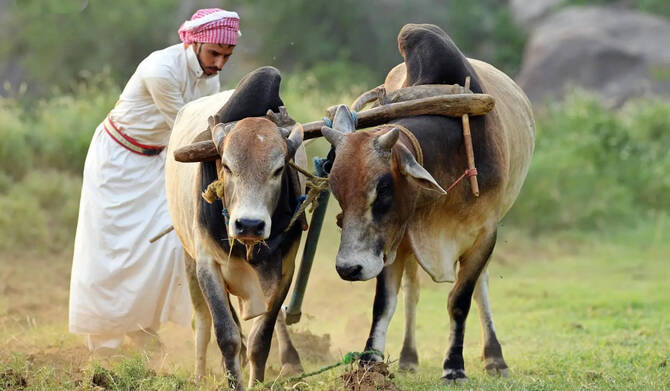


RIYADH: In Saudi Arabia’s Asir region, farmers still use cattle and hand-crafted tools to tend their land, maintaining traditional techniques passed down through generations, SPA reports.
The farmers carefully prepare their soil during seasonal periods, using either modern machinery or traditional wooden plows.
This process supports soil health for planting seasons, especially on terraced farms where rugged terrain or limited access roads make modern equipment less practical.

Farmers in Asir believe traditional methods provide greater control while preserving soil fertility and reducing fossil fuel dependence. (SPA)
During a recent field visit, SPA correspondents interviewed farmers and regional experts about these enduring practices.
Farmer Mesfer Al-Qahtani and Dr. Abdullah Al-Moussa, a heritage sciences researcher focused on the region’s agricultural calendar, discussed the role of celestial movements in Asir’s farming calendar.
“Farmers in Asir rely on celestial movements and weather patterns to determine optimal plowing and planting times,” Al-Moussa said.
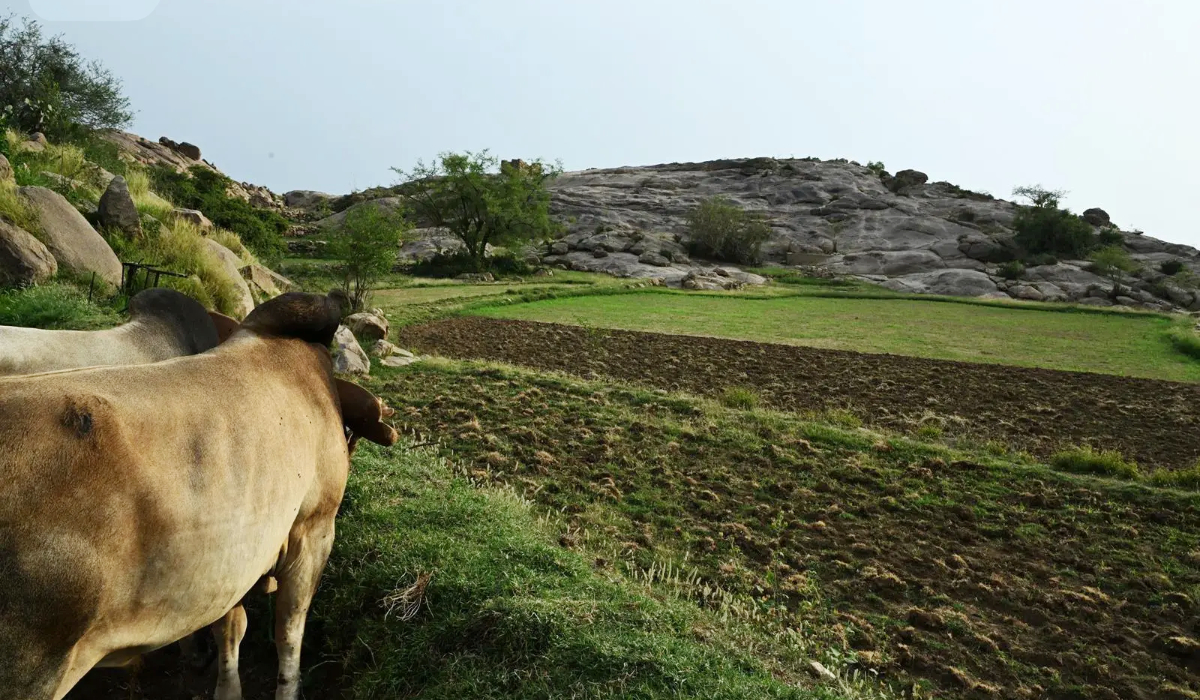
Farmers in Asir believe traditional methods provide greater control while preserving soil fertility and reducing fossil fuel dependence. (SPA)
He noted key seasons, including Al-Dhira’ayn, which signals the start of spring planting; Al-Thuraiya, ideal for corn and millet cultivation; and Al-Han’a, a critical period for soil preparation before autumn.
Al-Qahtani, who plows using cattle and ancestral methods, emphasized the deep connection between astronomical knowledge and agricultural practice.
“We track the seasons and heed our elders’ wisdom. We know when to plow the land and when to let it rest,” he told SPA.
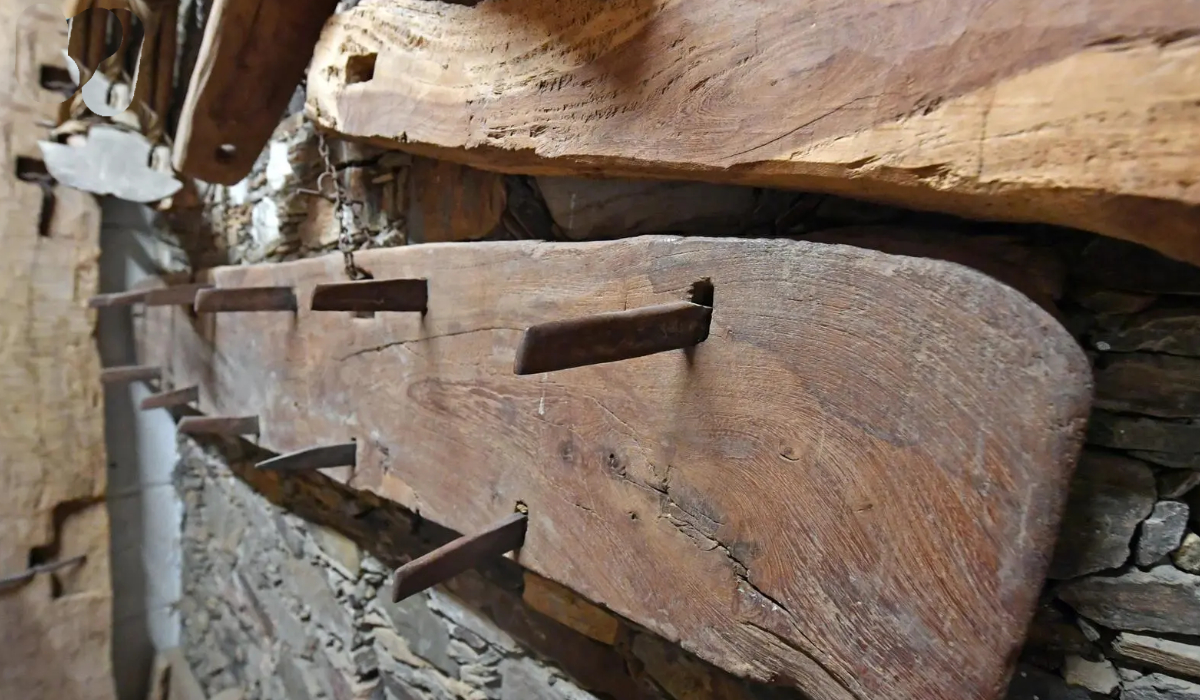
This system uses a wooden harness positioned over the bulls’ necks, with 70-cm wooden arms extending through four holes and secured with leather or palm fiber ropes. (SPA)
He explained that traditional plowing relies on cattle and the plow, adding, “This is not merely technique — it is a lifestyle where we honor the earth and understand its rhythms of giving and resting.”
According to farmer Abdul Karim Al-Shehri, the traditional plowing process begins with securing two bulls using a wooden neck harness called Al-Nir (yoke). This connects to Al-Sikka — a sharp iron plowshare attached to a wooden plow that cuts and turns the soil.
He also outlined the traditional tools that have shaped Asir’s agricultural practices for generations. The plow, typically made from jujube or juniper wood, holds the iron blade that breaks the soil. Farmers have relied on the handheld wooden Al-Madra to guide the plow’s direction during tilling.
The Ruba’a (clevis) or Al-Dimad (drawbar) system connects cattle to the plow, ensuring the optimal distance between the animals for effective field work. This system uses a wooden harness positioned over the bulls’ necks, with 70-cm wooden arms extending through four holes and secured with leather or palm fiber ropes.
Farmer Abdullah Abdulrahman Al-Asmari explained that plowing is usually a team effort. Two farmers work together: One steadies the plow while the other, known as Al-Thari (sower), scatters seeds evenly.
After plowing is complete, the Makam or Al-Madsam (harrow) — a wide, two-meter piece of wood pulled by bulls or camels over the freshly turned earth — is used to level the soil and protect seeds from birds and harsh elements such as wind and heat.
“While we must embrace progress, we cannot abandon Asir’s agricultural heritage,” Al-Asmari said. “Teaching younger generations about our traditional farming methods is essential — these practices were not merely labor but represented the entire way of life that sustained our ancestors for centuries.”
The process involves four distinct phases designed to maximize crop yield and nutritional quality: Initial soil turning, deeper breaking for improved aeration and water absorption, directional plowing to prepare for seeding, and finally, careful seed distribution and coverage.
Many farmers maintain that despite the available modern equipment, traditional cattle plowing benefits the soil in ways machinery cannot.
They believe that it provides greater control using more natural methods while preserving soil fertility and reducing fossil fuel dependence.
In Asir, traditional plowing is more than farming — it embodies cultural identity and sustains people’s timeless bond with the land.


