VENICE, Italy: Venice is charging day-trippers to the famed canal city an arrivals tax for the second year starting Friday, a measure aimed at combating the kind of overtourism that put the city’s UNESCO World Cultural Heritage status at risk.
A UNESCO body decided against putting Venice on its list of cultural heritage sites deemed in danger after the tax was announced. But opponents of the day-tripper fee say it has done nothing to discourage tourists from visiting Venice even on high-traffic days.
Here’s a look at Venice’s battle with overtourism by the numbers:
5-10 euros (about $6-$11)
The fee charged to visitors who are not overnighting in Venice to enter its historic center during the second year of the day-tripper tax. Visitors who download a QR code at least three days in advance will pay 5 euros ($5.69) — the same amount charged last year throughout the pilot program. But those who make last-minute plans pay double. The QR code is required from 8:30 a.m. until 4 p.m. and is checked at entry points to the city, including the Santa Lucia train station, the Piazzale Roma bus depot and the Tronchetto parking garage.
54
The number of days this year that day visitors to Venice will be charged a fee to enter the historic center. They include mostly weekends and holidays from April 18 to July 27. That is up from 29 last year. The new calendar covers entire weeks over key holidays and extends the weekend period to include Fridays.
2.4 million euros
That is the amount Venice took in during a 2024 pilot program for the tax. The city’s top budget official, Michele Zuin, said last year the running costs for the new system ran to 2.7 million euros, overshooting the total fees collected. This year, Zuin projects a surplus of about 1 million euros to 1.5 million euros, which will be used to offset the cost of trash collection and other services for residents.
450,000
The number of day-trippers who paid the tax in 2024. Officials say 8,000 day-trippers paid in advance to enter the city on Friday, among the 77,000 who have already registered so far to enter the city this year. Another 117,000 have registered for exemptions, which apply to anyone born in Venice, those paying property taxes in the city, studying or working in the historic center, or living in the wider Veneto region, among others.
75,000
The average number of daily visitors on the first 11 days of 2024 that Venice charged day-trippers. That’s about 10,000 people more than the number of tourists recorded on each of the three important holidays during the previous year. City council member Giovanni Andrea Martini, an opponent of the measure, said the figures show the project has not deterred visitors.
48,283
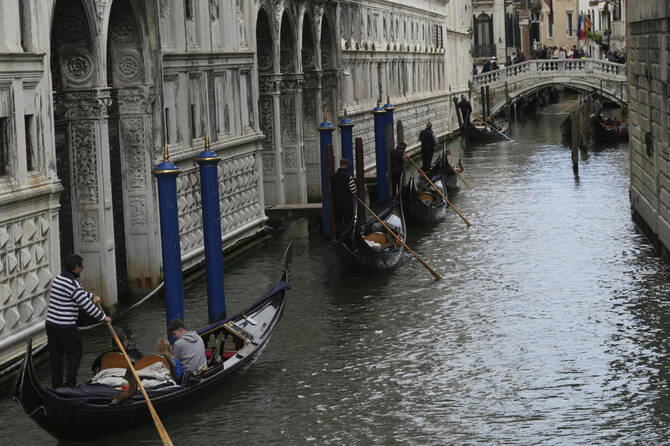
The number of official residents in Venice’s historic center composed of over 100 islands connected by footbridges and traversed by its famed canals. The population peaked at 174,000 in 1951, when Venice was home to thriving industries. The number shrank during Italy’s postwar economic boom as residents moved to the mainland for more modern housing — including indoor plumbing which was lacking in Venice. It has been shrinking dramatically over recent decades as local industry lost traction, families sought mainland conveniences and housing prices rose. Activists also blame the “mono-culture” of tourism, which they say has emptied the city of basic services like shops for everyday goods and medical care.
51,129
The number of beds for tourists in Venice’s historic center, including 12,627 in the less regulated short-term rental market, according to April data from the Ocio housing activist group. The number of tourist beds surpassed the number of permanent residents in 2023, according to Ocio’s monitor. Anyone staying in a hotel within the city limits, including on the mainland districts of Mestre and Marghera, pays a lodging tax and is therefore exempt from the day-tripper tax.
25 to 30 million
The number of annual arrivals of both day-trippers and overnight guests roughly confirmed by cellphone data tracked from a Smart Control Room since 2020, according to city officials.


![]()

Venice expands its day-tripper tax program in bid to combat overtourism
Short Url
https://arab.news/zprg5
Venice expands its day-tripper tax program in bid to combat overtourism
- A UNESCO body decided against putting Venice on its list of cultural heritage sites deemed in danger after the tax was announced
- Opponents of the day-tripper fee say it has done nothing to discourage tourists from visiting Venice even on high-traffic days


Latest updates


© 2026 SAUDI RESEARCH & PUBLISHING COMPANY, All Rights Reserved And subject to Terms of Use Agreement.