YANGON: Myanmar’s military government said Thursday it will release nearly 5,000 prisoners in an amnesty to mark the country’s new year festivities.
Civil rights groups say the junta has arrested thousands of protesters and activists since its 2021 coup cut short Myanmar’s experiment with democracy and plunged the nation into a multi-sided civil war.
Amnesties are regularly announced to commemorate national holidays or Buddhist festivals, but most high-profile political prisoners including deposed civilian leader Aung San Suu Kyi remain detained.
A junta statement said 4,893 prisoners will be pardoned “to participate in the state-building process, for peace of mind of people and on compassionate grounds.”
To convey the “loving kindness of the state,” the junta also said other prisoners would have their sentences reduced by one-sixth, except for those who had committed serious offenses.
The offenses include unlawful association and terrorism, as well as murder and rape.
The junta said 13 foreign nationals would also be pardoned and deported, without giving details of their identities or crimes.
Early on Thursday morning an AFP journalist saw crowds of families gathered outside Yangon’s Insein prison, prepared to meet those freed.
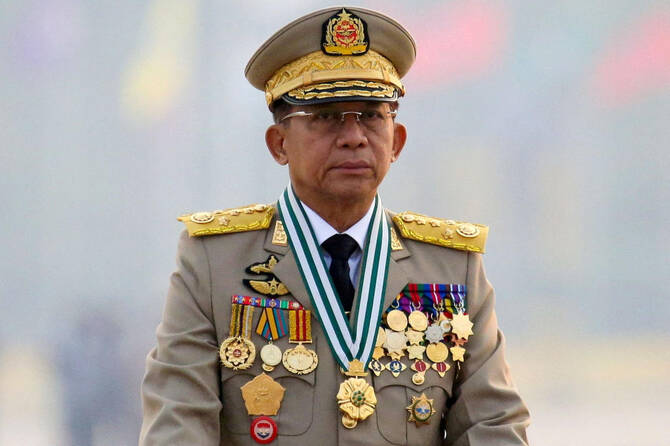
The amnesty announcement was made as junta chief Min Aung Hlaing was reportedly due to make a rare foreign trip to Bangkok to meet Malaysian Prime Minister Anwar Ibrahim, who is chairing the 10-country ASEAN bloc this year.
The Association of Southeast Asian Nations (ASEAN) has in the past barred junta officials from its summits over lack of progress on a peace plan.
But Anwar said he would meet Min Aung Hlaing Thursday to discuss the safety of Malaysian humanitarian teams dispatched to Myanmar following last month’s magnitude-7.7 earthquake.
The junta has not confirmed the meeting.
Myanmar’s ongoing “Thingyan” water festival typically marks the country’s new year with water-splashing rituals representing cleansing and renewal.
But celebrations have been muted following the March 28 tremor in the country’s central belt, which has killed 3,725 according to the latest official toll.


![]()

Myanmar junta says to free nearly 5,000 prisoners in amnesty
Short Url
https://arab.news/ne537
Myanmar junta says to free nearly 5,000 prisoners in amnesty
- Civil rights groups say the junta has arrested thousands of protesters and activists since its 2021 coup
- Amnesties are regularly announced to commemorate national holidays or Buddhist festivals


Latest updates



© 2026 SAUDI RESEARCH & PUBLISHING COMPANY, All Rights Reserved And subject to Terms of Use Agreement.