

Oil Updates — crude edges up on potential US tariff exemptions on cars 

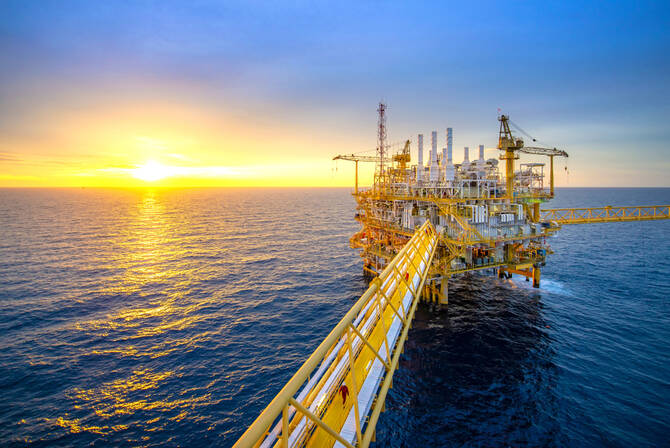
Brent crude futures gained 25 cents, or 0.4 percent, to $65.13 per barrel by 9:30 am Saudi time, while US West Texas Intermediate crude was up 28 cents, or 0.5 percent, to $61.81. Shutterstock
Short Url
Updated 15 April 2025
Follow

Oil Updates — crude edges up on potential US tariff exemptions on cars 

SINGAPORE: Oil prices inched higher on Tuesday, supported by new tariff exemptions floated by US President Donald Trump and a rebound in China crude oil imports in anticipation of tighter Iranian supply, according to Reuters. 

Brent crude futures gained 25 cents, or 0.4 percent, to $65.13 per barrel by 9:30 am Saudi time, while US West Texas Intermediate crude was up 28 cents, or 0.5 percent, to $61.81. 

“Trump granted exemptions on electronic tariffs and signalled an auto tariff relief, both of which are seen as setbacks from the previously announced import levies, hence, providing some relief to risk assets, including oil,” said independent market analyst Tina Teng. 

“However, the rally in stocks and growth-sentiment commodities is sceptical, as his policy is unpredictable.” 

In the latest development in Trump’s whipsawing trade war, he said he was considering a modification to the 25 percent tariffs imposed on foreign auto and auto parts imports from Mexico, Canada and other places. 

The vacillating US trade policies have created uncertainty for global oil markets and pushed OPEC on Monday to lower its demand outlook for the first time since December. 

The Trump administration had announced on Friday that it would grant exclusions from tariffs on smartphones, computers and some other electronic goods, most of which are imported from China. That drove both oil benchmarks to settle up slightly higher on Monday. 

On Sunday, Trump said he would announce the tariff rate on imported semiconductors over the next week and a Monday Federal Register filing showed the administration had begun an investigation into imports of semiconductors on April 1. 

“The market is digesting fast-moving policy developments on the tariff front, while balancing them with nuclear talks between the US and Iran,” said ING analysts in a Tuesday note. 

“Clearly, the market is more focused on tariffs and what they mean for oil demand.” 

US Energy Secretary Chris Wright said on Friday the US could stop Iranian oil exports as part of Trump’s plan to pressure Tehran over its nuclear program. 

Also supporting prices were data on Monday showing that China’s crude oil imports in March were up nearly 5 percent from a year earlier, as arrivals of Iranian oil surged in anticipation of tighter US sanctions enforcement. 

Kazakhstan said on Monday that its oil output fell 3 percent in the first two weeks of April from the March average, confirming a Reuters report, although that still leaves its production above its OPEC+ quota. 


Up to $600m in additional tariffs on Saudi exports to the US

Updated 23 February 2026
Follow

Up to $600m in additional tariffs on Saudi exports to the US

RIYADH: Gulf exports have become targets of US President Donald Trump’s tariffs, which he raised from 10 percent to 15 percent on all countries.

The increase comes after the US Supreme Court ruled that the legal basis Trump had used to impose earlier tariffs was unlawful.

Previously, Gulf countries were among the few that had not raised their tariffs above 10 percent, while many other countries, most notably China, had already been subject to higher tariffs. However, with this latest increase, the Gulf states will be among those affected.

According to the financial analysis unit of Al-Eqtisadiah newspaper, Gulf exports to the US in 2024 amounted to about $26.2 billion, with Saudi Arabia accounting for roughly half of that, at $12.7 billion. These exports are subject to potential additional tariffs of SR637 million ($169 million).

It is likely that tariffs on Saudi exports will grow from $1.3 billion annually to $1.9 billion, a rise of 50 percent, following Trump’s recent increase.

Customs duties on Gulf exports will also increase, from $2.6 billion annually to $3.9 billion.

In 2024, Gulf exports are distributed as follows: $7.5 billion from the UAE, $1.8 billion from Qatar, and $1.6 billion from Kuwait, as well as $1.3 billion from Oman, and finally, $1.2 billion from Bahrain.

Gulf trade with the US in 2024 reached approximately $86 billion, comprised of $26.2 billion in exports and approximately $60 billion in imports, resulting in a Gulf trade deficit of $33.5 billion.

Trump responds to Supreme Court ruling

US President Donald Trump raised the global tariffs from 10 percent to 15 percent in response to the US Supreme Court ruling that his previous tariff implementation mechanism was unlawful.

Trump said in a post on his Truth Social account today: “As President of the US, I will, effective immediately, raise the global tariffs imposed on countries that have been taking advantage of the US for decades with impunity (until I took over!) to the legally permitted and tested level of 15 percent.”

Hours after the Supreme Court ruling on Feb. 20, Trump imposed a 10 percent global tariff on foreign goods, a move aimed at maintaining his trade agenda.

Trump had expressed his displeasure with the Supreme Court’s decision to overturn the tariffs imposed by his administration, asserting that the ruling would not restrict him. He vowed to impose tariffs far exceeding those struck down by the court, indicating that he had stronger alternatives to tariffs, raising questions about his future trade strategy.

The US Supreme Court struck down Trump’s sweeping global tariffs, undermining his signature economic policy and inflicting his biggest legal defeat since returning to the White House.

By a six-three vote, the court ruled that Trump exceeded his authority by invoking the federal emergency powers law to impose his reciprocal tariffs worldwide, in addition to targeted import duties that the administration claims are intended to combat fentanyl smuggling.