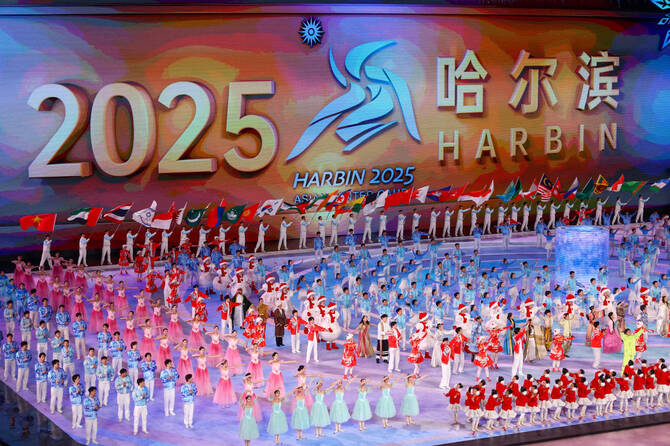
BEIJING: Chinese police in the northeastern city of Harbin have accused the United States National Security Agency (NSA) of launching “advanced” cyberattacks during the Asian Winter Games in February, targeting essential industries.
Police added three alleged NSA agents to a wanted list and also accused the University of California and Virginia Tech of being involved in the attacks after carrying out investigations, according to a report by state news agency Xinhua on Tuesday.
The NSA agents were identified by Xinhua as Katheryn A. Wilson, Robert J. Snelling and Stephen W. Johnson. The three were also found to have “repeatedly carried out cyberattacks on China’s critical information infrastructure and participated in cyberattacks on Huawei and other enterprises.”
It did not specify how the two American universities were involved.
The US Embassy in China did not immediately respond to an emailed request for comment.
The detailed allegations come as the world’s two largest economies spiral deeper into a trade war that has already spurred travel warnings for Chinese tourists going to the US and halted imports of US films into China.
“The US National Security Agency (NSA) launched cyberattacks against important industries such as energy, transportation, water conservancy, communications, and national defense research institutions in Heilongjiang province,” Xinhua said, citing the Harbin city public security bureau.
The attacks had “the intention of sabotaging China’s critical information infrastructure, causing social disorder, and stealing important confidential information,” it added.
Anonymous servers
Xinhua said the NSA operations took place during the Winter Games and were “suspected of activating specific pre-installed backdoors” in Microsoft Windows operating systems on specific devices in Heilongjiang.
In order to cover its tracks, the NSA purchased IP addresses in different countries and “anonymously” rented a large number of network servers including in Europe and Asia,” Xinhua said.
The NSA intended to use cyberattacks to steal the personal data of participating athletes, the news agency said, adding that the cyberattacks reached a peak from the first ice hockey game on February 3. The attacks targeted information systems such as the Asian Winter Games registration system and stored “sensitive information about the identities of relevant personnel of the event,” Xinhua said.
The US routinely accuses Chinese state-backed hackers of launching attacks against its critical infrastructure and government bodies.
Last month, Washington announced indictments against a slew of alleged Chinese hackers who targeted the US Defense Intelligence Agency, the US Department of Commerce, and the foreign ministries of Taiwan, South Korea, India, and Indonesia.
Beijing denies all involvement in overseas cyber espionage.
After years of being accused by Western governments of cyberattacks and industrial espionage, in the past two years several Chinese organizations and government organs have accused the United States and its allies of similar behavior.
In December, China said it found and dealt with two US cyberattacks on Chinese tech firms to “steal trade secrets” since May 2023, but did not name the agency involved.

China accuses US of launching ‘advanced’ cyberattacks during the Asian Winter Games
Short Url
https://arab.news/rpdnm
China accuses US of launching ‘advanced’ cyberattacks during the Asian Winter Games
- The attacks had ‘the intention of sabotaging China’s critical information infrastructure, causing social disorder, and stealing important confidential information’
China threatens ‘forceful measures’ over US arms sales package to Taiwan
BEIJING: China’s military will step up training and “take forceful measures” to safeguard the country’s sovereignty and territorial integrity, the defense ministry said on Friday in response to a planned $11.1 billion US arms sales package to Taiwan. The package, the largest ever by the United States to the island Beijing views as its own territory, comes as China has been stepping up its military and political pressure on Taiwan.
The ministry said it had lodged “stern representations” with the United States, and urged the country to immediately cease arms sales to Taiwan and abide by its commitment not to support “Taiwan independence forces.”
“The ‘Taiwan independence’ separatist forces, at the cost of the safety and well-being of Taiwan compatriots, use the hard-earned money of ordinary people to fatten US arms dealers in an attempt to ‘seek independence by relying on military force’,” the ministry statement said.
The United States, by repeatedly going back on its word, indulging and supporting Taiwan independence, is “bound to get burned itself,” the ministry added.
“The Chinese People’s Liberation Army will continue to strengthen training and combat readiness, take strong measures to safeguard national sovereignty and territorial integrity, and resolutely frustrate attempts at ‘Taiwan independence’ separatism and external interference.”
It did not give details on what exact steps it might take.
Washington has formal diplomatic relations with Beijing, but maintains unofficial ties with Taiwan and is the island’s most important arms supplier. The US is bound by law to provide Taiwan with the means to defend itself, though such arms sales are a persistent source of friction with China.
The latest weapons package includes HIMARS rocket systems, made by Lockheed Martin and which have been used extensively by Ukraine against Russian forces.
Taiwan’s democratically elected government rejects Beijing’s sovereignty claims, saying only the island’s people can decide their future.
China has rebuffed repeated offers of talks with Taiwan President Lai Ching-te, saying he is a “separatist.” It has not ruled out the
use of force to take control of the island.
The ministry said it had lodged “stern representations” with the United States, and urged the country to immediately cease arms sales to Taiwan and abide by its commitment not to support “Taiwan independence forces.”
“The ‘Taiwan independence’ separatist forces, at the cost of the safety and well-being of Taiwan compatriots, use the hard-earned money of ordinary people to fatten US arms dealers in an attempt to ‘seek independence by relying on military force’,” the ministry statement said.
The United States, by repeatedly going back on its word, indulging and supporting Taiwan independence, is “bound to get burned itself,” the ministry added.
“The Chinese People’s Liberation Army will continue to strengthen training and combat readiness, take strong measures to safeguard national sovereignty and territorial integrity, and resolutely frustrate attempts at ‘Taiwan independence’ separatism and external interference.”
It did not give details on what exact steps it might take.
Washington has formal diplomatic relations with Beijing, but maintains unofficial ties with Taiwan and is the island’s most important arms supplier. The US is bound by law to provide Taiwan with the means to defend itself, though such arms sales are a persistent source of friction with China.
The latest weapons package includes HIMARS rocket systems, made by Lockheed Martin and which have been used extensively by Ukraine against Russian forces.
Taiwan’s democratically elected government rejects Beijing’s sovereignty claims, saying only the island’s people can decide their future.
China has rebuffed repeated offers of talks with Taiwan President Lai Ching-te, saying he is a “separatist.” It has not ruled out the
use of force to take control of the island.
© 2025 SAUDI RESEARCH & PUBLISHING COMPANY, All Rights Reserved And subject to Terms of Use Agreement.


