

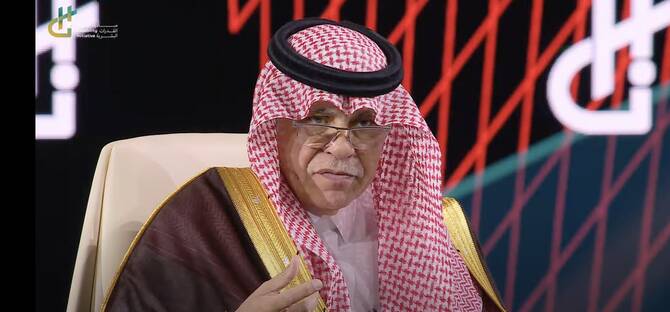

RIYADH: A Saudi-UK Center of Excellence should be established to help secure the future skill sets needed, according to the Kingdom’s minister of commerce.
During a panel discussion titled “Human Capital Reimagined – Launching the Saudi-UK Skills Initiative” on the second day of the Human Capability Initiative 2025 taking place in Riyadh, Majid Al-Qasabi explained that this initiative aligns with the UK’s reputation as a global center of excellence in education, home to top universities, leading research institutions, and world-class vocational schools.
Al-Qasabi speculated on future areas of collaboration: “We need to collaborate and cooperate and coordinate in three areas. Track A, we create a Saudi-UK Center of Excellence for future skills, where we can bring democrats like me, policymakers, private sector opinion leaders, educators, all the stakeholders to co-design future skills.”
He also shed light on additional areas where the two countries should collaborate, including vocational training and leveraging digital platforms.
“We know that the UK, they’re the center of excellence for vocational training, and we desperately need vocational training in Saudi Arabia. So, second track, we create the center of excellence or vocational academies, jointly UK-Saudi Vocational Academy, where your software, your brain power, your experience can be transferred to our boys and girls because this will also be used in the health sector and the newly developed sectors,” the minister said.
“Last, how can we leverage digital platforms to accelerate learning and continuous life learning because things are going too fast, so we create maybe a joined platforms to have continuous education even in the service sector. You know, the UK is the second largest exporter of services globally,” Al-Qasabi added.
He went on to note that the tourism, culture, sports, and creative industries are expected to create 1 million jobs by 2030. The creative economy alone already supports over 80,000 jobs, with strong growth anticipated in film and design, fashion, and digital arts.
“The digital economy is projected to grow from 4.4 percent of GDP in 2020 to over 19 percent by 2030. The health care sector is projected to reach SR250 billion ($66.6 billion) by 2030,” the minister said.
Al-Qasabi added: “The green economy expected over SR2 trillion worth of investments in the pipeline, like sustainable construction, renewable energy, circular economies, and so forth.”
He also emphasized that with 65 percent of the population under the age of 35, investing in lifelong learning is not a choice but a necessity.
Also speaking during the panel, the Kingdom’s Vice Minister of Sport, Bader Al-Kadi, noted that the National Sports Strategy was developed by drawing on insights from other markets, particularly the UK, which has been closely studied as a model for sports development.
“With that learning taken, we have worked on building capabilities in Saudis to ensure that we have the right talents. Not only as athletes, but as a physiotherapist, as psychiatrists, as sports managers, as coaches, and everything around building the ecosystem,” Al-Kadi said.
“We learn also from the UK sustainability in the sports sector. The UK sports sector is 90 percent funded by the private sector. That’s a great target, an ambitious to achieve. In Saudi Arabia today, 15 percent of the sports sector is funded by the private sector, so a big gap and a big ambition for us to work on toward achieving,” he added.
The minister also emphasized that human capability is one of the key enablers underpinning the National Sports Strategy and plays a central role in its development.
“The sports sector will contribute to 13 percent of those jobs that are being created by sports entertainment and tourism sectors,” Al-Kadi said.
“Obviously, sports (sector) is expected to also contribute to the economy. We aim to have sports reaching up to 3 percent of GDP by 2030. This is an ambitious target that we have for ourselves,” he added.
Also present in the same panel, UK’s Minister of Early Education Stephen Morgan underlined that the country wants to start by sharing their work with the Kingdom and, in turn, learn from the Ministry of Education’s initiatives to upskill and retain early-year staff.
“We could also share our experiences of introducing new modern teaching methods, and these include educational technology that tailors learning to individual children and produces data-led results to measure impact,” Morgan said.
He added: “And it’s through the sharing of our practice and resources and knowledge that early education can become a key building block in our partnership on skills training for older students and I have absolutely no doubt that the UK-Saudi Skills Education Partnership will be accessed with a success and we’ve already had notable achievements in our work together on education, such as increasing the number of UK independent schools in the Kingdom and we’re working really hard to deliver more important higher education partnerships for the future.”
Steve Field, UK special healthcare representative to Saudi Arabia, said: “You have a large number of nurses, majority of which are currently working very effectively in the hospital setup. You’ve got some brilliant hospitals, but to deliver the vision you will need to focus on prevention, on primary care and on mental health in addition to your hospital world and of course, if you can do that, you can move care out of hospitals, reduce the cost of healthcare, and also prevent illnesses before you have to treat them.”
He added: “So we’re here to help you. Our universities are really keen to partner with you to develop more nursing schools to support you in your faculty development, in your leadership, and we want to be on this journey with you and finally just to reassure and assure you that the UK government are right behind this and are with you right till the end and beyond.”
Mazen Fakeeh, president of Fakeeh Care Group, who also participated in the session, disclosed that the nursing shortage is a global issue, not just specific to Saudi Arabia.
“Nurses constitute 40 percent of the workforce required to provide care across the globe. Saudi Arabia, we have about. 6.2 nurses per 1,000 population. In Saudi Arabia, the current intake in nursing school is about 5,000 a year. For us to meet the gap, the existing gap and the future gap between 2030 to 2040, we need to increase that intake from the current 5,000 by 150 percent,” Fakeeh said.
He added: “So, there is a huge demand on nursing, nursing training and education. For that, the government had the initiative to reduce the number of years without compromising the quality of training from the current four years plus one year of internship to three years, which is the expedited nursing curriculum in the UK.”


