


PARIS: France’s foreign minister said Monday that Algerian authorities gave 12 French state officials 48 hours to leave the country.
Jean-Noel Barrot denounced the decision, saying it appeared as “a response to the arrest of three Algerian nationals suspected of serious offenses on French soil.”
French counterterrorism prosecutors said the Algerians were arrested Friday and handed preliminary charges of “kidnapping or arbitrary detention … in connection with a terrorist undertaking.” They are allegedly involved in the April 2024 kidnapping of an Algerian influencer, Amir Boukhors, or Amir DZ, a known critic of the Algerian government with 1.1 million followers on TikTok.
An Algerian consular official is among the three arrested, according to French media.
Barrot called on Algerian authorities “to abandon” measures to expel the French officials “who have no connection with the current legal proceedings,” in a written statement.
“If the decision to send back our officials is maintained, we will have no other choice but to respond immediately,” Barrot said.
In an interview with French national news broadcaster France Television, Boukhors said he was abducted in April 2024 in a Paris suburb and released 27 hours later.
He said he saw a car in front of his home, with four people he said were acting like false police officers. Some wore police armbands and put him in handcuffs. They brought him to a remote place in the Paris region. “That’s when I felt and confirmed that they were kidnappers. I had fallen into the trap,” he said.
He was told he would be meeting an Algerian official, which never happened, and was later released, the influencer said.
According to French media, Boukhors lives in France since 2016 and was granted the status of political refugee in 2023.
Relations between France and Algeria sharply deteriorated last summer when France shifted its position to support Morocco’s autonomy plan for Western Sahara — a disputed territory claimed by the pro-independence Polisario Front, which receives support from Algiers and is based in refugee camps in southeastern Algeria.
Tensions further peaked after Algeria arrested French-Algerian writer Boualem Sansal, who is an outspoken critic of Islamism and the Algerian regime, in November. He has since been sentenced to five years in prison.
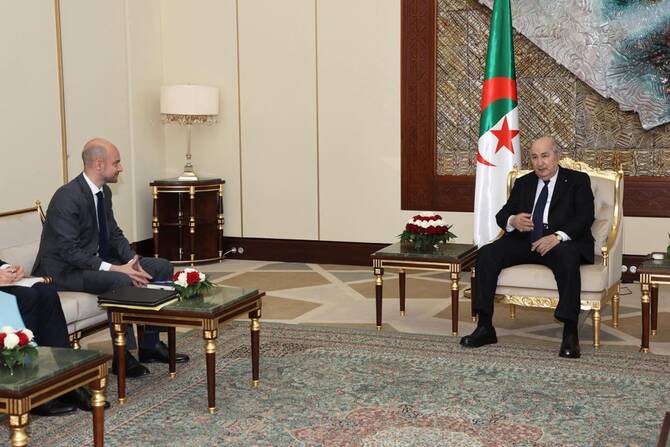
However, tensions started easing in the past two weeks, following a phone call between French President Emmanuel Macron and Algerian counterpart Abdelmadjid Tebboune during which they both agreed to revive bilateral relations, according to a statement by the Elysee Palace.
Barrot traveled to Algeria earlier this month, a visit meant to show the diplomatic rapprochement between the two countries.


