



RIYADH: The Saudi Research and Media Group unveiled a compelling collection at the inaugural Art Week Riyadh that traces the evolution of Saudi abstraction.
Titled “Abstract Horizons,” it highlights the pioneering contributions of artists like Mohammed Al-Saleem and Abdulhalim Radwi, whose work helped lay the groundwork for the Kingdom’s contemporary art movement.
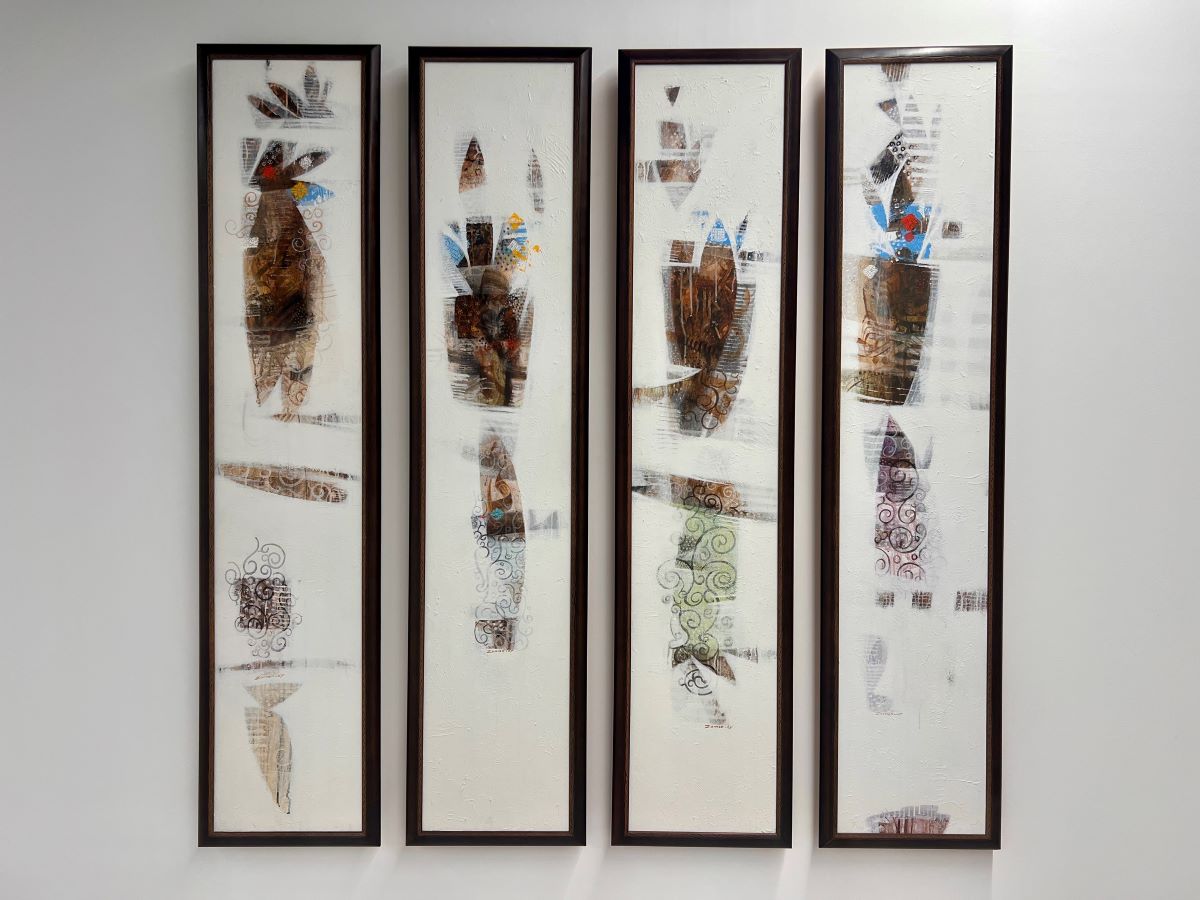
Borrowing its name from Mohammed Al-Saleem’s seminal work, the collection takes a unique approach, emphasizing the shifting aesthetic and intellectual currents of the Kingdom through the abstract practices of three generations of Saudi artists. (AN Photo by Nada Alturki)
Borrowing its name from Al-Saleem’s seminal work, the collection takes a unique approach, emphasizing the shifting aesthetic and intellectual currents of the Kingdom through the abstract practices of three generations of Saudi artists.
The exhibition seamlessly flows from the early beginnings with artists born in the 1930s and 1940s, whose work predominantly emerged in the 1990s: Radwi was a foundational figure in Saudi modernism; Al-Saleem, who became notable for establishing the “horizonism” movement, characterized his work with a geometric depiction of the Saudi skyline and desertscape; Taha Al-Seban furthered the desert motif with his unique color compositions.
From there, it can be seen how abstraction has transformed into a crucial language in the cultural scene.
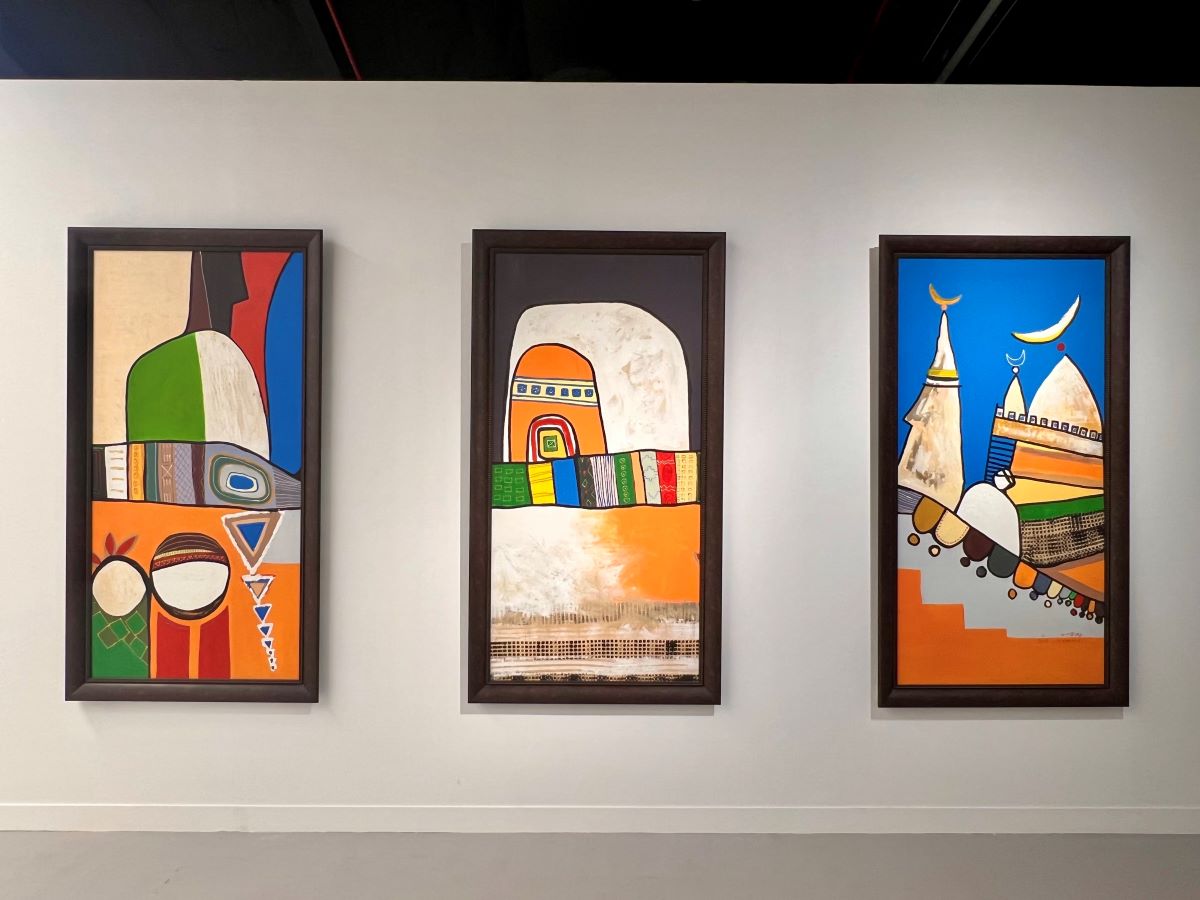
The exhibition seamlessly flows from the early beginnings with artists born in the 1930s and 1940s, whose work predominantly emerged in the 1990s. (AN Photo by Nada Alturki)
The exhibition continues to work from the early 2000s, engaging more with culture, identity and memory. There are artists like Abdulrahman Al-Soliman, also a critic, who infused architectural elements to bridge between heritage and contemporary expression; Abdullah Hamas, who reimagines the Saudi landscape through geometric compositions; Fahad Al-Hajailan, whose abstraction plays with color and movement; Raeda Ashour, one of the first female Saudi abstract artists, who adopts a minimalist yet evocative approach with a chromatic palette and fluid silhouettes.
Then, at the turn of the 21st century, there is the work of artists born in the 1970s. Abstraction is now a conceptual tool.
Rashed Al-Shashai, known for his experimental approach, repurposes everyday materials to construct layered compositions that address the tension between tradition and modernity while, in contrast, Zaman Jassim’s abstraction interplays between the tangible and the elusive.
SRMG’s collection is on display as part of an exhibition titled “Collections in Dialogue,” featuring collected works by the King Abdulaziz Center for World Culture (Ithra) and Hayy Jameel.


