GENEVA: A halt to US funding for Gavi, an organization that vaccinates children in the world’s poorest countries, will leave a dangerous gap threatening the lives of millions, its chief warned on Monday.
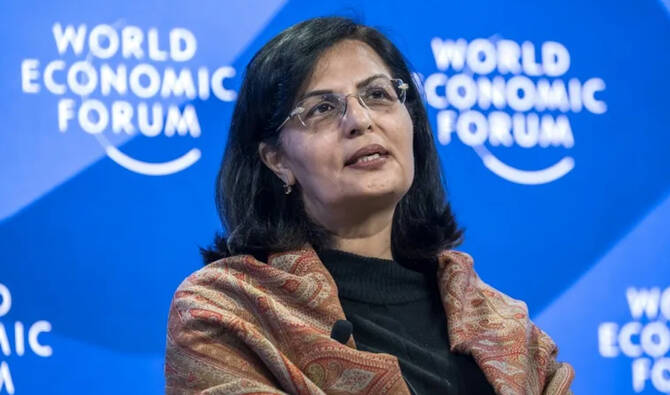
“The first impact would be for the most vulnerable children of the world,” Gavi chief executive Sania Nishtar told AFP.
She spoke via video link from Washington, during a visit to try to convince US authorities that their 25-year collaboration with the Geneva-based organization must continue.
The New York Times broke the news last week that President Donald Trump’s administration, which has been aggressively slashing foreign aid, aims to cut all funding to Gavi.
That step featured in a 281-page spreadsheet related to cuts to USAID that was sent to the US Congress.
The decision would impact about 14 percent of Gavi’s core budget — and came just days after the Congress had approved $300 million in funding for the organization.
“I was very, very surprised,” Nishtar said, adding that her organization still had received no official termination notice from the US government.
The medical doctor and former minister and senator in Pakistan said: “Gavi was supported by the previous Trump administration. We had a very good relationship.”
If the cuts go ahead, Nishtar warned it would have devastating effects.
“Frankly, this is too big a hole to be filled,” Nishtar warned, even as Gavi scrambled to find donors to offset the missing US funding.
“Something will have to be cut.”
Gavi says it helps vaccinate more than half the world’s children against infectious diseases including COVID-19, Ebola, malaria, rabies, polio, cholera, tuberculosis (TB), typhoid and yellow fever.
Since its inception in 2000, Gavi has provided vaccines to more than 1.1 billion children in 78 lower-income countries, “preventing more than 18.8 million future deaths,” it says.
Before the US decision, the organization has a goal of vaccinating 500 million more children between 2026 to 2030.
The US contribution is directly responsible for funding 75 million of those vaccinations, Nishtar said.
Without them, “around 1.3 million children will die from vaccine-preventable diseases.”
Beyond Gavi’s core immunization programs, the funding cut would jeopardize the stockpiling and roll-out of vaccines against outbreaks and in health emergencies, including for Ebola, cholera and mpox.
“The world’s ability to protect itself against outbreaks and health emergencies will be compromised,” Nishtar said.
During her Washington visit, the Gavi chief said she aimed to show how effective funding has been so far for her organization.
For every $1 spent on vaccinations in developing countries where Gavi operates, $21 will be saved this decade in “health care costs, lost wages and lost productivity from illness and death,” the vaccine group estimates.
Unlike other organizations facing cuts, Gavi has not received an outsized contribution from Washington toward its budget, Nishtar noted, insisting that the US contribution was proportionate to its share of the global economy.
Other donors were paying their “fair share,” while recipient countries also pitch in and are provided with a path to transition away from receiving aid, she said.
Some former recipients, like Indonesia, had even become donors to the program, she pointed out, voicing hope that such arguments would help sway Washington to decide to stay the course.
Without the US backing, “we will have to make difficult trade-offs,” Nishtar warned.
That “will leave us all more exposed.”


![]()

Pakistani Gavi chief warns slashed US funding threatens millions of children
Short Url
https://arab.news/p37xv
Pakistani Gavi chief warns slashed US funding threatens millions of children
- Donald Trump’s funding halt could affect 14 percent of global vaccine group’s budget
- Sania Nishtar warns 1.3 million children may die of vaccine-preventable diseases
Latest updates


© 2026 SAUDI RESEARCH & PUBLISHING COMPANY, All Rights Reserved And subject to Terms of Use Agreement.