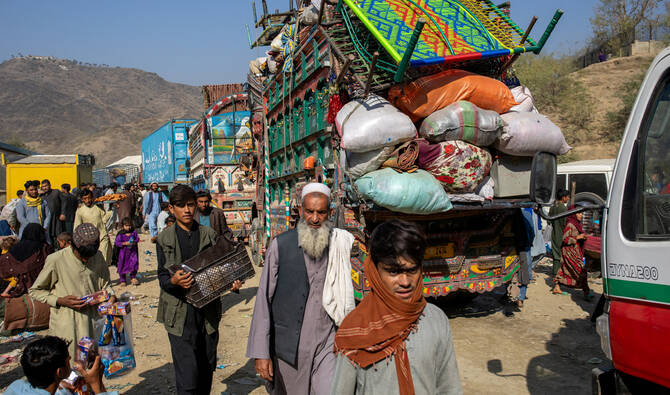
ISLAMABAD: The Taliban interim administration in Kabul on Tuesday urged Afghan refugees to return home voluntarily, as Pakistan resumed deportations following a March 31 deadline issued last month for undocumented migrants and Afghan Citizen Card (ACC) holders to leave the country.
Pakistan’s decision has coincided with the Eid Al-Fitr celebrations, casting a shadow over the religious holiday for thousands of Afghan families. The move is part of a broader repatriation drive launched in 2023, which has so far seen more than 800,000 Afghans expelled.
Pakistani authorities maintain Afghan nationals have been involved in militant attacks and organized crime, accusations Kabul denies.
The crackdown began amid a surge in violence by armed groups like the Tehreek-e-Taliban Pakistan (TTP) and the Baloch Liberation Army (BLA), whose leaders Islamabad claims are based in Afghanistan, a charge rejected by the Taliban administration.
“The Islamic Emirate has reiterated its call for the voluntary return of Afghan migrants as the celebration of Eid Al-Fitr already began,” Afghanistan’s state-run Bakhtar news agency reported on Tuesday. “This appeal comes in light of increasing deportations of Afghan refugees from neighboring countries, mainly Iran and Pakistan.”
“Mawlavi Abdul Kabir, the country’s Minister of Refugees and Repatriation, has urged neighboring countries to halt these deportations and allow Afghans to return home voluntarily,” it added. “He emphasized the importance of humane treatment for refugees, especially in light of reports of mistreatment of Afghans by border nations, including instances where individuals holding legal visas were also deported.”
The agency said Pakistan’s “renewed crackdown” had left even documented Afghan refugees uncertain about their future.
Last week, Afghan refugee leaders in Karachi held a press conference appealing to Pakistani authorities to reconsider the timing of the deportations.
“Pakistan has generously hosted us for nearly 47 years, and a large portion of these refugees were born in Pakistan,” said Hajji Abdullah Shah Bukhari, chairman of the refugee community in Sindh. “Even if the government decides to expel us, it should not be done during Eid.”
He rejected claims that Afghan refugees were involved in militancy, saying, “We ourselves are victims of war and terrorism.”
International rights groups have also urged Islamabad to halt the deportations, warning that some returning Afghans could face threats under Taliban rule.
Pakistan insists it is carrying out the deportation campaign in a humane manner, saying it respects the dignity of all Afghan nationals.
However, officials maintain that the country has hosted Afghan refugees for decades and it is now time for them to return.


![]()

Afghanistan urges voluntary return of refugees as Pakistan resumes deportations
Short Url
https://arab.news/9kecb
Afghanistan urges voluntary return of refugees as Pakistan resumes deportations
- Last month, Pakistan set a March 31 deadline for Afghan Citizen Card holders to return to their country on their own
- Afghan officials in Kabul seek humane treatment for refugees, saying even people with valid documents felt uncertainty
Latest updates


© 2026 SAUDI RESEARCH & PUBLISHING COMPANY, All Rights Reserved And subject to Terms of Use Agreement.