

Saudi Arabia launches Hajj packages for domestic pilgrims via Nusuk app

1 / 4
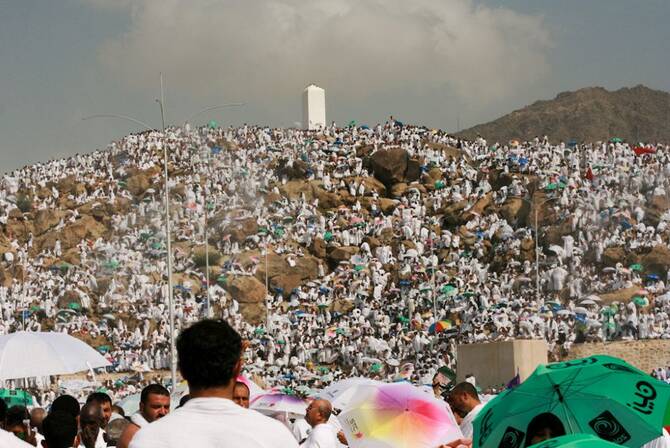
The Ministry of Hajj and Umrah has launched this year’s Hajj packages for citizens and residents of the Kingdom. (SPA)
2 / 4
The Ministry of Hajj and Umrah has launched this year’s Hajj packages for citizens and residents of the Kingdom. (File Photo)
3 / 4
The Ministry of Hajj and Umrah has launched this year’s Hajj packages for citizens and residents of the Kingdom. (AN Photo)
4 / 4
The Ministry of Hajj and Umrah has launched this year’s Hajj packages for citizens and residents of the Kingdom. (File Photo)
Short Url
Updated 31 March 2025
Follow

Saudi Arabia launches Hajj packages for domestic pilgrims via Nusuk app

  • Priority given to Muslims undertaking Hajj for the first time
  • Only those with mandatory meningitis vaccination eligible to book packages

RIYADH: Saudi Arabia’s Ministry of Hajj and Umrah has launched this year’s Hajj packages for citizens and residents of the Kingdom, now available for booking through the Nusuk app and its dedicated electronic portal.

In line with Saudi Arabia’s commitment to expanding access to the annual pilgrimage, the ministry has launched Hajj packages with priority booking for first-time pilgrims, the Saudi Press Agency reported.

According to the ministry, pilgrims must have completed the mandatory meningitis vaccination to access packages, with appointments available through the Sehhaty app.

The Nusuk platform offers a user-friendly experience, allowing pilgrims to browse and book packages with various payment options.

The Nusuk app also enables pilgrims to purchase essential Hajj items, including ihram clothing and personal necessities, as well as book flight tickets within their packages, streamlining the entire pilgrimage journey.

Welcoming the announcement, Arif Anwar, an Alkhobar resident, told Arab News: “It’s great news, I was waiting for it. Now I will make the booking via Nusuk for me and my family, and (we are) looking forward to it as priority will be given to individuals who have not previously performed this once-in-a-lifetime pilgrimage, to allow more Muslims to fulfil this one of the five pillars of Islam in a spiritually inclusive and accessible environment.”

Abdulrahman Qahtani, a Jeddah native, said: "It was awaited. I am keen to perform Hajj this year, and by fulfilling the requirements mentioned by the ministry, I will now apply via Nusuk to perform this one of the five key pillars of Islam."

Wissam Dekmak, a Lebanese resident in Riyadh, said: "It is exciting for all residents to hear this announcement, allowing us to plan and book Hajj well in advance. We can now easily reserve packages through the Nusuk app and portal. It is an amazing initiative that simplifies the process and prioritizes those who haven't yet experienced Hajj."

Packages are accessible through the electronic portal at masar.nusuk.sa/individuals/local-pilgrims.

"We offer pilgrims a variety of Hajj packages provided by authorized service provider companies, ensuring a seamless Hajj experience," according to Nusuk portal.

The Hajj package starts at SR8,092 ($2,157) for the Al-Diyafah camp in Mina with shared accommodation. The second package is offered at SR10,366 with an upgraded camp providing high-quality service.

The third package costs SR13,150 for the six towers in Mina, located near the Jamarat bridge. The fourth package, Kidana Al-Wadi Towers, is valued at SR12,537, offering luxurious accommodation in modern towers with advanced facilities and meals.

The launch is part of a wider digital transformation of the Hajj experience, with the Nusuk platform serving as a comprehensive digital companion.

The ministry receives pilgrims’ inquiries via the Pilgrims’ Care Center at 1966 (available 24/7) or the beneficiary care account on X (@MOHU_Care).


Klija Festival in Buraidah empowers small businesses

Updated 24 January 2026
Follow

Klija Festival in Buraidah empowers small businesses

  • Half a million attend 15-day celebration of heritage; event creates 1,500 seasonal jobs

RIYADH: The 17th Klija Festival in Buraidah drew more than half a million visitors during its 15-day run, celebrating the region’s heritage and entrepreneurial spirit.

Organized by the Qassim Chamber of Commerce, the event highlighted small businesses, providing a platform for entrepreneurs to showcase local products.

More than 340 sales outlets, marketing corners and points of sale welcomed attendees, while the festival provided 1,500 seasonal job opportunities, the Saudi Press Agency reported.

The small business pavilions featured families in the cottage industry, artisans and startups presenting traditional foods, and handicrafts and heritage items that reflect the region’s identity.

Participants said that the festival was a key marketing platform, boosting sales, increasing brand awareness, facilitating knowledge exchange and fostering connections with organizations supporting SMEs.

Mohammed Al-Hanaya, Qassim Chamber secretary-general and festival supervisor, said that the event brought together families, artisans, SMEs, companies and institutions, stimulating commercial activity, opening direct marketing channels and enhancing economic returns.

He added that the festival provided seasonal jobs for more than 1,500 young men and women across operations, marketing and services, supporting the labor market, empowering national talent, and connecting youth to the events and creative economy.

Klija, a traditional cookie made from wheat flour, dates or sugar, date syrup and natural ingredients such as cardamom and lemon, is a rich source of energy, carbohydrates, dietary fiber and natural proteins.

A cultural icon rooted in Qassim’s traditions, the cookie has gained international exposure through the festival, expanding the availability of packaged products.

Starting next year, the festival will be renamed the International Klija Festival, a rebranding approved by Qassim Gov. Prince Faisal bin Mishaal, who described it as a “successful model for turning local initiatives into global economic engines.”

This year’s festival, held at the King Khalid Cultural Center, included international participants from Egypt, Turkiye and Morocco, marking its evolution into a cross-cultural platform.