



RIYADH: Consumer spending in Saudi Arabia is expected to stay robust this year, driven by a youthful population and digitalization, according to multiple experts.
Speaking to Arab News, Sunil Kumar, CEO of supermarket chain Spinneys, said that consumer spending in the Kingdom is expected to witness a compound annual growth rate of 6.4 percent from 2022 to 2028, while UAE will see an expansion of 4.3 percent during the same period.
The views of Kumar align with the findings of a recent report published by global consulting firm AlixPartners which said Saudi Arabia’s consumer market is evolving rapidly, characterized by adaptability, shifting spending patterns, and resilience in the face of global economic challenges.
Spinneys’s CEO explained that as the Saudi and UAE economies continue to achieve growth, consumer confidence remains strong, fueling demand for premium products.
“Convenience is another important factor, with the accelerating penetration of aggregators, as well as proprietary e-commerce platforms like our own, making fresh, premium products quickly and easily accessible,” he said.
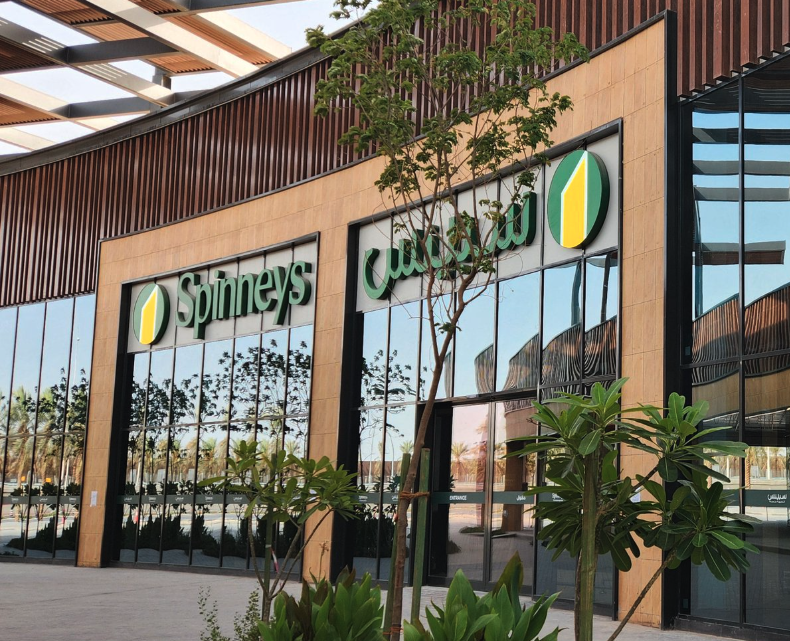
Spinneys opened its first Saudi store in June 2024, with 12 additional stores expected to open across the Kingdom by 2028. Spinneys
Factors driving consumer spending
Usman Iftikhar, principal in the retail and consumer goods practice for India, the Middle East, and Africa at Oliver Wyman, told Arab News that strategic government investments, digital advancements, and tourism initiatives are some of the major factors that are driving the growth of consumer spending in the Middle East and North Africa.
Iftikhar added that the MENA region now has a dynamic and evolving marketplace, fostering increased demand for a wide range of goods and services.
“The region has a young and growing population, which drives demand for goods and services, particularly in sectors such as education, technology, and entertainment. For example, in Saudi Arabia, one of the largest markets in the MENA region, more than 60 percent of the population is under the age of 30,” said Iftikhar.
He added: “Government spending and economic diversification play a vital role in stimulating consumer spending. Many countries in the region are investing in infrastructure, tourism, and non-oil sectors, boosting employment and consumer confidence.”
The Oliver Wyman official added that increased internet penetration and smartphone adoption are fueling e-commerce growth in the region, and is reshaping how consumers shop.
Jim Liu, general manager of AliExpress for the GCC region, shared identical views and told Arab News that consumer spending growth in the MENA region is fueled by rapid technological advancements, evolving consumer preferences, and a digitally native, mobile-first population.
“Structural reforms, increased investments in digital infrastructure, and the rise of payment solutions are further enhancing online retail accessibility,” said Liu.
Speaking to Arab News in February, Ali Bailoun, regional general manager of Visa, also highlighted how consumer retail spending in the Kingdom is expected to grow significantly in the coming years, with the share of e-commerce in the overall sector projected to reach 46 percent by 2030.
All these views align with Saudi Arabia’s ongoing transition toward a diversified, digitally-driven economy, with e-commerce playing a crucial role.
Sectors benefiting from increased consumer spending
Experts told Arab News that several sectors including electronics and gadgets, food and beverages, entertainment and leisure, and travel and tourism, will be the beneficiaries of increased consumer spending in Saudi Arabia and the wider Middle East region.
According to AlixPartners report, groceries and clothing categories are expected to dominate as key spending categories in 2025, with consumers prioritizing value-driven deals and savings.
Highlighting the growth of the entertainment sector in the Kingdom, the analysis added that 33 percent of Saudi consumers plan to increase spending on entertainment outside of the home, well above the 19 percent global average.

Usman Iftikhar, principal in the retail and consumer goods practice for India, the Middle East, and Africa at Oliver Wyman. Supplied
“Entertainment and leisure activities are seeing increased demand as disposable incomes rise. For instance, Saudi Arabia’s Vision 2030 aims to boost household spending on entertainment from 2.9 percent to 6 percent by 2030, reflecting a growing appetite for cinemas, theme parks, and recreational activities,” said Iftikhar.
He added: “The travel and tourism sector is rebounding, with hospitality and airlines benefiting from renewed consumer interest.”
Kumar said that sustained economic growth and rising disposable incomes in Saudi Arabia and the UAE are having a very positive impact on grocery shopping.
“The fresh food segment continues to see especially strong demand, driven by a growing consumer preference for high-quality, healthy and sustainably sourced products. At Spinneys, fresh food accounted for more than 63 percent of sales in 2024, with standout performances by product categories including fresh fruit, premium berries and organic products,” added Kumar.
Liu said that strong economic policies are elevating business confidence in the region, with consumer spending expected to increase significantly in tech gadgets.
“At AliExpress, we see this trend reflected in high demand for tech gadgets, fashion, household electronics, and lifestyle products — categories where consumers are prioritizing quality, affordability, and convenience,” added Liu.
The impact of inflation
According to Oliver Wyman’s Iftikhar, inflation and global economic uncertainty are significantly affecting purchasing behavior among consumers, creating a sense of cautious optimism regarding overall spending.
Citing a survey carried out by his firm, Iftikhar said that 31 percent of households in Saudi Arabia reported a drop in income during 2024, with 11 percent experiencing declines of more than 50 percent.
The findings revealed that to save money, many consumers are changing their shopping behaviors, with 48 percent of those surveyed reporting comparing prices, and 46 percent actively looking for stores that offer lower prices.
“Retailers must adapt to these shifting behaviors to meet the evolving needs of a consumer base increasingly focused on maximizing value,” he added.
Kumar of Spinneys shared a different view and noted that the company is not seeing a slowdown in spending in response to inflation, with consumers instead preferring high-quality products, especially in the food sector.
Liu also shared similar views and said: “At AliExpress, we are seeing sustained growth in the region as more consumers turn to our platform for high-quality products at affordable prices — items they would typically pay more for elsewhere. This shift highlights the increasing importance of affordability, promotions, and personalized shopping experiences in maintaining customer trust and loyalty.”
Consumer spending: The future outlook
Iftikhar also outlined several key trends that will reshape the consumer spending pattern in the Middle East region over the next few years, with a particular focus on the rise of artificial intelligence.
“AI revolution is gaining traction, with over 50 percent of customers in the GCC expressing excitement about the potential of generative AI to enhance their online and in-store experiences. Generative AI can significantly reshape the consumer experience by enabling companies to tailor products and offerings more effectively,” said Iftikhar.
He added that personalization is becoming a key differentiator in consumer expectations, with more than 60 percent of customers interested in tailored promotions and recommendations.
Liu said that the future of consumer spending in MENA will be shaped by digital-first retail strategies, economic diversification, and a mobile-driven shopping culture.
“The region is undergoing a payment revolution, with digital wallets and alternative payment methods like buy now, pay later gaining significant traction. Quick commerce is emerging as a significant sector, and this growth is driven by demand for rapid delivery across non-grocery categories like beauty, pharma, electronics, and fashion,” said Liu.
The AliExpress official added that millennials and Gen Z consumers, who expect seamless, tech-enabled shopping experiences, will continue driving demand for e-commerce and cross-border retail.
Focusing on the future of the retail food industry in the region, Kumar said that consumer spending in the GCC will be shaped by health, sustainability and convenience.
He added that the region is witnessing a rising demand for whole food sources, high-protein and nutrient-dense foods, as consumers become more conscious of the effects of processed eatables.
“Convenience remains at the forefront of consumer preference, with functional beverages and nutrient-dense snacks gaining traction. However, we expect this to evolve beyond speed and ease – with consumers now seeking hyper-personalized options that deliver on health, flavor and sustainability,” said Kumar.


