A mainstay at the Eid Al-Fitr table of award-winning food author Maryam Jillani’s grandmother, Kulsoom, was mutton pulao, an aromatic rice dish prepared in a gently spiced bone broth. It’s both comforting and celebratory — and can be absolutely revelatory when paired with a sharp condiment like a garlic chutney.
Dessert included seviyan, sweetened vermicelli noodles simmered in spiced milk.
Here are recipes from Jillani’s new cookbook, “Pakistan,” for the mutton, chutney, and seviyan:
Mutton Pulao (Aromatic Rice with Mutton)
Serves 6 to 8 as a main course
Ingredients:
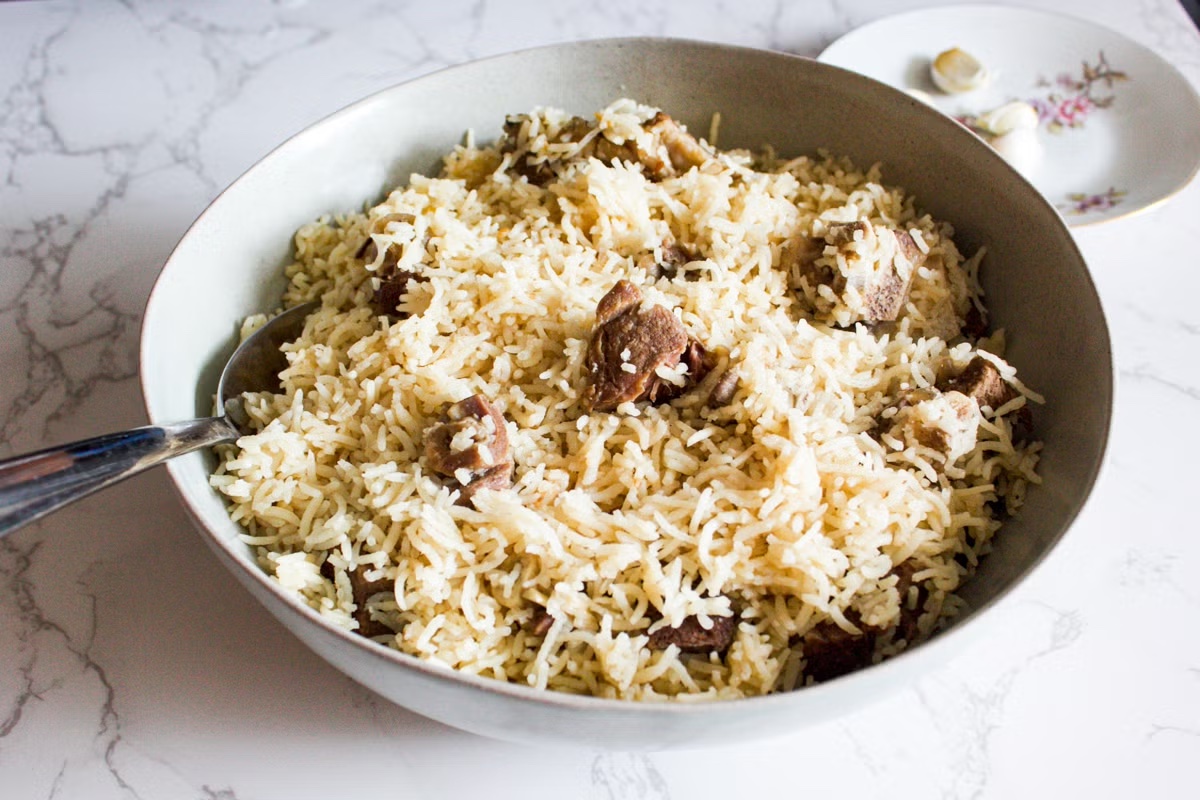
The photo taken on June 21, 2022, shows a receipe for mutton pulao from Maryam Jillani’s book, "Pakistan." (Maryam Jillani via AP)
About 3 pounds bone-in mutton, lamb or beef, cut into 1- to 1 1/2-inch pieces
4 medium yellow onions, halved and thinly sliced
4 whole cloves
2 black cardamom pods
One 2-inch cinnamon stick
1 tablespoon cumin seeds
2 tablespoons garlic paste
2 tablespoons salt, or to taste
1/3 cup vegetable oil
3 cups basmati rice, rinsed in several changes of water
Directions:
Fill a large pot with 8 to 10 cups water. Add the mutton, half of the onions, the whole cloves, cardamom pods, cinnamon stick, cumin seeds, 1 tablespoon of the garlic paste, and 1 tablespoon of the salt. Cover the pot with a tight-fitting lid. Bring to a boil over high heat, then lower the heat to maintain a gentle simmer. Cook the mutton for 1 to 2 hours, depending on the quality of the meat, until it is tender. With a slotted spoon, remove the meat. Strain the solids from the liquid, return the liquid to the pot, and place it by the stove. Discard the solids.
In a clean, heavy-bottomed pot, heat the oil until it begins to shimmer. Add the remaining onions and fry on medium-low heat for 12 to 15 minutes until they are a deep golden-brown color. Take care to not let them burn. Stir in the remaining garlic paste and cook for 30 seconds to 1 minute, until the mixture no longer smells raw.
Increase the heat to high and add the mutton and remaining 1 tablespoon salt. Sear the meat, 5 to 7 minutes, until it has browned slightly. Pour in 6 cups of the strained mutton broth (put any leftover broth in airtight containers and freeze for later use). Taste and add more salt as needed. Bring to a boil, then lower the heat to maintain a simmer. Carefully pour in the rice and let cook for about 10 minutes until the water completely evaporates.
Wrap a tight-fitting lid with a clean kitchen towel and place it securely on the pot. Turn the heat to the lowest possible setting and let the rice steam for at least 10 to 12 minutes until fluffy. Carefully transfer the pulao to a serving platter and fluff with a fork.
Lahsun ki Chutney (Garlic Chutney)
Aida Khan, a London-based entrepreneur and chef, shared her mother’s recipe for this vibrant, punchy lahsun ki chutney. It’s very spicy, so a little goes a long way. Refrigerate this chutney in an airtight container for up to two weeks.
Makes 1 cup
Ingredients:
4 heads garlic, cloves separated and peeled
1 1/2 small red onions, roughly chopped
1/4 cup red chili flakes
1 bird’s eye chile (optional)
1/2 cup vegetable oil
1 teaspoon salt, or to taste
2 teaspoons lemon juice
Directions:
In a food processor, combine the garlic, onions, chile flakes, and bird’s eye chile (if using), and blitz until you have a thick paste.
In a small saucepan, heat the oil over medium heat until it shimmers. Add the garlic and onion paste and salt. Bring it to a simmer, cover the pan, and reduce the heat to low. Cook the chutney for 35 to 40 minutes, stirring occasionally to make sure it doesn’t stick to the pan, until the garlic and onions have caramelized and the chutney’s color deepens.
Remove the pan from the heat. Stir in the lemon juice and serve.
Seviyan (Sweetened Roasted Vermicelli)
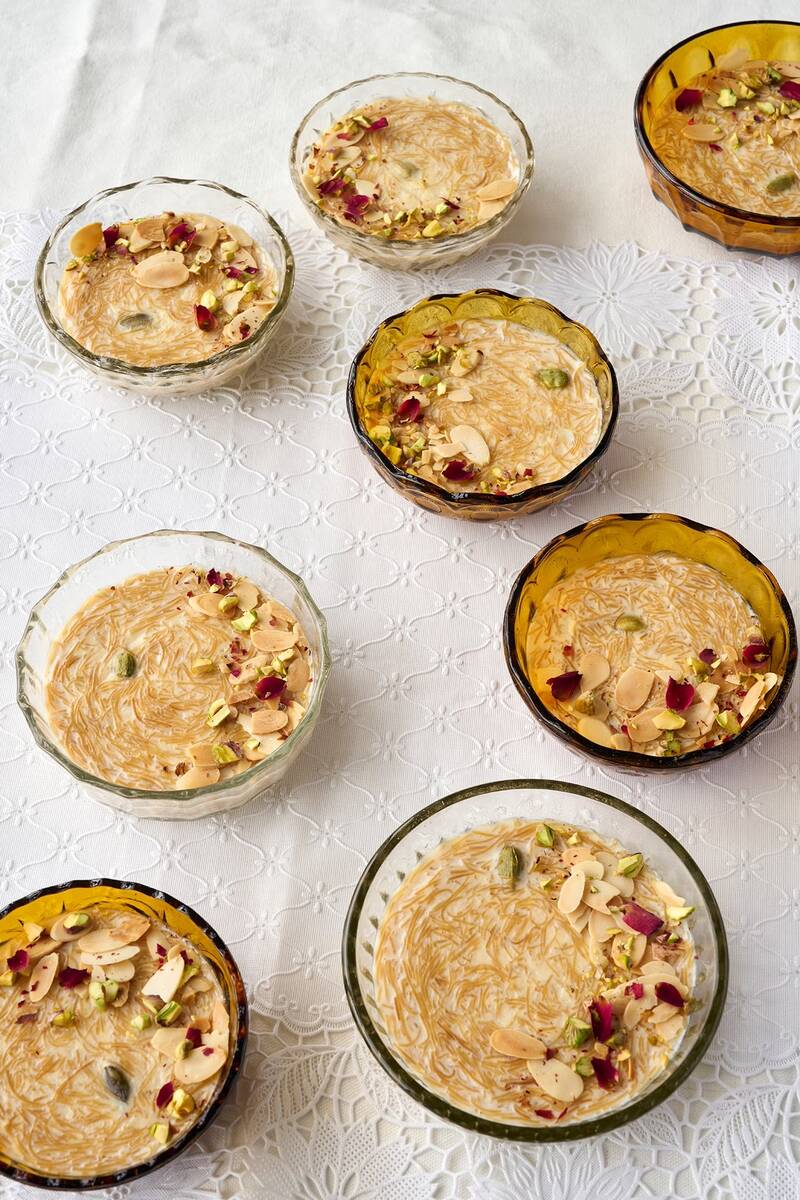
This image shows. dessert receipe called seviyann from the cookbook "Pakistan" by Maryam Jillani. (Sonny Thakur via AP)
Serves 12
Ingredients:
1/4 cup ghee
6 green cardamom pods, cracked
5 1/2 ounces seviyan (semolina vermicelli)
8 1/2 cups full-fat milk
3/4 cup sugar
2 tablespoons blanched sliced almonds
Directions:
In a heavy-bottomed pot over medium heat, melt the ghee and heat it until it begins to shimmer. Add the cardamom pods and fry for about 30 seconds until fragrant. Add the seviyan and fry over medium heat for 2 to 3 minutes until browned slightly. Gradually pour in the milk and bring the pudding to a boil. Lower the heat to medium and stir in the sugar until it dissolves. Keep the milk at a gentle simmer and cook for 15 to 20 minutes, stirring continually, until the milk thickens but the seviyan still has some bite.
Transfer the seviyan to a serving bowl. Top with sliced almonds. Let it cool to room temperature before serving. To store, transfer to an airtight container, refrigerate, and use within 2 to 3 days.