

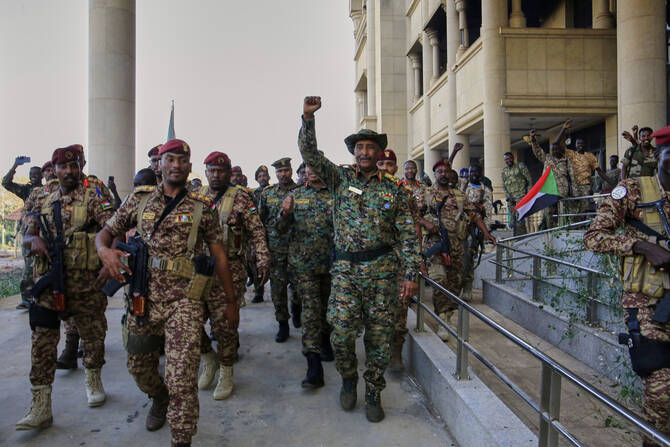


LONDON: Sudan’s de-facto military ruler visited the presidential palace in Khartoum on Wednesday after his forces recaptured the city from a rival paramilitary group. Whether the development will prove to be a decisive moment in the conflict that has devastated the country since April 2023 remains to be seen.
Khartoum, once one of East Africa’s fastest-growing capitals, is today a ghost city, its residents displaced and its basic infrastructure in ruins. “It’s heartbreaking to see people dying in huge numbers from hunger in Sudan, once the breadbasket of East Africa,” Mathilde Vu, a Sudan-based aid worker with the Norwegian Refugee Council, told Arab News.
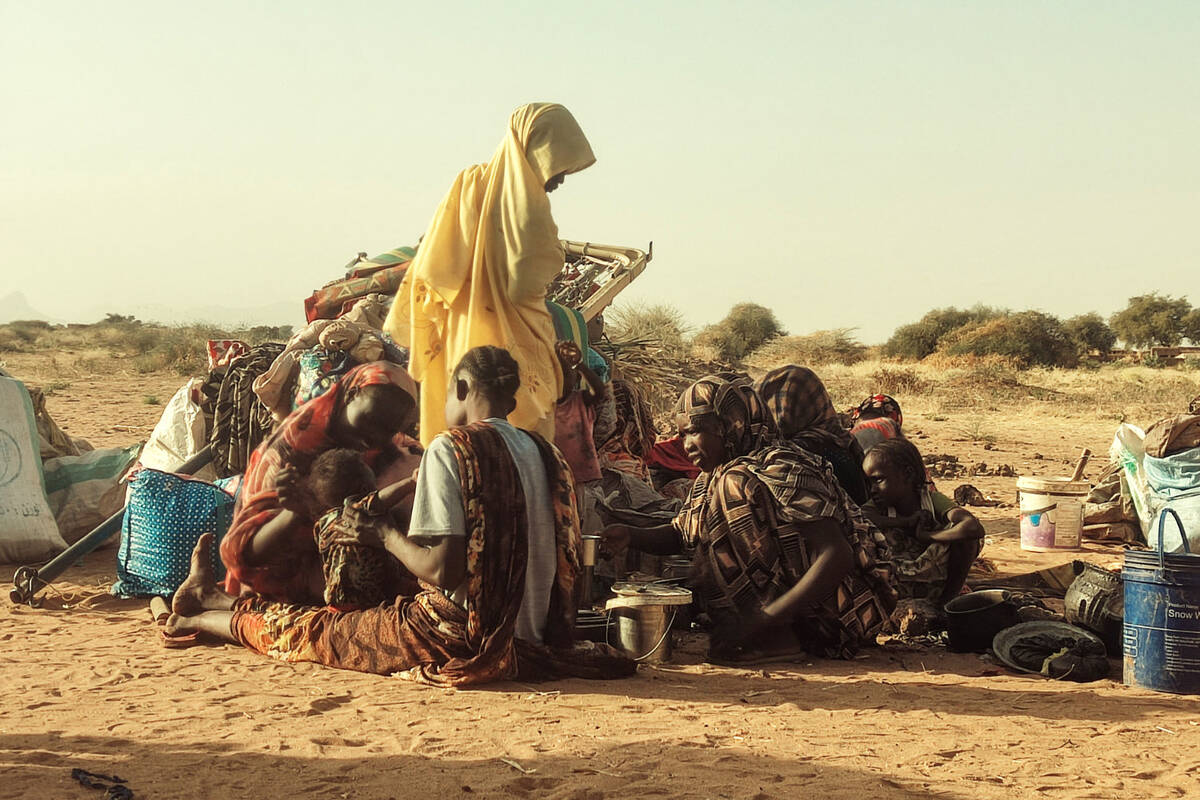
Displaced Sudanese, who fled the Zamzam camp, gather near the town of Tawila in North Darfur on February 14, 2025. (AFP)
According to Vu, the humanitarian response in the capital depends heavily on grassroots efforts. “Local responders are the one hope of Sudan,” she said. “They operate without logos, without any resources, and yet they’ve organized evacuations, run soup kitchens, offered psychosocial support, even repaired water systems.”
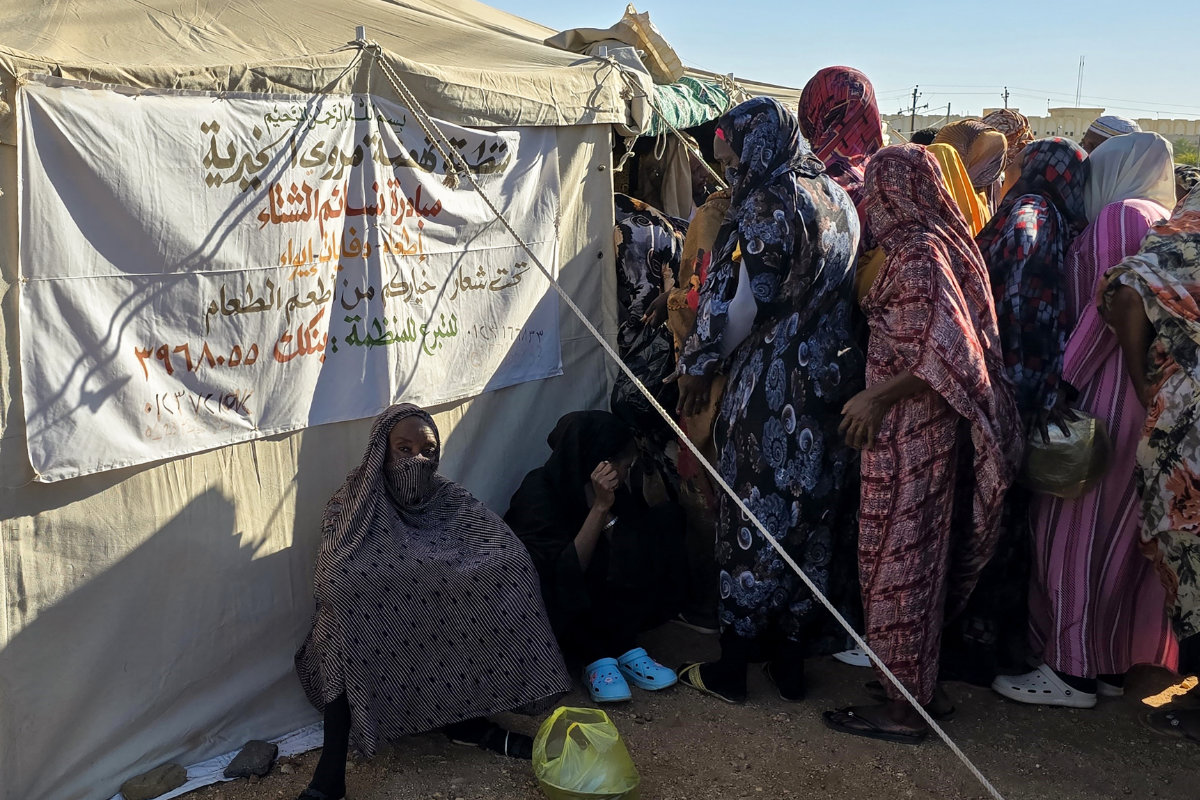
People wait to collect food at a location set up by a local humanitarian organization in Meroe in the country's Northern State, on January 9, 2025. (AFP)
But these efforts are fragile and increasingly under threat, with at least 10 local responders killed during intensified fighting in March. “If one local responder dies, one kitchen is closed. And with that, entire families are left without food,” Vu said.
The Sudanese Armed Forces have in recent days consolidated control not just over the presidential palace, but also the central bank, the airport and the strategic Al-Yarmouk weapons manufacturing complex, having dislodged its adversary, the Rapid Support Forces.
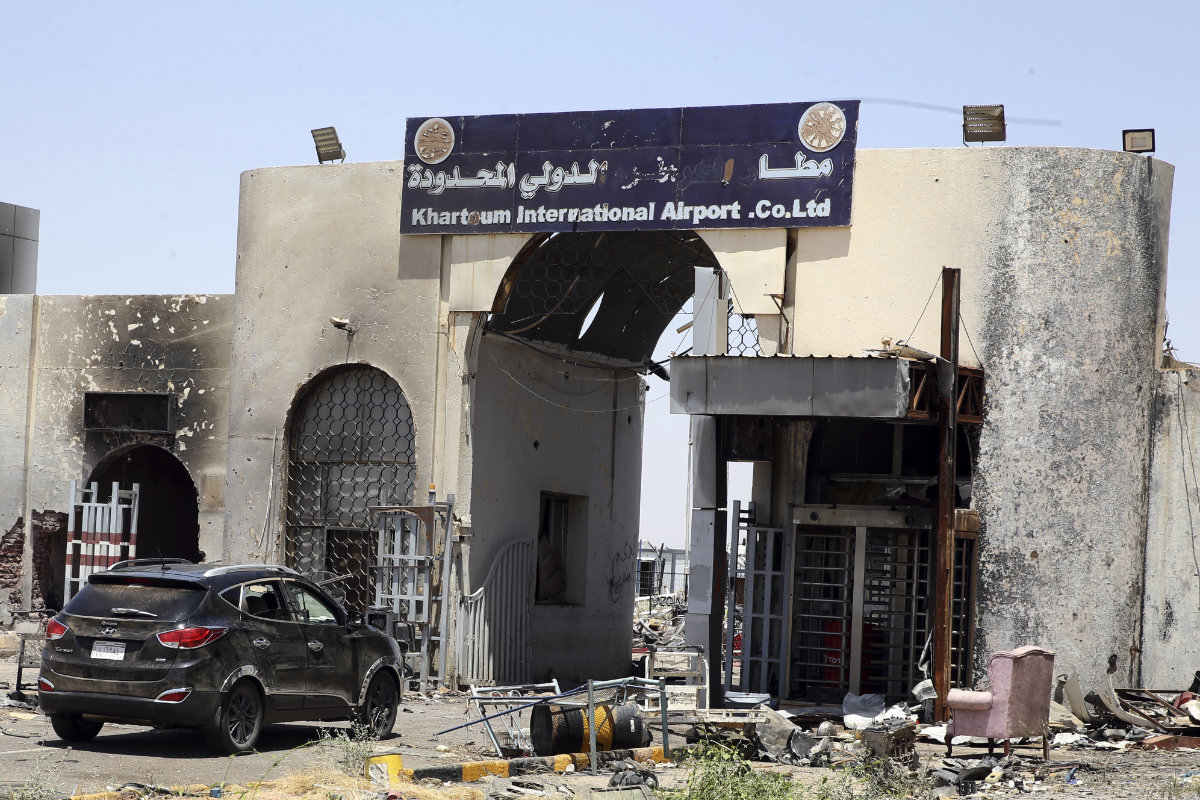
Damage is seen at Khartoum international airport a day after it was recaptured from the paramilitary Rapid Support Forces (RSF) on March 27, 2025. (AP Photo)
These are symbolic gains. But whether they will translate into stability or reconstruction is far from certain.
Abiol Lual Deng, a South Sudanese-American political scientist, cautions against assuming that the SAF’s return to the city signals a new era. “This is a city where people died from starvation and infectious disease — not just bullets,” she told Arab News.
“The fighting disrupted every part of urban life. Shops closed, fuel ran out, water became contaminated, and no one could move because of snipers and shelling.”
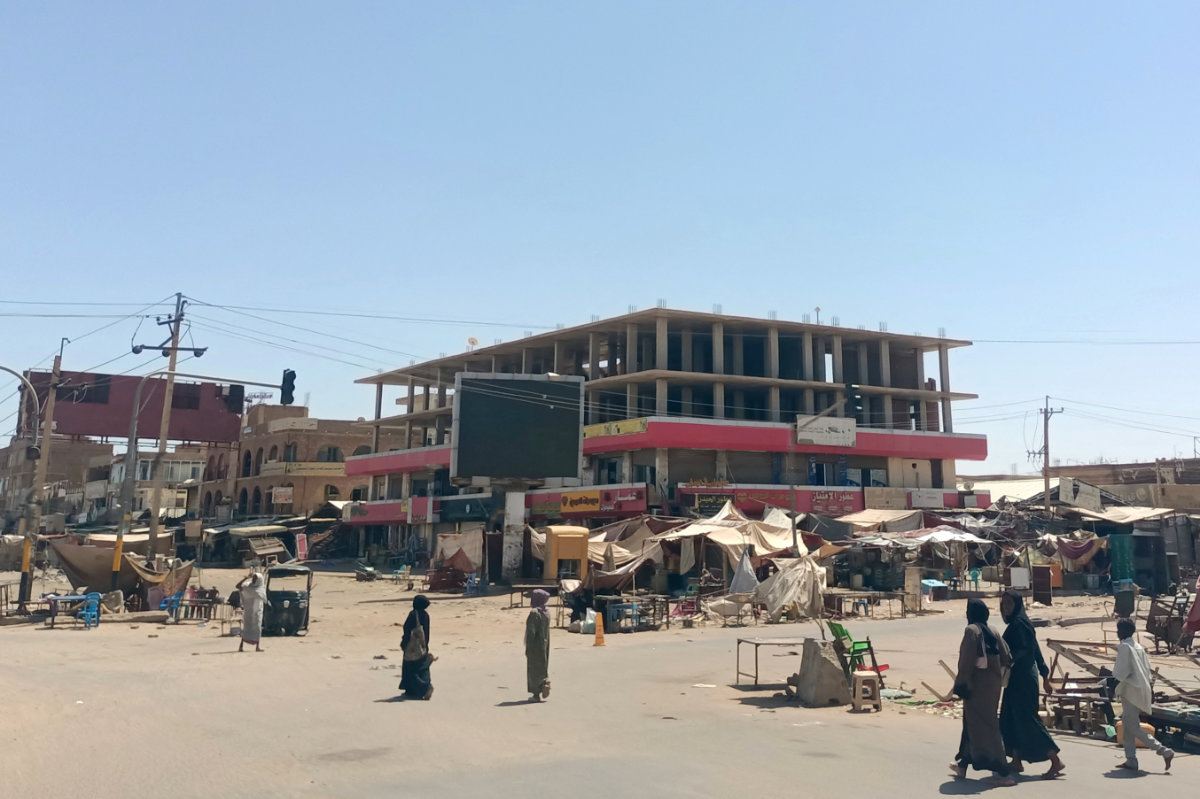
People walk past shuttered shops down a street in a southern neighbourhood of Khartoum on March 29, 2025, after the military recaptured the capital. (AFP)
She added: “Now that SAF has retaken key areas like the airport, we might see some humanitarian aid trickling back in, especially for the wounded and those in critical need. But the scale of need is just unfathomable. Two-thirds of Sudan’s population requires assistance. This is not something a few aid flights can solve.”
The destruction of Khartoum’s civilian infrastructure has been especially devastating because of the city’s role in the national economy. Once home to the country’s key financial institutions, markets, and trade corridors, Khartoum’s paralysis has sent ripples across Sudan and beyond.
The SAF’s ability to maintain control over the capital will depend not just on military gains, but also on whether it can stabilize these essential services.
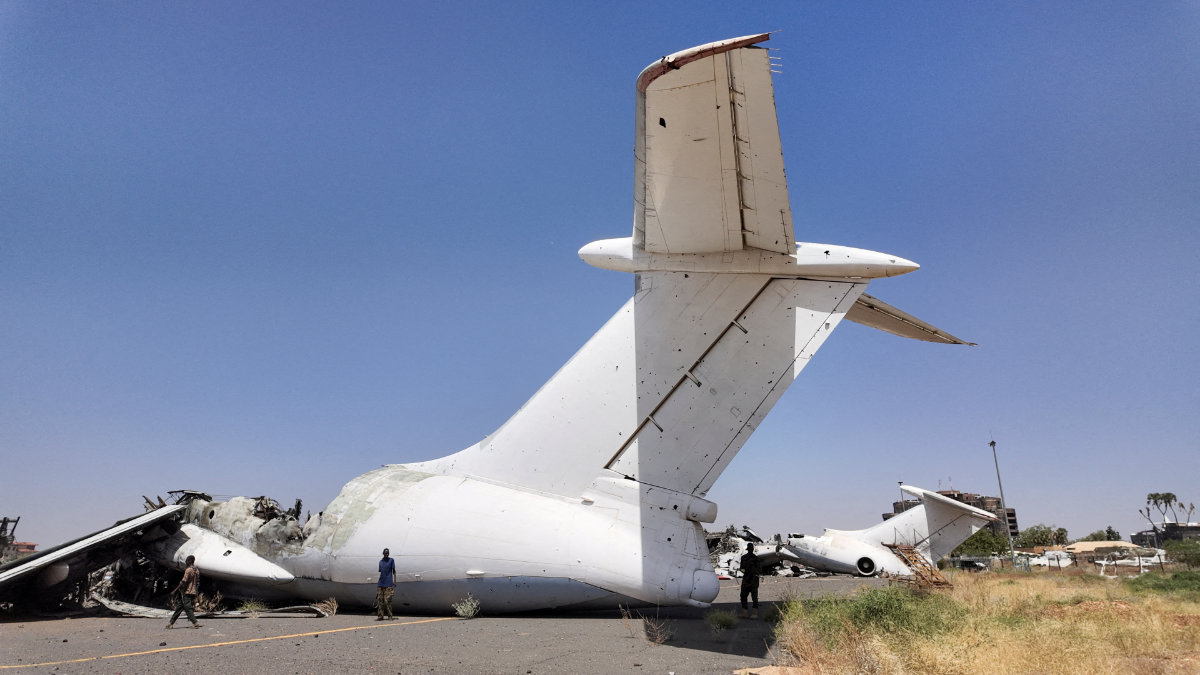
Sudanese army members walk next to wreckage of destroyed planes wreckage at Khartoum Airport on March 27, 2025. (REUTERS)
Dallia Abdelmoniem, a Sudanese analyst with deep experience in civil society networks, points out that many displaced civilians are already planning to return — despite the lack of security guarantees.
“For many Sudanese, they don’t have the privilege to wait for full reconstruction,” she told Arab News. “They’re returning to neighborhoods where there’s no running water, no banks, no healthcare. Civil society will be forced to fill the vacuum again.”
Yet any suggestion that the war is winding down would be premature. Having withdrawn from Khartoum, the RSF has entrenched itself in Darfur and other regions. There, it continues to function as a parallel authority, with reports of its leader, Mohamed Hamdan Dagalo, making diplomatic overtures to regional leaders.
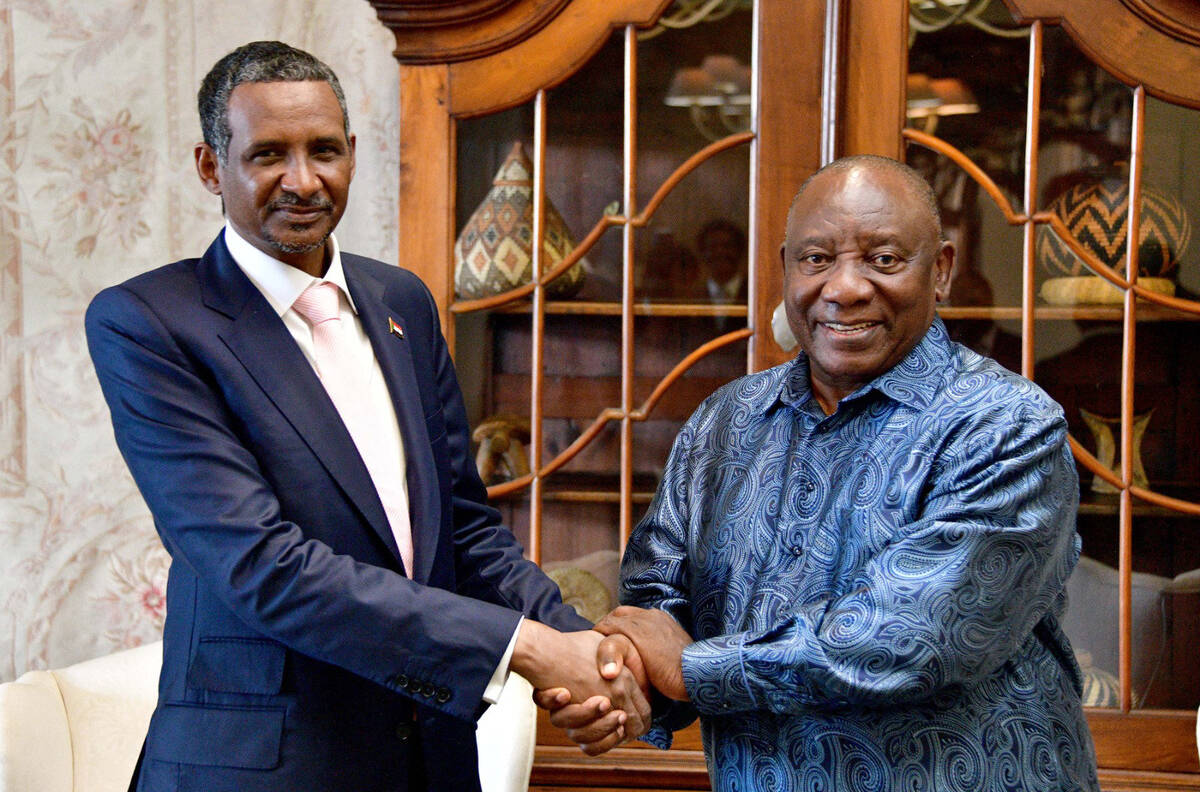
Sudan's paramilitary Rapid Support Forces (RSF) Mohamed Daglo (L) on a visit to South African President Cyril Ramaphosa in Pretoria on January 4, 2024. (Handout photo via AFP
“The RSF has already established a parallel government,” said Deng. “They’re not disappearing. They have a base of power in Darfur, strong cross-border supply networks, and deep-rooted ethnic and regional dynamics backing them.”
She reminds observers that the RSF originated as a paramilitary force — evolving from the Janjaweed militias once backed by the central government — and has long been used to destabilize peripheries under the guise of counterinsurgency.
Abdelmoniem warns the SAF’s territorial gains may embolden it to pursue an outright military solution to the conflict. “Negotiations appear dead in the water,” she said. “SAF has political momentum now, and it would be naive to think that pushing the RSF into Darfur means an end to hostilities. We’re more likely to see Darfur become a sustained war zone again.”
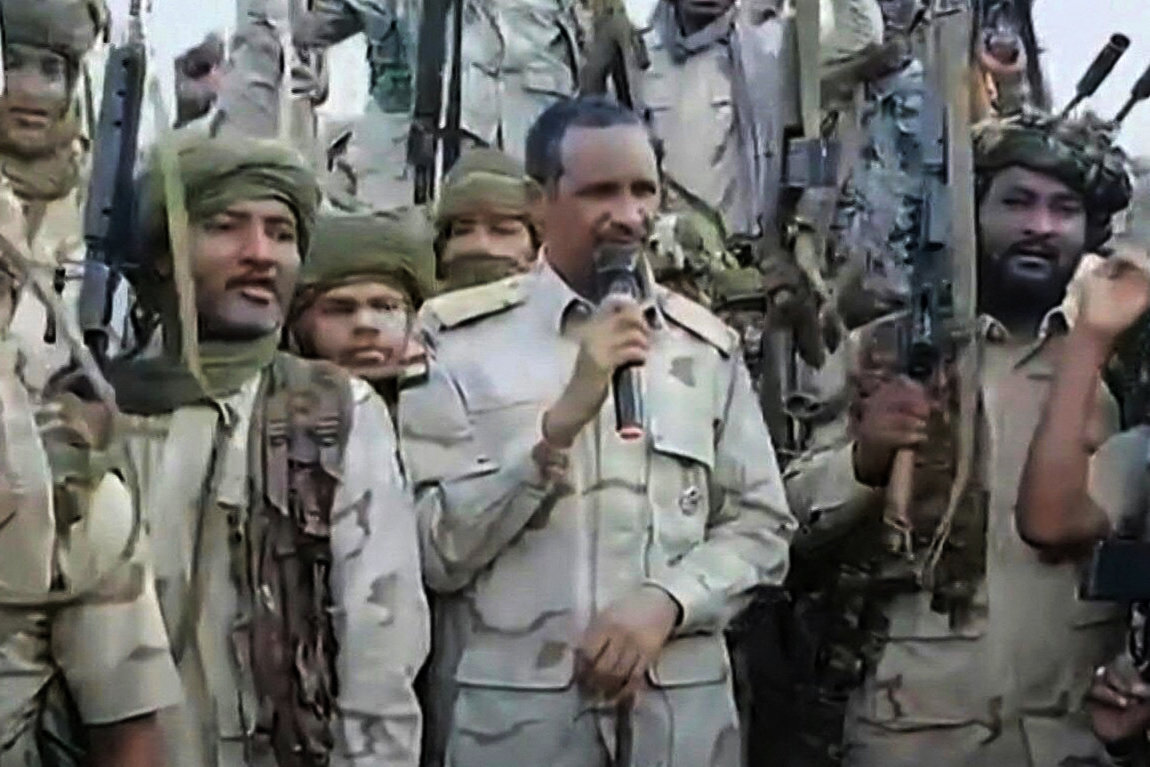
An image grab taken from a handout video posted on the Sudanese paramilitary Rapid Support Forces (RSF) page on X, on July 28, 2023 shows its commander Mohamed Hamdan Dagalo addressing RSF fighters at an undisclosed location. (AFP)
Even as the geography of the conflict shifts, the consequences remain grim for civilians. In Darfur’s Al-Fasher and Zamzam camp, where thousands are trapped in siege-like conditions, Vu describes haunting scenes of families trying to escape on donkeys under the cover of night — leaving everything behind.
“They’re too scared to take cars during the day because they could be arrested or attacked,” she said.
Access to these areas remains severely limited. “We must be realistic about the fact that both sides have obstructed aid,” said Deng. “But RSF-controlled areas are among the worst-hit. Famine conditions are spreading, and aid blockades are used as a weapon of war.”
Still, she says, international humanitarian organizations like the International Committee of the Red Cross and Medecins Sans Frontieres continue to engage with non-state actors.
“Groups like the ICRC or MSF operate based on neutrality, and the RSF knows that,” said Deng. “Sometimes access is possible — but it requires pressure, not just on the ground, but also on the states backing these groups with arms and logistics.”
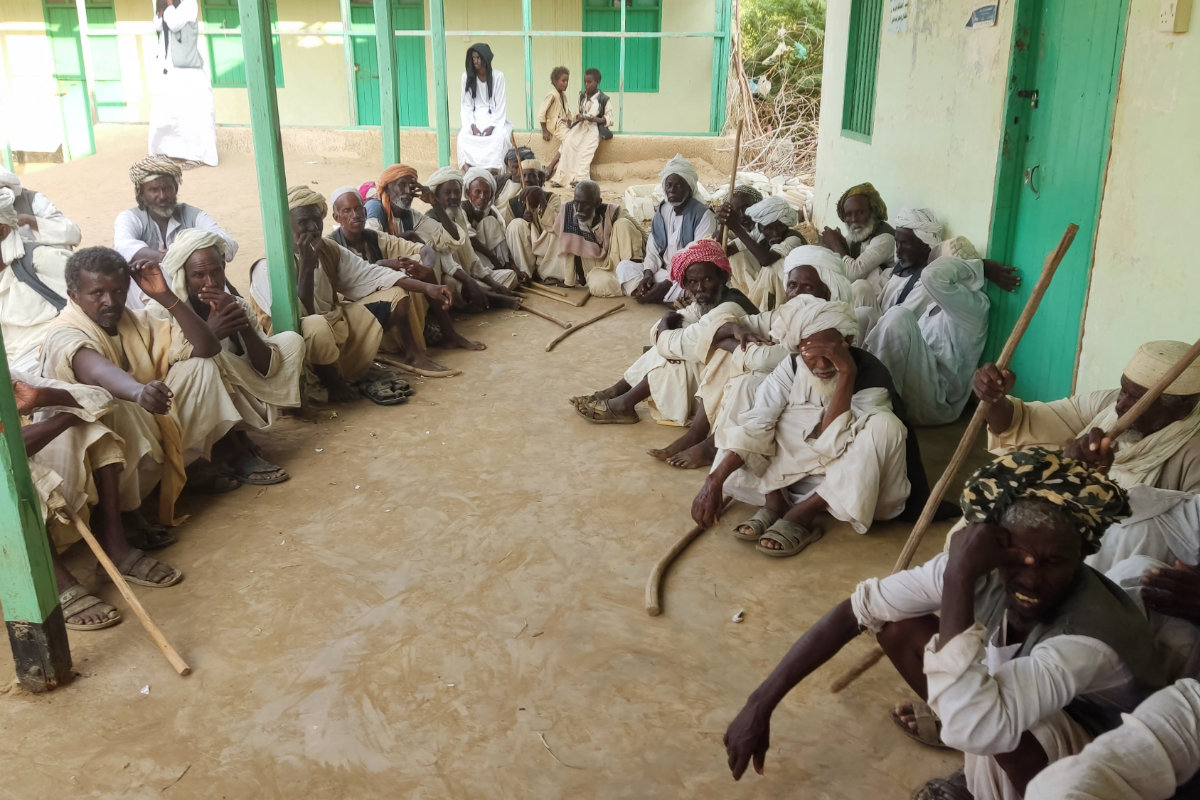
Sudanese wait outside a hospital for medical check-up in Tokar in the Red Sea State in eastern Sudan on October 10, 2024. (AFP)
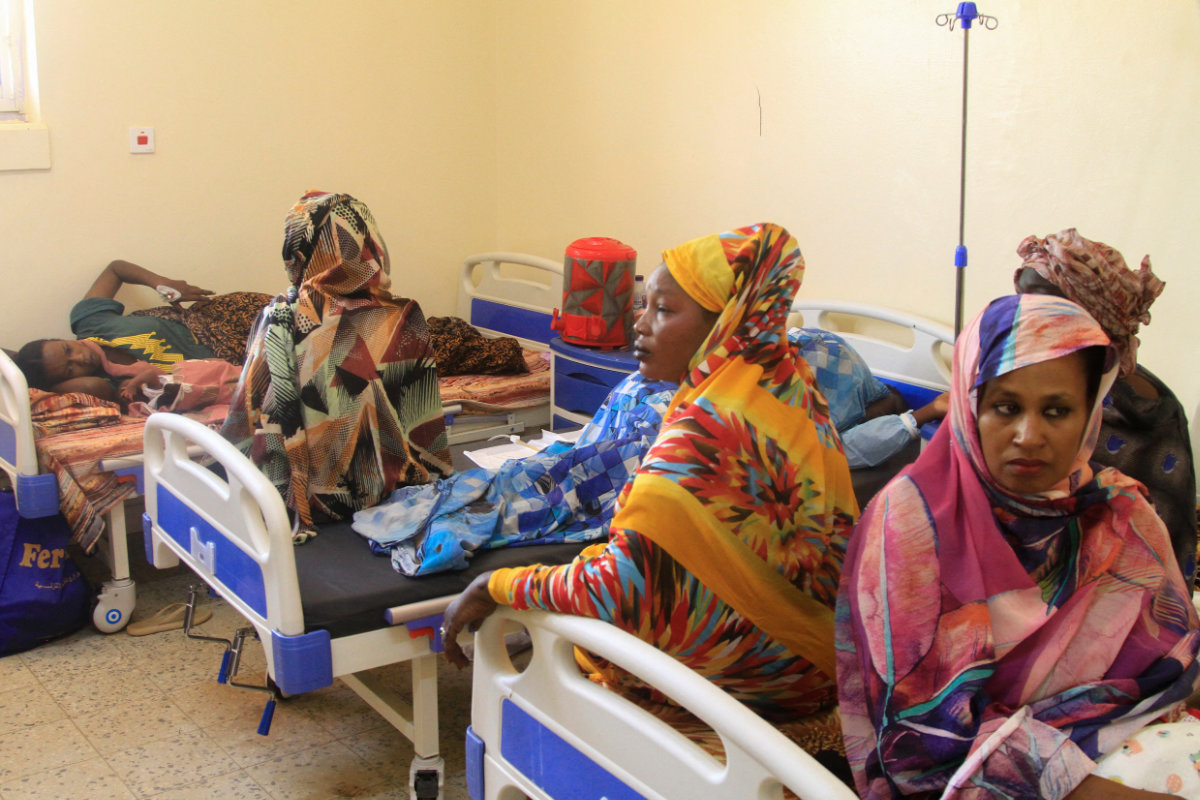
Patients are pictured in one of the rooms of the Saudi hospital in Khartoum's twin-city Omdurman on March 20, 2025 as most hospitals and schools no longer function in the Sudanese capital and its environs due to the ongoing war which broke out in April 2023. (AFP)
That pressure, so far, has been uneven. The international response to Sudan’s war has been widely criticized as inadequate, both in scale and in coherence. Vu underlines that while the world debates political solutions, people are starving.
“Humanitarian access must prevail, whether there is peace or not,” she said. “Aid should have no side.”
Meanwhile, SAF’s internal cohesion remains uncertain. Analysts have long warned of leadership fractures within the army and its allied militias. Deng points out that the SAF and RSF were not always rivals — they once operated in concert, often carrying out atrocities in Darfur and the south together.
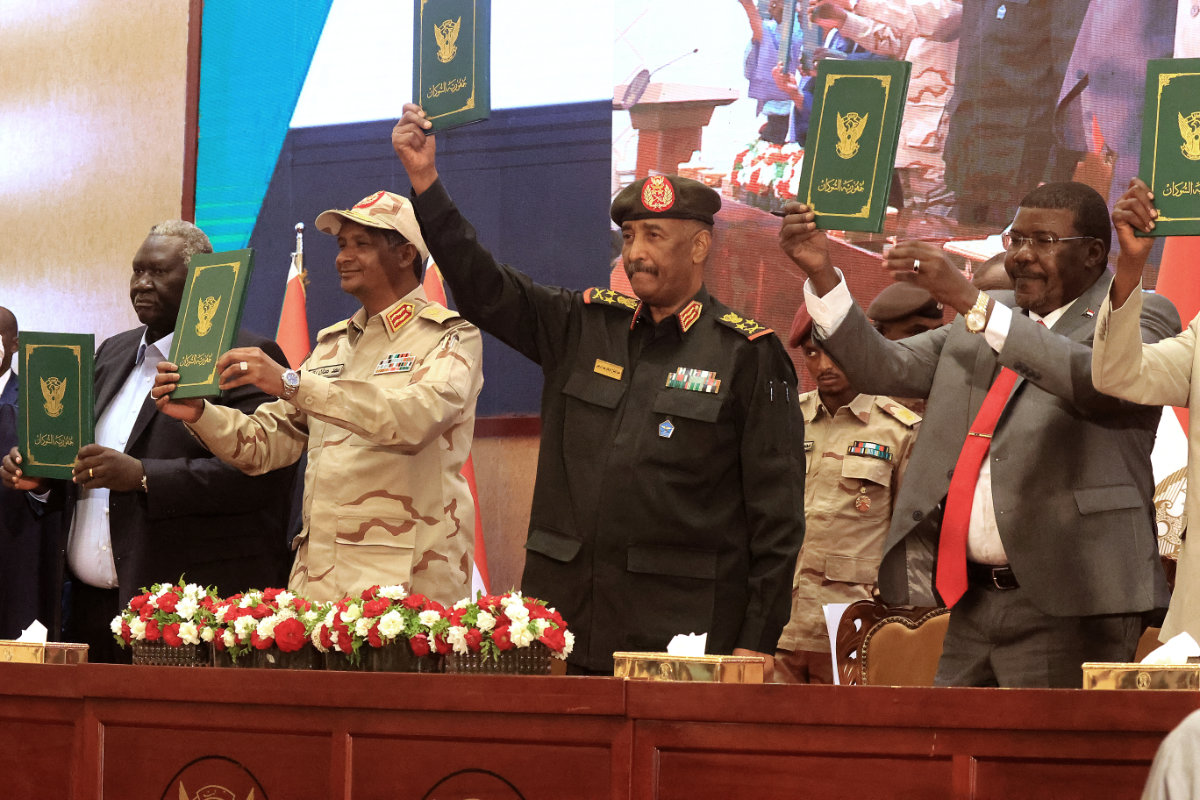
Sudan's Army chief Abdel Fattah al-Burhan (C-R) and paramilitary commander Mohamed Hamdan Daglo (C L) once worked together alongside civilian leaders, even signing on Dec. 5, 2022, a deal aimed at ending a deep crisis that hit Sudan. (AFP)
“Now they’ve turned those tactics on each other,” she said. “That a power vacuum would emerge inside the SAF is no surprise. Everyone wants to be seen as the legitimate inheritor of military authority.”
In the background looms a larger question: How much of Sudan’s war is about Sudan at all? “We’re entering an era where global geopolitics is less about rules and more about resources,” said Deng.
“Sudan manufactures its own weapons. It’s geographically pivotal. And it’s being drawn into the gravitational pull of multiple regional powers. That changes how this war plays out — and how it ends.”
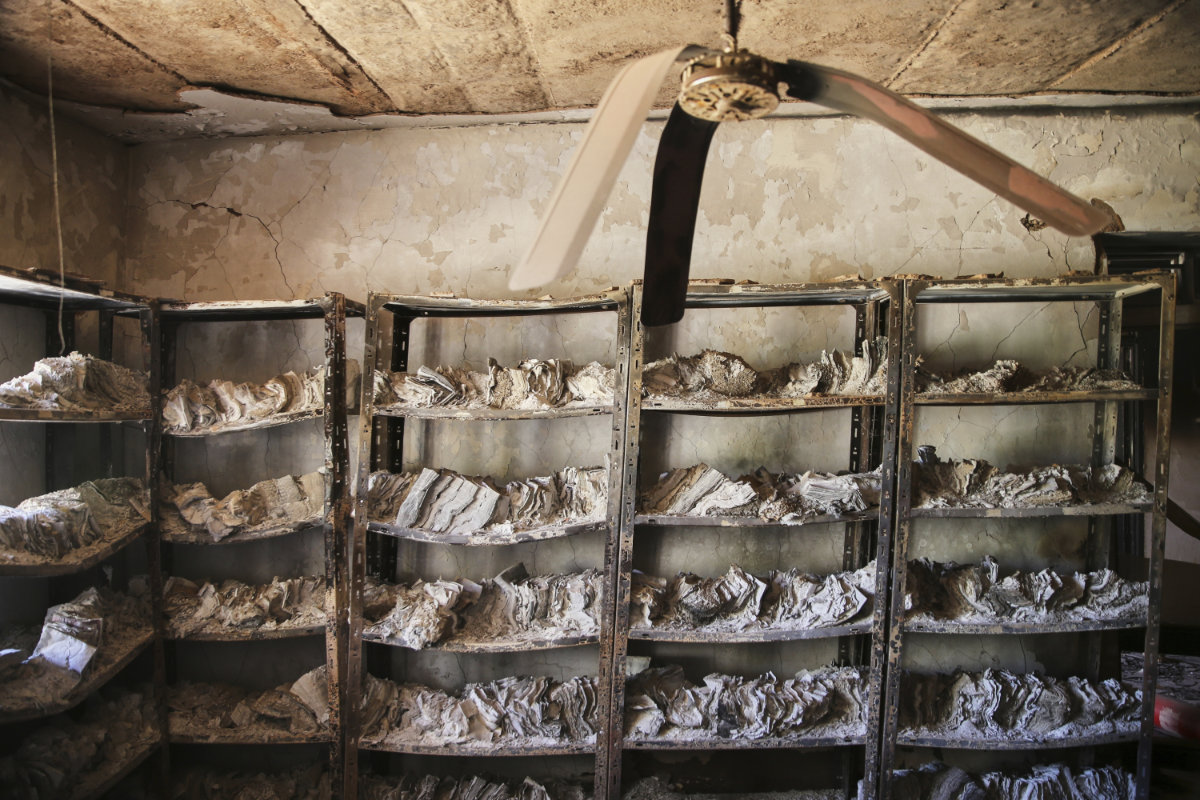
Burned documents are left on shelves inside a charred room at the Republican Palace, following its recapture by Sudan's army from the Rapid Support Forces paramilitary group, in Khartoum, on March 24, 2025. (AP Photo)

Vandalized vintage luxury cars are parked in a hangar at the Republican Palace on March 24, 2025. (AP Photo)
For now, Khartoum remains in limbo. The SAF may have reclaimed the city, but it has not yet won the peace.
Displaced civilians are navigating shattered neighborhoods. Aid might be trickling in, but it is far from sufficient. Across the country, war rages on in new theatres. And a political resolution, however desirable, feels no closer.
“The international community must increase pressure on the warring parties and their backers,” said Vu. “Without strong engagement, especially from countries with influence over SAF and RSF, aid will remain politicized and civilians will keep paying the price.”


