PESHAWAR: An eight-month peace agreement was reached on Saturday between warring factions in Khyber Pakhtunkhwa’s restive Kurram district, with all sides pledging to resolve future disputes through legal means, according to a statement shared by a police official.
Kurram, a tribal district of around 600,000 people bordering Afghanistan, has long been a flashpoint for sectarian violence between Shia and Sunni tribes. Clashes between the two sides have killed more than 150 people since November, while militant attacks and retaliatory violence have claimed even more lives of people and security personnel during months of unrest.
The violence also created a humanitarian crisis, with road blockades cutting off access to food, fuel and life-saving medicines, leading to the reported deaths of dozens of children.
“Representatives of both sides agreed to maintain peace for a period of eight months in order to prevent any kind of conflict in the area and to work toward improving the situation,” said a statement shared by district police spokesperson Riaz Khan.
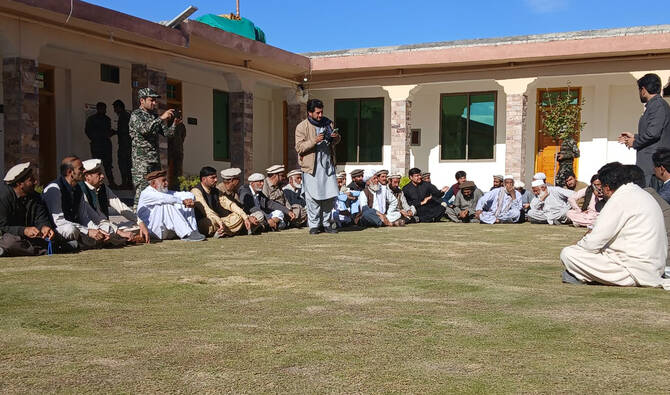
The deal was struck following a jirga, or tribal council, held in the presence of provincial authorities and the local administration.
The agreement builds on the Kohat Agreement, a peace framework developed last year that called for a ceasefire, disarmament, the dismantling of private bunkers in the area and government oversight to ensure sustainable peace.
“Under this agreement, if any untoward incident occurs on the road, legal action will be taken against the responsible party in accordance with the ‘Kohat Agreement,’” the statement continued.
“Both sides pledged that in the event of any incident that could harm peace in the area, they would consult with each other and seek a solution through legal means,” it added.
It was also agreed that the main road through Kurram, closed for months due to violence, will be formally reopened in a joint announcement by the government and state institutions to ease public hardship and facilitate travel.


![]()

Eight-month peace deal reached after deadly clashes in Pakistan’s Kurram district
Short Url
https://arab.news/pjxm9
Eight-month peace deal reached after deadly clashes in Pakistan’s Kurram district
- The peace deal follows last year’s Kohat Agreement, which called for a ceasefire and removal of private bunkers
- Violence in Kurram lasted for months, triggered a humanitarian crisis, cutting off access to food, fuel and medicine
Latest updates


© 2026 SAUDI RESEARCH & PUBLISHING COMPANY, All Rights Reserved And subject to Terms of Use Agreement.