


LONDON: As wake-up calls go, the alarms don’t get much louder.
Allies of the United States see the group chat between top US officials about a planned attack in Yemen that accidentally included a journalist as a jaw-dropping security breach which casts doubt on intelligence-sharing with Washington and the security of joint military operations.
“Scary” and “reckless” was the verdict of one European diplomat about the discussion on the Signal messaging app about strikes on Houthi rebels. Neil Melvin, a security expert at defense think tank the Royal United Services Institute, called it “pretty shocking.”
“It’s some of the most high-ranking US officials seeming to display a complete disregard for the normal security protocols,” he said.
Beyond the security concerns raised by the leaked chat, US officials addressed the country’s trans-Atlantic allies with disdain as Vice President JD Vance complained about “bailing out” Europe and Defense Secretary Pete Hegseth slammed “pathetic” European “freeloading.”
The criticism is another blow to a long-standing relationship already strained by President Donald Trump’s blunt “America First” approach and disregard for friendly nations.
Melvin said that for America’s allies, “the alarm clock’s been ringing for a long time.”
In public, however, European officials insisted all was well in the trans-Atlantic relationship.
“We have a very close relationship with the US on matters of security, defense and intelligence,” said British Prime Minister Keir Starmer’s spokesman, Dave Pares. “They are our closest ally when it comes to these matters, have been for many years and will be for many years to come.”
France’s Foreign Ministry said “the United States is our ally, and France intends to continue its cooperation with Washington, as well as with all its allies and European partners, in order to address current challenges — particularly in the area of European security.”
A growing divide
Since taking office, the Trump administration has halted government funding for programs that support democratic principles around the world and presented a less welcoming face to visitors.
US embassies in at least 17 countries have posted warnings for would-be travelers that engaging in behavior deemed harmful by the government could get them deported. Several European countries have issued warnings about visiting the United States after international tourists were caught up in Trump’s border crackdown.
Trump has appalled allies with his repeatedly stated aim of taking over Greenland — an autonomous Danish territory that Vance and second lady Usha Vance are due to visit this week — and his desire to make Canada the 51st state.
Canadian Prime Minister Mark Carney said his country has to “take greater ownership” of its own defense in the face of threats: “We have to look out for ourselves.”
Nathalie Loiseau, a member of the European parliament, told the BBC that she was “flabbergasted” by the breach.
“If I was (Russian President) Vladimir Putin, I would feel jobless. Russia has nothing more to do. … You don’t even need to spy on the US administration. They leak by themselves,” she said.
US reliability questioned
The European diplomat, who spoke on condition of anonymity to discuss sensitive matters, suggested the security breach could make allies question the reliability of the US as a partner.
The diplomat expressed hope that the Signal lapse was due to a lack of experience in government rather than a deliberate disregard for security.
Asked if he had concerns about sharing intelligence with the US after the Signal incident, Carney said “it’s a serious, serious issue and all lessons must be taken.” He said it would be important to see “how people react to those mistakes and how they tighten them up.”
Britain could be particularly exposed by US security breaches. Its intelligence network is entwined with the US in the Five Eyes alliance, and the countries’ militaries work more closely than those of almost any other nations.
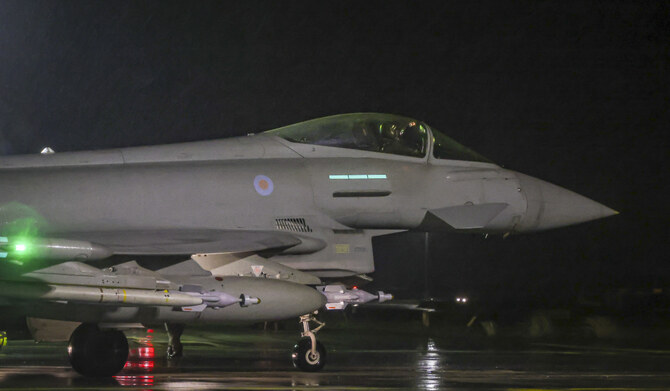
Britain’s Royal Air Force provided air-to-air refueling for US planes during the strike on the Houthis, but UK Armed Forces Minister Luke Pollard insisted British personnel had not been put at risk by the breach.
“We’ve got high confidence that the measures that we have got with our allies, including the United States, remain intact,” he told lawmakers.
Ed Davey, the leader of Britain’s opposition Liberal Democrats, said the lapse showed the Trump administration can’t be trusted to protect its own intelligence and “it could only be a matter of time until our own intelligence shared with them is also leaked.”
“This could put British lives at risk,” he said.
Alex Clarkson, a lecturer in European and international studies at King’s College London, said “the professionals and old hands” who “contained the damage” during Trump’s first term are largely gone.
“So what we’re having now is … a manifestation of tendencies that were held in check that we already saw in the first round,” he said.
American frustration
The US has underpinned European security since World War II, and Trump is not the first president to bristle at the burden.
“From the Obama administration (onward), there’s been quite some frustrations in the US security apparatus about the failure of the Europeans … to step up,” Melvin said.
Trump has gone much further than his predecessors in upending the decades-old security arrangements. He has long contended the US needs to completely rethink its relationship with the rest of the world, saying other countries have been “taking advantage” of the nation’s military might by not paying enough for their own defense.
Trump has praised autocrats including Putin and sent chills through NATO during last year’s election campaign with his comment that Russia should “do whatever the hell it wants” to members that don’t meet military spending targets.
“There’s a real sense of divorce, that America is not just disinterested in the trans-Atlantic alliance but views Europe fundamentally as an adversary,” said Max Bergmann, a former State Department official who now works at the Center for Strategic and International Studies.
“It’s very clear at this point, abundantly clear, that it will be next to impossible to count on the United States for the cause of defending democracy in the world,” said Kevin Casas-Zamora, secretary-general of the pro-democracy group International IDEA.
NATO leaders point out that Trump’s criticism and the war in Ukraine have led to a majority of member states meeting the target of spending at least 2 percent of their gross domestic product on defense.
Trump’s reelection and rapprochement with Putin has hastened European military plans, with nations scrambling to ramp up weapons production and create their own security structures – including a UK- and France-led “coalition of the willing” to help guarantee a future ceasefire in Ukraine.
Clarkson said Europe has more strength than many give it credit for, and severing the trans-Atlantic bond would hurt the US, too.
“One shouldn’t underestimate European military industrial capacity,” he said. “There are all kinds of things that can go wrong … but there is an element here also that the Americans are awakening a sleeping giant.”


