WWF, global biopharma giant join hands to protect freshwater resources in Pakistan, India

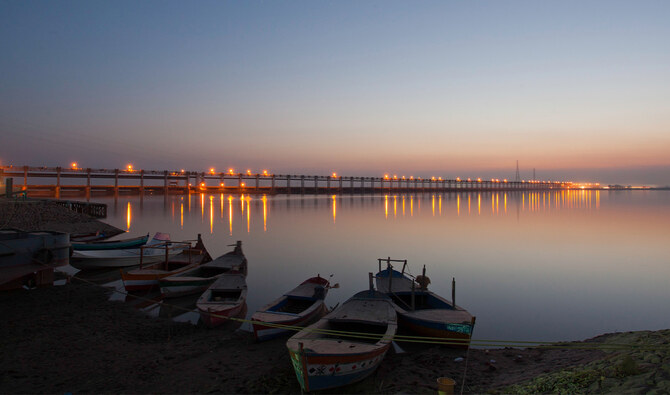
The picture shared by WWF-Pakistan on March 25, 2025, shows picture of River Indus and Taunsa barrage. (WWF-Pakistan)
Short Url
Updated 25 March 2025
Follow

WWF, global biopharma giant join hands to protect freshwater resources in Pakistan, India

  • Freshwater ecosystems have seen an alarming 85 percent decline in wildlife since 1970, WWF says
  • Pakistan’s Indus Basin, in particular, faces threats from pollution, dams and climate change

ISLAMABAD: The World Wide Fund for Nature (WWF) and the GSK global biopharma giant have launched a five-year initiative to conserve and restore freshwater resources in water-stressed regions of Pakistan and India, Pakistani state media reported on Tuesday.
The collaboration, running until 2030, will focus on the Indus River Basin in Pakistan and the Sutlej River Basin in India, key areas for medicine production. The initiative aims to replenish over 300,000 cubic meters of water and benefit more than 100,000 people by implementing nature-based solutions.
Key efforts include restoring freshwater habitats, protecting endangered species like river dolphins and otters, and promoting sustainable water management in local communities and farms, the Associated Press of Pakistan (APP) news agency reported.
“Ensuring sustainable water supply is critical to delivering life-saving medicines,” Regis Simard, president of global supply chain of GSK that operates three manufacturing sites in these regions, was quoted as saying by the APP.
“Partnering with WWF allows us to drive meaningful change in these vulnerable ecosystems.”
Freshwater ecosystems have seen an alarming 85 percent decline in wildlife populations since 1970, according to WWF’s Living Planet Report. The Indus Basin, in particular, faces threats from pollution, dams and climate change.
The partnership aligns with global biodiversity goals, including the Freshwater Challenge that seeks to restore 300,000 kilometers of rivers and 350 million hectares of wetlands by 2030.
“Pakistan faces severe water scarcity and pollution,” said Hammad Naqi Khan, director-general of WWF-Pakistan, highlighting the urgency of water conservation.
“Companies like GSK are leading by example not just reducing water use but actively replenishing resources.”


Pakistan urges concessional finance for developing nations to boost clean energy security

Updated 6 sec ago
Follow

Pakistan urges concessional finance for developing nations to boost clean energy security

  • Pakistan has emerged as one of world’s fastest growing solar markets, with 12GWs of off-grid and 6GWs of net-metered capacity in 2025
  • PM’s aide says Islamabad remains committed to Paris Agreement, looks for continued support in building a resilient and low-carbon future

ISLAMABAD: Pakistan has urged international partners to scale up concessional financing for developing countries, the country’s Press Information Department (PID) said on Sunday, citing an aide to Prime Minister Shehbaz Sharif.

The call was made by Sharif’s coordinator on climate change, Romina Khurshid Alam, while delivering Pakistan’s national statement at the 16th International Renewable Energy Agency (IRENA) Assembly in Abu Dhabi.

Pakistan has emerged as one of the world’s fastest growing solar markets, with 12 gigawatts (GWs) of off-grid and over 6GWs of net-metered solar capacity by the end of 2025. Last fiscal year, renewables accounted for a historic 53 percent of total electricity generation, according to Alam.

The prime minister’s aide stressed that affordable funding for developing nations is critical to accelerating their transition to clean energy and strengthening energy security amid rising climate and economic challenges.

“Alam reaffirmed Pakistan’s target of achieving 60 percent renewables in the power mix by 2030,” the PID said in a statement.

“In her call to action, she urged IRENA and Member States to increase concessional finance for developing nations, treat technologies such as energy storage and green hydrogen as global public goods, and strengthen regional cooperation for shared energy security.”

IRENA is a global intergovernmental agency for energy transformation that serves as the principal platform for international cooperation, supports countries in their energy transition, and provides state of the art data and analyzes on technology, innovation, policy, finance and investment. Its membership comprises 170 countries and the European Union (EU).

The 16th session of the IRENA Assembly is taking place on Jan. 10-12 in Abu Dhabi and focuses on the theme of “Powering Humanity: Renewable Energy for Shared Prosperity.” The session has gathered global leaders and energy decision-makers to discuss strategies and underline necessary actions for the acceleration of renewable energy across countries, regions, and the world, driving economic inclusion, equity, and human well-being.

Alam shared that Pakistan is taking action against energy poverty through initiatives like the Punjab Solar Panel Scheme 2026, which provides free or subsidized systems to low-income households.

She highlighted how distributed solar kits have restored power and livelihoods in flood-affected communities and offer a replicable model for climate-resilient recovery.

“Pakistan remains fully committed to the Paris Agreement and looks to IRENA for continued technical and financial support in building a resilient, inclusive, and low-carbon future,” Alam said.

Adopted in 2015 to combat climate change, the Paris Agreement binds nations to hold “the increase in the global average temperature to well below 2°C above pre-industrial levels” and pursue efforts “to limit the temperature increase to 1.5°C above pre-industrial levels.”