

Thai firms eyeing investment in Saudi Arabia’s Qassim region, ambassador reveals 

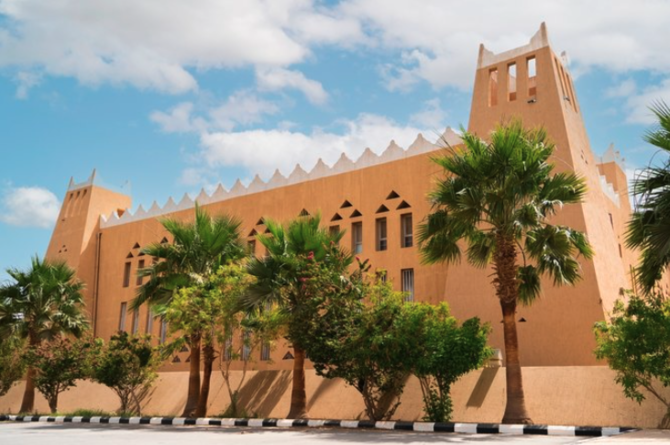
In 2023, Qassim unveiled new investment opportunities as it aimed to spur development and stimulate the region’s economy.   
Short Url
Updated 25 March 2025
Follow

Thai firms eyeing investment in Saudi Arabia’s Qassim region, ambassador reveals 

RIYADH: Several Thai companies plan to invest in Saudi Arabia’s Qassim region, recognizing it as an attractive business hub, according to the country’s ambassador to the Kingdom.

Darm Boontam highlighted Qassim’s position as Saudi Arabia’s “food basket” and its role as a key trade and transport link connecting Riyadh, Madinah, and Hail, making it an appealing destination for Thai investors, he told Al-Eqtisadiah. 

Located near the geographic center of the Arabian Peninsula, the region produces approximately 1.22 million tonnes of agricultural products annually.

It is also home to the only bauxite mine in the Middle East, with estimated reserves of 183.4 million tonnes, making it a key player in the mining sector.

The investment push aligns with efforts to strengthen economic ties between Thailand and Saudi Arabia after both countries fully restored diplomatic relations in 2022. Since then, bilateral trade and investment have surged to $8.8 billion. 

According to Al-Eqtisadiah, Ambassador Boontham said the two sides are working on the possibility of concluding a free trade agreement between Thailand and the Gulf Cooperation Council in 2025, which would boost bilateral trade and investment. 

In 2024, Thailand’s key exports to Saudi Arabia included automobiles, which accounted for 57 percent of the total, followed by wood products and rubber and its derivatives at 7 percent and 5.6 percent, respectively, bringing the total export value to $2.8 billion, according to the top official. 

Conversely, Thailand primarily imported crude oil and petroleum products from Saudi Arabia, which made up a significant portion of the $5.56 billion total. 

In May, a delegation of over 100 Saudi companies visited Thailand to explore investment opportunities, underscoring the growing trade and investment relationship between the two nations. 

Saudi Minister of Commerce Majid bin Abdullah Al-Qasabi led the delegation, and held discussions with Thai leaders, including Prime Minister Srettha Thavisin. Both sides agreed to enhance cooperation in areas including agriculture, tourism, and manufacturing.

According to Boontam, Thai businesses across diverse industries — including food manufacturing, health and wellness, jewelry, and cosmetics — are increasingly interested in establishing a presence in Saudi Arabia. 


Saudi POS spending jumps 28% in final week of Jan: SAMA

Updated 06 February 2026
Follow

Saudi POS spending jumps 28% in final week of Jan: SAMA

RIYADH: Saudi Arabia’s point-of-sale spending climbed sharply in the final week of January, rising nearly 28 percent from the previous week as consumer outlays increased across almost all sectors. 

POS transactions reached SR16 billion ($4.27 billion) in the week ending Jan. 31, up 27.8 percent week on week, according to the Saudi Central Bank. Transaction volumes rose 16.5 percent to 248.8 million, reflecting stronger retail and service activity. 

Spending on jewelry saw the biggest uptick at 55.5 percent to SR613.69 million, followed by laundry services which saw a 44.4 percent increase to SR62.83 million. 

Expenditure on personal care rose 29.1 percent, while outlays on books and stationery increased 5.1 percent. Hotel spending climbed 7.4 percent to SR377.1 million. 

Further gains were recorded across other categories. Spending in pharmacies and medical supplies rose 33.4 percent to SR259.19 million, while medical services increased 13.7 percent to SR515.44 million. 

Food and beverage spending surged 38.6 percent to SR2.6 billion, accounting for the largest share of total POS value. Restaurants and cafes followed with a 20.4 percent increase to SR1.81 billion. Apparel and clothing spending rose 35.4 percent to SR1.33 billion, representing the third-largest share during the week. 

The Kingdom’s key urban centers mirrored the national surge. Riyadh, which accounted for the largest share of total POS spending, saw a 22 percent rise to SR5.44 billion from SR4.46 billion the previous week. The number of transactions in the capital reached 78.6 million, up 13.8 percent week on week. 

In Jeddah, transaction values increased 23.7 percent to SR2.16 billion, while Dammam reported a 22.2 percent rise to SR783.06 million. 

POS data, tracked weekly by SAMA, provides an indicator of consumer spending trends and the ongoing growth of digital payments in Saudi Arabia.  

The data also highlights the expanding reach of POS infrastructure, extending beyond major retail hubs to smaller cities and service sectors, supporting broader digital inclusion initiatives.  

The growth of digital payment technologies aligns with Saudi Arabia’s Vision 2030 objectives, promoting electronic transactions and contributing to the Kingdom’s broader digital economy.