Pakistan charges Baloch activist with ‘terrorism’

Pakistan's ethnic minority activist Mahrang Baloch (C) addresses the media at Karachi Press Club in Karachi on October 8, 2024. (AFP/File)
Short Url
Updated 23 March 2025
Follow

Pakistan charges Baloch activist with ‘terrorism’

  • Mahrang Baloch staged sit-in in Quetta on Friday to demand release of members of her group allegedly detained by security forces
  • Pakistan’s military strongly denies Baloch’s accusations of carrying out extrajudicial killings, enforced disappearances of Baloch persons

QUETTA: Pakistan on Sunday charged a Baloch rights activist with terrorism, sedition and murder after she led a demonstration which ended in the death of three protesters, according to police documents.

Mahrang Baloch, one of Pakistan’s most prominent human rights advocates, has long campaigned for the Baloch ethnic group, which claims it has been targeted by Islamabad with harassment and extrajudicial killings.

Pakistan’s military and the central government in Islamabad strongly refute her allegations. 

Pakistan has been battling a separatist insurgency in Balochistan for decades, where militants target state forces and foreign nationals in the mineral-rich southwestern province bordering Afghanistan and Iran.

On Friday, she and other activists took part in a sit-in protest outside the University of Balochistan in the provincial capital of Quetta.

They demanded the release of members of their support group, whom they allege had been detained by security agencies.

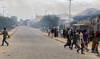
Police launched a pre-dawn raid on Saturday, arresting Baloch and other activists, during which at least three protesters died. Both sides blamed each other for the deaths.

Mary Lawlor, the United Nations special rapporteur on human rights defenders, said she was “very concerned” at Baloch’s arrest.

Baloch and other protesters have been charged with terrorism, sedition and murder, according to the police charge sheet seen by AFP.

Hamza Shafqaat, a senior administrative official in Quetta, said that Baloch and other activists were held under public order laws.

Her lawyer, Imran Baloch, confirmed she was detained in a jail in Quetta.

Baloch was barred from traveling to the United States last year to attend a TIME magazine awards gala of “rising leaders.”

Protests among the Baloch are often led by women. Baloch, now in her 30s, began her activist career aged 16 when her father went missing in what his supporters said was an alleged “enforced disappearance.” His body was found two years later.

Earlier in March, the separatist Baloch Liberation Army (BLA) — which accuses outsiders of plundering the province’s natural resources — launched a dramatic train siege that officials said ended in around 60 deaths, half of whom were separatists behind the assault.


Pakistan, Japan discuss boosting trade, investment and cooperation in key sectors

Updated 8 sec ago
Follow

Pakistan, Japan discuss boosting trade, investment and cooperation in key sectors

  • The Pakistani side highlighted various opportunities in sectors minerals and mining, agricultural and agri-food products, and IT sectors
  • The development comes as Pakistan steps up economic diplomacy to expand trade, investment ties after emerging from a financial crisis

ISLAMABAD: Pakistan and Japan have held talks on improving bilateral trade and investment and expanding cooperation in key sectors, Pakistan’s Press Information Department said on Saturday.

Both countries held the 8th Pakistan–Japan Government–Business Joint Dialogue and the Pakistan Business Forum in Tokyo on Friday, marking the first convening of the dialogue in the Japanese capital since Dec. 2018.

The dialogue was co-chaired by Prime Minister Shehbaz Sharif’s aide on commerce Rana Ihsaan Afzal Khan and Takuo Komori, Japan’s parliamentary vice-minister of economy, trade and industry, according to the PID.

The two sides exchanged views on strengthening bilateral economic relations, with a focus on improving the trade and investment environment and advancing practical cooperation.

“The Pakistani side outlined Pakistan’s economic priorities and highlighted opportunities for collaboration in sectors such as minerals and mining, agricultural and agri-food products, and information technology,” the PID said in a statement.

“The Japanese side shared perspectives on the operating environment for Japanese companies in Pakistan and discussed areas where continued engagement and follow-up could further facilitate business activity.”

Pakistan steps up economic diplomacy to expand trade ties and attract foreign capital after emerging from a prolonged financial crisis that nearly pushed it into default in mid-2023. Islamabad has since set up the Special Investment Facilitation Council (SIFC), a civil-military body designed to cut red tape and provide a one-window operation for businesses, as it navigates a long path to economic recovery under a $7 billion International Monetary Fund (IMF) program.

Pakistan and Japan established diplomatic and economic relations in 1952. Since then, Japan has been a major development partner, financing infrastructure such as roads, power plants and water systems, while extending technical assistance and yen loans.

The Pakistan–Japan Government–Business Joint Dialogue brought together senior officials and private-sector representatives from both countries, including members of the Pakistan–Japan Business Forum (PJBF) and the Japan–Pakistan Business Co-operation Committee (JPBCC).

Participants reaffirmed the importance of sustained government-to-government engagement, supported by close coordination with the private sector, to advance mutually beneficial economic cooperation between Pakistan and Japan, according to the statement.

Following the Joint Dialogue, the Pakistan Business Forum, co-organized by the Embassy of Pakistan in Tokyo and the Japan External Trade Organization (JETRO), was held in Tokyo that was attended by Japanese and Pakistani business leaders.

The Forum featured selected sectoral presentations highlighting practical cooperation between Japanese and Pakistani partners. It included a presentation by the Trade and Investment Counsellor of the Embassy of Pakistan in Tokyo on “From Trade to Investment: Building Japan–Pakistan Joint Value Chains.”

“The Forum concluded with closing remarks by Mr. Abdul Hameed, Ambassador of Pakistan to Japan, who highlighted the importance of sustained engagement, trust-building, and long-term partnership in advancing Pakistan–Japan economic cooperation,” the PID added.