

Saudi project restores historic Al-Hosn Al-Asfal Mosque in Asir

1 / 3
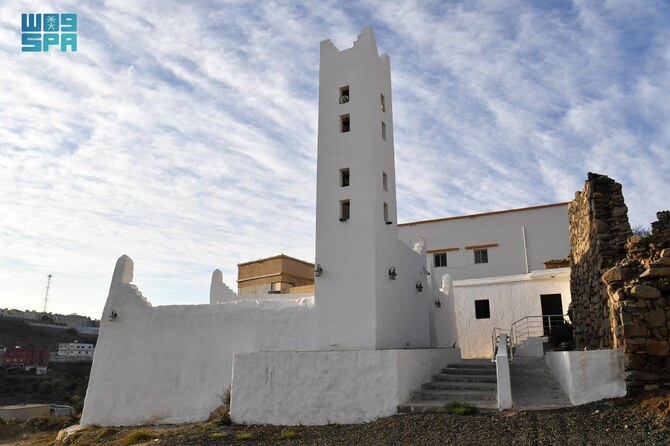
Al-Hosn Al-Asfal Mosque was renovated to preserve its original design and geometric shape while restoring its sustainable features. (SPA)
2 / 3
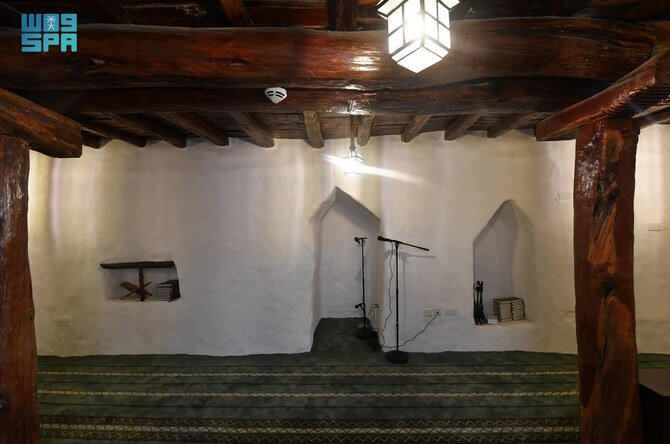
Al-Hosn Al-Asfal Mosque was renovated to preserve its original design and geometric shape while restoring its sustainable features. (SPA)
3 / 3
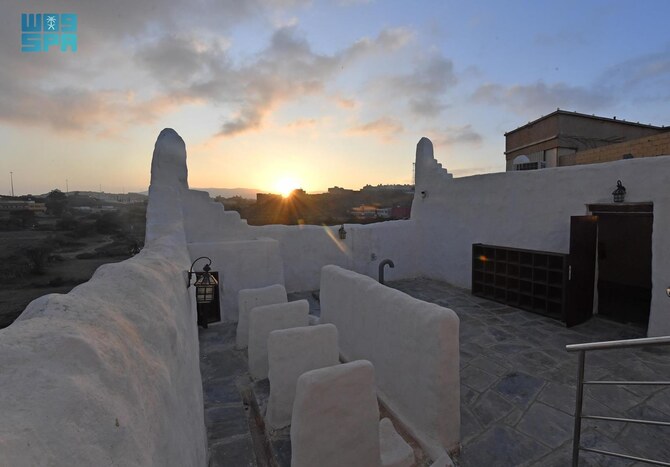
Al-Hosn Al-Asfal Mosque was renovated to preserve its original design and geometric shape while restoring its sustainable features. (SPA)
Short Url
Updated 23 March 2025
Follow

Saudi project restores historic Al-Hosn Al-Asfal Mosque in Asir

  • The second phase of the Prince Mohammed bin Salman Project for the Development of Historic Mosques aims to protect Islamic heritage

RIYADH: The historic Al-Hosn Al-Asfal Mosque in the Asir region has been restored as part of a national project, the Saudi Press Agency reported.

The second phase of the Prince Mohammed bin Salman Project for the Development of Historic Mosques aims to protect Islamic heritage and highlight traditional architectural styles.

Built in 1760, Al-Hosn Al-Asfal Mosque was renovated to preserve its original design and geometric shape while restoring its sustainable features.

These include a rainwater collection system that stores water in the mosque’s reservoir and is used for ablutions, the SPA reported.

The mosque, designed in the Sarat style, covers 134 sq. meters and can accommodate up to 32 worshippers.

A notable feature is the Al-Manzala room, traditionally used to host travelers. Its construction features stone walls, which reflect the upper mountain villages’ urban fabric.

Adorned with white plaster, the mosque stands out from neighboring buildings. The Sarat style’s urban patterns are influenced by climate, topography and culture.

It is one of 30 mosques in 13 regions in phase two, including six in Riyadh, five in Makkah, four in Madinah, three in Asir, and two each in the Eastern Province, Jouf, and Jazan. The Northern Borders, Tabuk, Baha, Najran, Hail and Qassim each have one mosque in the scheme.

Phase two follows phase one, completed in 2018, which restored 30 mosques in 10 regions. Saudi companies and heritage restoration experts are leading the development efforts, according to the SPA.


Economic growth and resilience at heart of 2nd AlUla Emerging Market Economies Conference

Updated 03 February 2026
Follow

Economic growth and resilience at heart of 2nd AlUla Emerging Market Economies Conference

  • Event on Feb. 8 and 9 will bring together ministers, governors of central banks, policymakers, economic experts and international financial institutions
  • Emerging-market economies a ‘pivotal element’ in global economic system due to effect they have on growth and stability, says Saudi Finance Minister Mohammed Al-Jadaan

RIYADH: The second annual AlUla Conference for Emerging Market Economies, which Saudi Arabia will host next week, offers a platform to exchange views on global developments and discuss policies and reforms that support inclusive growth and strengthen economic resilience, the Kingdom’s finance minister said.

The event on Feb. 8 and 9 will bring together finance ministers, governors of central banks and policymakers, alongside economic experts and representatives of international financial institutions.

Organized by the Saudi Ministry of Finance in partnership with the International Monetary Fund, it takes place as emerging-market economies face mounting challenges amid rapid global economic change.

Finance Minister Mohammed Al-Jadaan said the decision to host the conference reflects Saudi Arabia’s ongoing commitment to efforts that support global financial and economic stability, and highlights the growing influence of emerging economies on worldwide growth.

Emerging-market economies represent a “pivotal element” in the global economic system due to the direct impact they have on economic growth and stability, he added.

“The AlUla Conference for Emerging Market Economies provides a unique platform for exchanging views on global economic developments, and discussing policies and reforms that will support inclusive growth and enhance economic resilience, in light of broader international cooperation that contributes to confronting common challenges,” Al-Jadaan said.

Kristalina Georgieva, managing director of the IMF, said the event would help emerging economies deal with growing uncertainty driven by technological change, demographic shifts and geopolitical tensions.

“The AlUla conference provides a vital platform for emerging economies to discuss how they can navigate the risks and embrace the opportunities ahead,” she said.

“In these times of sweeping transformations in the global economy, policymakers face a more challenging and uncertain environment. Countries should work together to strengthen resilience through sound macroeconomic and financial policies.”