

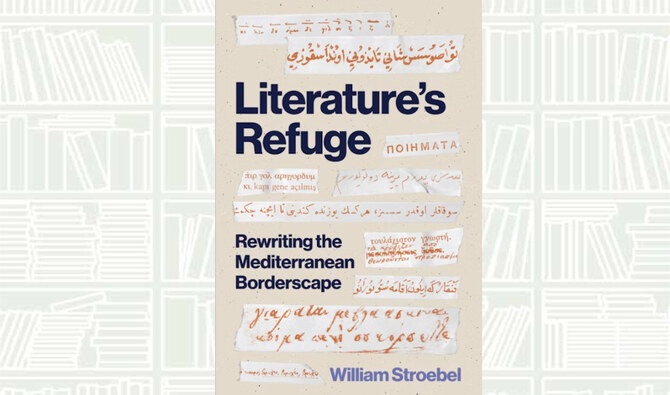
What We Are Reading Today: Literature’s Refuge

Photo/Supplied
Short Url
Updated 22 March 2025
Follow

What We Are Reading Today: Literature’s Refuge

  • Stroebel argues that two complementary forces emerged as a template for the Eastern Mediterranean’s cultural landscape

Author: William Stroebel

In 1923, the Greco-Turkish Population Exchange uprooted and swapped nearly 2 million Christians and Muslims, “pacifying” the so-called Near East through ethnic partition and refugeehood.
This imposition of borders not only uprooted peoples from their place in the world; it also displaced many of their stories from a place in world literature. In “Literature’s Refuge,” William Stroebel recovers and weaves together work by fugitive writers, oral storytellers, readers, copyists, editors, and translators dispersed by this massive “unmixing” of populations and the broader border logic that it set in motion.
Stroebel argues that two complementary forces emerged as a template for the Eastern Mediterranean’s cultural landscape: the modern border, which reshuffled people through a system of filters and checkpoints; and modern philology, which similarly reshuffled their words and works.



What We Are Reading Today: ‘The Voices of Nature’ by Nicolas Mathevon

Updated 20 January 2026
Follow

What We Are Reading Today: ‘The Voices of Nature’ by Nicolas Mathevon

What is the meaning of a bird’s song, a baboon’s bark, an owl’s hoot, or a dolphin’s clicks? In “The Voices of Nature,” Nicolas Mathevon explores the mysteries of animal sound.

Putting readers in the middle of animal soundscapes that range from the steamy heat of the Amazon jungle to the icy terrain of the Arctic, Mathevon reveals the amazing variety of animal vocalizations.

He describes how animals use sound to express emotion, to choose a mate, to trick others, to mark their territory, to call for help, and much more.