ISLAMABAD: A Pakistani market research organization on Wednesday estimated a further decline in inflation in the ongoing month, projecting it to fall below 1%, marking the lowest monthly year-on-year (YoY) reading in over three decades.
Topline Pakistan Research, a division of Topline Securities, a prominent brokerage house in Pakistan, gathers and analyzes market data along with consumer behavior and socio-economic indicators.
In recent years, Pakistan has grappled with high inflation, with consumer prices reaching a record 38% in May 2023. However, subsequent monetary policy measures and a series of economic reforms led to a substantial decline, bringing the annual inflation rate down to 1.5% in February 2025.
“Pakistan’s Consumer Price Index (CPI) for Mar 2025 is expected to bottom out and clock in at 0.5-1.0% YoY (+0.9 percent MoM), lowest monthly YoY reading in over 3 decades, taking 9MFY25 average to 5.38% compared to 27.06% in 9MFY24,” Topline Pakistan Research stated in its estimate.
It noted the anticipated decline in March 2025’s CPI was likely to follow a 2.3% reduction in electricity prices, resulting from a higher fuel cost adjustment of Rs2 per kilowatt hour (kWh) compared to Rs1/kWh in the previous month.
The transport segment index is also expected to decrease by 0.7% month-on-month, owing to a decline in diesel and petrol prices by an average of 2%.
Given these developments, Topline Pakistan Research said it was also revising its inflation forecast for fiscal year 2025 downward from 6-7% to 5-6%.
With the expected inflation rate of less than 1 percent for March 2025, the research organization said the real interest rates will be significantly higher than Pakistan’s historic average of 200-300 basis points, standing at 1,100-1,150 basis points. However, based on fiscal year 2026 inflation estimates of 8-9%, real rates are projected to be 300-400 basis points positive.
Topline Pakistan Research also cautioned any major deviation in commodity rates from current levels, especially fuel prices, could result in change in inflation estimates.

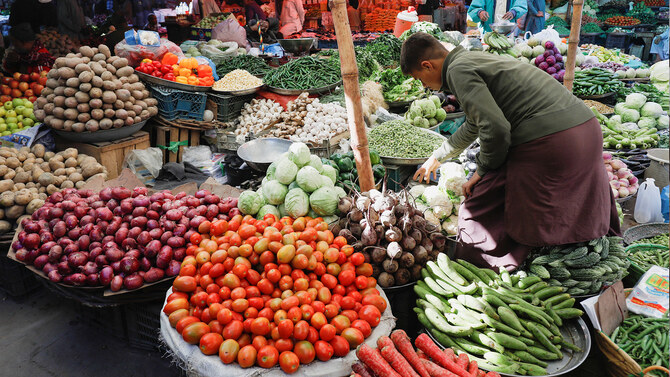
Pakistan March inflation to drop below 1% — market analysis
https://arab.news/2duzt
Pakistan March inflation to drop below 1% — market analysis
- Topline Pakistan Research says the decline may mark the lowest level in over three decades
- The research firm cautions any major deviation in commodity prices will impact the inflation rate
‘Future cities will be built for visitors, not just residents,’ Saudi tourism minister tells Arab News
RIYADH: Saudi Arabia is positioning itself at the forefront of the global travel evolution by designing destinations that will target the tourists of the future, the Kingdom’s tourism minister has said.
Ahmed Al-Khateeb added that sustainability would serve as the guiding principle behind Saudi Arabia’s role in tomorrow’s global travel landscape.
Travelers’ habits and the tourism industry’s revenue sources have shifted dramatically in recent years, he told Arab News in an interview.
“People used to travel in groups. Today, they are traveling in smaller groups. Hotels used to make most of their revenues from rooms — now, they are making more from lounges and restaurants.”
And younger generations, empowered by technology, are also redefining how travel is planned and experienced, Al-Khateeb added. “They are driving their own itineraries on the go, which puts pressure on traditional travel companies that once organized large group trips. We are witnessing big shifts in the global travel market.”
Among the world’s fastest-growing tourism markets, China and India are reshaping international travel flows. “China has become the most important source market for outbound travelers, while India is expected to double its number of travelers in the coming years,” the minister said. “This opens a major opportunity for the Middle East — and Saudi Arabia in particular — to emerge as a top destination for international tourists.”
Since 2019, Saudi Arabia has recorded the fastest tourism growth among all G20 nations, said Al-Khateeb. “We have a very strong domestic market and a very strong religious market. Now, we have opened our doors for leisure, business and holiday travelers — whether they seek the Red Sea coast, the southern mountains, our major cities or our beautiful islands.”
Yet the Kingdom’s long-term vision for tourism extends far beyond the present, with destinations being built to serve both visitors and residents sustainably, he added.
“In the 1950s and 1960s, cities were built for residents,” Al-Khateeb said. “Today, in places like Greece, visitors outnumber residents three to one. The cities of the future must be designed for visitors as well — and that’s what we are doing in Saudi Arabia.”
Sustainability has become a non-negotiable element of all tourism development in the Kingdom, he added. “In the last two decades, sustainability has become extremely important. As we build new destinations like the Red Sea, we are fully aligned with sustainability regulations. Whatever we build today is environmentally friendly, ensuring not only environmental, but also social and economic sustainability.”
This principle lies at the heart of Vision 2030’s tourism transformation: “Sustainability is at our forefront whenever we build or operate any new destination,” he added.


