KARACHI: An axe-wielding mob chases a terrified group; a daring Pakistani television drama has for the first time tackled the deeply sensitive issue of the dozens murdered for alleged blasphemy.
Islam is the official religion in Muslim-majority Pakistan, and accusations of insulting religious sentiments can easily incite mob violence.
Blasphemy is an incendiary charge, and the issue is rarely discussed by major media broadcasters due to security concerns.
But producer Sultana Siddiqui challenged that with an 11-part television drama, which has earned praise since it began airing in December for handling a taboo topic with sensitivity.
“This issue has not been raised before because of fear,” Siddiqui, founder of the Hum Network media company, told AFP.
Her drama “Tan Man Neelo Neel,” or “Bruises on Body and Soul,” tells the stories of people in a small Pakistani town, and has generated millions of views and widespread praise on social media.
“I took the risk in a careful manner,” she said. “That’s why people appreciated it.”
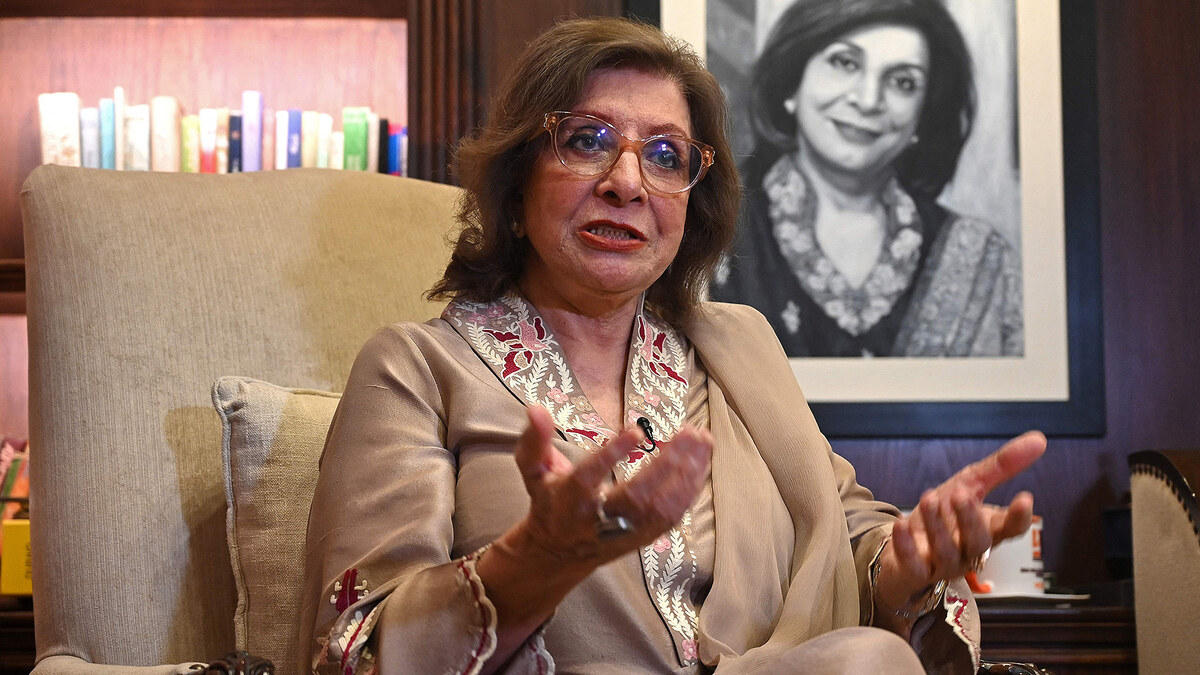
Sultana Siddiqui, director, producer and founder of the Hum Network media company, speaks about her television drama ‘Tan Man Neel-o-Neel’ or ‘Bruises on Body and Soul,’ during an interview with AFP in Karachi, Pakistan, on March 11, 2025. (AFP)
In the drama, the case of blasphemy centers around a character who falsely claims a dance performance takes place in a mosque, rather than the abandoned mansion it happened in.
That storyline of false allegations is an echo of reality.
Pakistan’s independent Human Rights Commission, in a report last month, described the “impunity for perpetrators of hate and violence.”
It detailed cases of people killed, and followers and places of worship of Pakistan’s minority religions, including Christians and Hindus, being attacked over false claims.
“Law enforcement... have often failed to rescue blasphemy suspects from vigilante violence,” the commission said.
“A careful examination of various blasphemy allegations shows that these are invariably based on fabrications, malicious disinformation and fake news.”
Siddiqui said she was motivated by a 2017 case in the city of Mardan when a mob beat 23-year-old journalism student Mashal Khan to death after accusing him of posting blasphemous content online.
“I couldn’t sleep after hearing Mashal’s mother say that ‘not a single bone in his body was left unbroken — even his finger bones were fractured,’” she said.
“I kept wondering: How brutally must they have beaten him?“
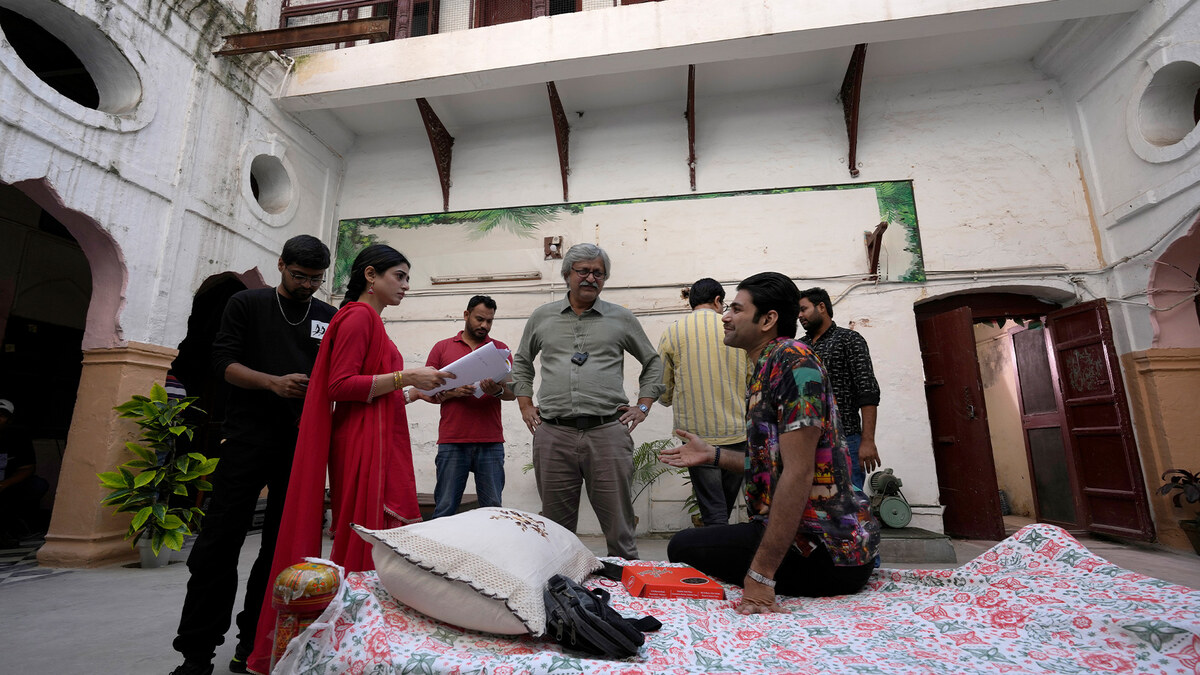
Pakistani tv actor and producer Saife Hassan (center) talks with actor Usman Javed (right) and Sehar Khan (second left) on the set during the shooting of a scene of TV drama serial ‘Tan Man Neel-o-Neel’ or ‘Bruises on Body and Soul,’ in Rawalpindi, Pakistan, on November 2, 2024. (AP)
Mohammad Iqbal, the murdered student’s father, said that the producer had chosen the “right topic” and had “honored his son.”
“We, those most affected, have rarely spoken about it publicly,” he told AFP.
“At last, this conversation is happening on television.”
Siddiqui said she had long wanted to address the issue and had been carefully collaborating with fellow directors and writers to address the subject matter appropriately.
“I, too, fear extremists who might not like me and could harm me,” she said.
“However, I believe we should address these issues with them in a respectful manner.”
Siddiqui said it was her “duty to educate people” and “raise awareness about crucial social issues” that impact society.
Pakistani dramas boast a massive viewership and their popularity serves as a powerful vehicle for social change.
A Gallup survey conducted in October 2023 suggested that two-fifths of the country watch dramas.
“We should have spoken about such issues much earlier,” said Mustafa Afridi, the writer of the show.
“If we had, perhaps we wouldn’t be in this situation today, perhaps our children wouldn’t be dying.”
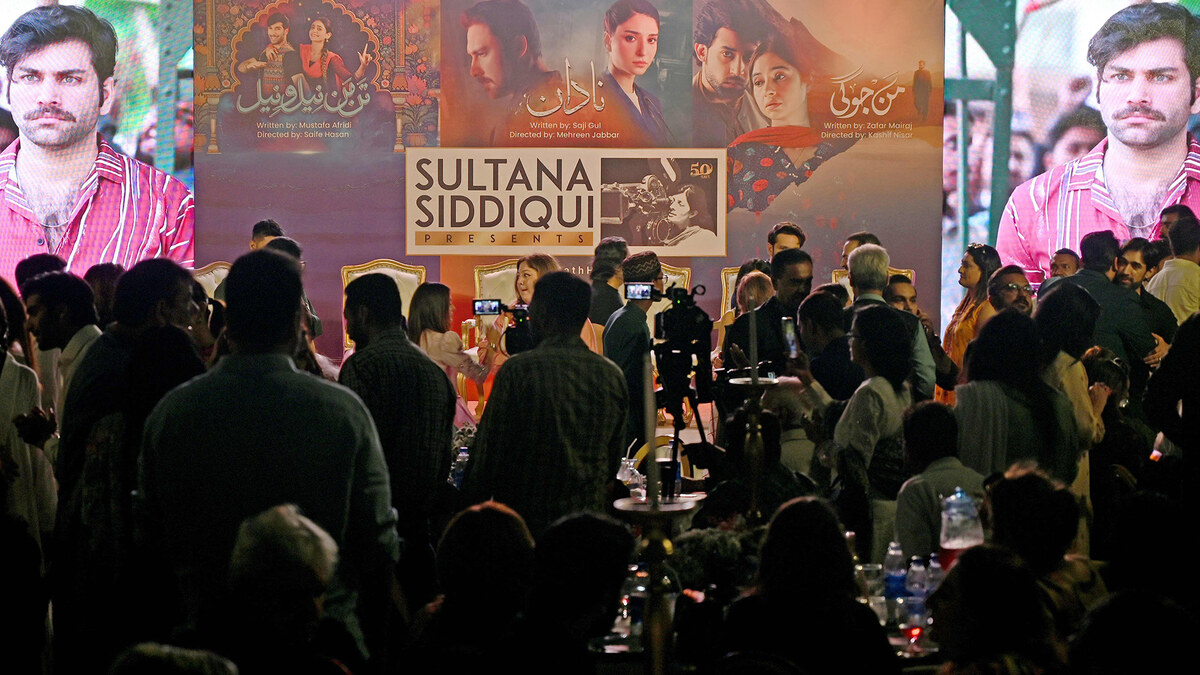
Celebrities gather at the residence of Sultana Siddiqui, director, producer and founder of the Hum Network media company, during an event held to celebrate the success of her television drama "Tan Man Neelo Neel", or "Bruises on Body and Soul", in Karachi on March 12, 2025. (AFP)
Pakistan’s media industry has been wary of the topic — and fallen foul in the past of accusations of creating blasphemous content.
The release of the 2019 award-winning film “Zindagi Tamasha,” or “Circus of Life,” was halted after the Islamist party Tehreek-e-Labaik Pakistan (TLP) objected to its portrayal of a cleric they deemed “blasphemous.”
In 2020, a music video shot at Lahore’s Wazir Khan mosque sparked furious protests after singer Bilal Saeed was filmed dancing with actor Saba Qamar.
Police filed a case against them, and they apologized — and were eventually acquitted two years later.
Arafat Mazhar, the director of the Alliance Against Blasphemy Politics group, said Siddiqui’s show had “sparked a viral critique of blasphemy-related mob violence.”
He called the reaction “unprecedented.”
“It wasn’t just that people were watching a drama about mob violence — it was that the conversation centered on mob violence at such a large scale for the first time,” he told AFP.
“The battle against blasphemy violence is not just about speaking out against mob killings. It is about challenging the structures that create and sustain them.”