



RIYADH: Saudi Arabia’s banking sector demonstrated resilience in 2024, supported by strong asset quality, improved cost efficiency, and disciplined credit management, according to Alvarez & Marsal.
Arab News analysis of the A&M KSA Banking Pulse 2024 report found that banks maintained profitability despite rising funding costs, fueled by intensified deposit competition and increased reliance on external borrowing.
This assessment relies on key financial ratios outlined in the report, including cost-to-income and loan-to-deposit, as well as net interest margin — indicators of how banks are navigating cost structures, liquidity pressures, and profitability.
The A&M report came alongside a separate analysis from Fitch Ratings, which suggests that lower interest rates have had a mixed impact on earnings by banks in the Kingdom.
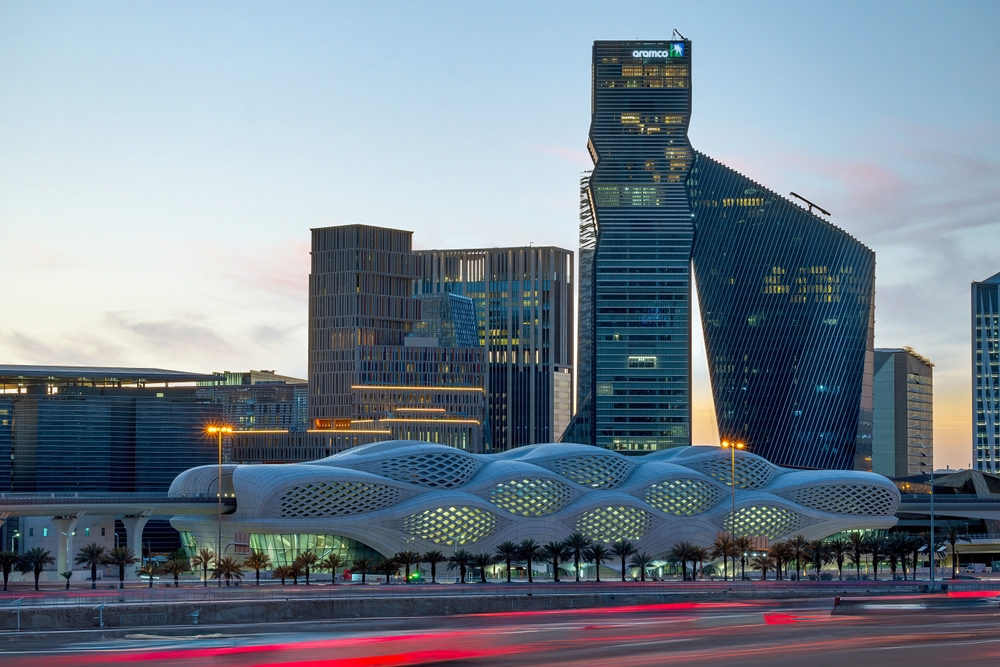
As Saudi Arabia accelerates economic diversification, the banking sector remains a key pillar of Vision 2030. Shutterstock
“Saudi banks’ performance metrics, particularly net interest margins, will see only limited improvement from the interest rate cuts that began in 2024, due to the prolonged tightening of liquidity conditions and strong competition for funding,” the agency said.
While rate cuts support loan growth, which boosts income from higher credit volumes, intense competition for liquidity is squeezing margins. Banks are reducing lending rates to stay competitive while maintaining attractive deposit rates to secure funding.
Strong asset quality
Alvarez & Marsal highlighted strong credit quality as a key factor supporting profitability in 2024.
The non-performing loan ratio improved by 18 basis points to 1.1 percent, reflecting better risk management and healthier loan portfolios. Meanwhile, loan loss coverage remained solid at 161 percent, ensuring a strong buffer against defaults. The cost of risk also improved to 0.3 percent, indicating lower impairments and higher-quality lending.
These improvements directly boosted bank earnings. Lower impairment charges allowed banks to retain more profits rather than setting aside funds for bad loans.
With a larger share of performing loans and reduced provisioning costs, banks strengthened their bottom lines despite margin pressures.
As Saudi Arabia accelerates economic diversification, the banking sector remains a key pillar of Vision 2030, driving financing for mega-projects, corporate expansion, and capital market growth. Banks are at the forefront of private sector investment, reinforcing their role as vital enablers of the Kingdom’s transformation.
Beyond traditional lending, Saudi banks play a pivotal role in capital markets, contributing significantly to liquidity and investment activity. Banking stocks are among the most actively traded on the Saudi Stock Exchange, often driving market turnover.
Saudi banks are also expanding their footprint in the debt market, with sukuk issuances and other financial instruments increasingly funding large-scale projects.

Deposits rebounded by SR40 billion in January, fully offsetting the fourth-quarter drop. Shutterstock
Efficiency gains drive profitability
Saudi banks demonstrated strong cost management in 2024, according to A&M, optimizing operational expenses while maintaining revenue growth.
This resulted in a 63 basis point improvement in the cost-to-income ratio, which fell to 31.3 percent, reflecting greater efficiency in generating income relative to costs.
The improvement reflects banks’ strategic focus on digital transformation, automation, and expense management — ensuring sustainable, long-term growth despite rising funding costs and liquidity pressures.
Cost optimization efforts contributed to a 9.3 percent year-on-year growth in operating income, outpacing the 7.1 percent rise in operating expenses. This operational discipline boosted profitability, leading to a 13.5 percent rise in aggregate net income, reaching SR79.6 billion in 2024.
Key contributors to this annual growth included a SR7.9 billion increase in net interest income, SR2.6 billion in net fee and commission income, and SR1.6 billion in other operating income, according to the report.
However, net interest income growth slowed to 7.6 percent year-on-year in 2024, down from 11 percent in 2023, primarily due to higher funding costs.
Despite narrowing net interest margins, banks leveraged rising fee-based income and cost efficiencies, maintaining a stable earnings outlook. The sector’s ability to navigate tightening liquidity while staying profitable underscores its strategic adaptability.
Rising funding costs
The rise in funding costs for Saudi banks is driven by both local liquidity constraints and global financial trends. As deposit growth lags behind credit expansion, banks are increasingly turning to alternative funding sources to sustain lending activity.
A key factor behind this deposit gap is the dominance of government-related entity deposits, which account for about one-third of total sector deposits, according to Fitch Ratings.
During the high-interest rate cycle, GREs moved funds into banks offering higher returns, rather than holding them at the Saudi Central Bank, also known as SAMA.
Saudi banks play a pivotal role in capital markets, contributing significantly to liquidity and investment activity. Shutterstock
The introduction of SAMA’s deposit auction platform accelerated this shift, with GRE deposits at the central bank dropping from SR670 billion in 2023 to SR460 billion in early 2025.
However, as rates began to decline, GRE inflows slowed. In the fourth quarter of 2024, Saudi banks saw a rare SR27 billion — or 1 percent — decline in deposits, the first drop since 2019, according to Fitch Ratings. The agency attributed this to seasonal budget and tax-related outflows from GREs.
Despite this, deposits rebounded by SR40 billion in January, fully offsetting the fourth-quarter drop.
While deposits recovered, their growth lagged behind lending expansion, which surged 14.4 percent year on year in 2024 — significantly outpacing the 7.9 percent rise in deposits, according to the A&M report.
This pushed the loan-to-deposit ratio to 104.7 percent, surpassing the 100 percent mark for the first time in recent years.
Corporate lending remains the primary driver, fueled by Vision 2030 mega-projects, infrastructure development, and private sector investments.
With rising corporate financing needs, banks have diversified their funding sources, leaning more on sukuk issuances, external borrowings, and interbank lending to bridge liquidity gaps. While essential, these instruments come with higher costs than traditional deposits, pushing funding expenses higher.
Impact of monetary policy
The monetary policy shift has contributed to liquidity pressures. The US Federal Reserve’s 100 basis point rate cut in 2024 prompted SAMA to lower its repo rate to 5 percent, aligning with the riyal’s dollar peg.
Despite this easing, funding costs remain high due to a lag effect — banks are still carrying higher-cost deposits and debt issued during the peak rate period.
With loan growth projected to outpace deposits in 2025, Fitch forecasts banks will increase non-deposit funding, with debt issuance expected to exceed $20 billion. However, competition for liquidity and the dilution of current and savings accounts may offset the benefits of lower rates on net interest margins. Banks will need to carefully manage their funding mix to sustain profitability.
Fitch also warned that tightening liquidity and increased reliance on external funding could pressure some banks’ funding and liquidity scores. However, a one-notch downgrade is unlikely to affect their overall Viability Ratings.
As Saudi banks navigate these challenges, they are expected to focus on optimizing funding strategies, expanding capital market access, and leveraging long-term debt instruments to fuel lending growth while controlling funding costs.


