KABUL: The World Health Organization said Monday 80 percent of services that it supports in Afghanistan could shut down by June due to a funding shortage.
The UN health agency said the cash shortfall, which comes amid massive US aid cuts, is tied to a shift in “development aid priorities.”
“Without urgent intervention, over 220 more facilities could close by June 2025, leaving an additional 1.8 million Afghans without access to primary health care,” WHO said in a statement.
The agency said that 167 such operations have already closed due to a lack of financial support.
“The consequences will be measured in lives lost,” said WHO’s Afghanistan chief Edwin Ceniza Salvador.
“This is not just about funding. It is a humanitarian emergency that threatens to undo years of progress in strengthening Afghanistan’s health system,” Salvador added.
WHO has been sounding the alarm since US President Donald Trump signed an executive order withdrawing the United States from the agency.
This pullout and the end of Washington’s contributions put at risk the global measles surveillance network, which until now has been entirely funded by Washington.
Afghanistan saw more than 16,000 suspected measles cases and 111 deaths in January and February, according to WHO.
The figures are disputed by the Taliban authorities, who returned to power in 2021 with the ousting of the US-backed government.
The Taliban government is not recognized internationally and relies largely on NGOs, UN agencies and aid donors to keep the health system afloat.
WHO said Afghanistan is also facing “multiple health emergencies,” including outbreaks of malaria and dengue.
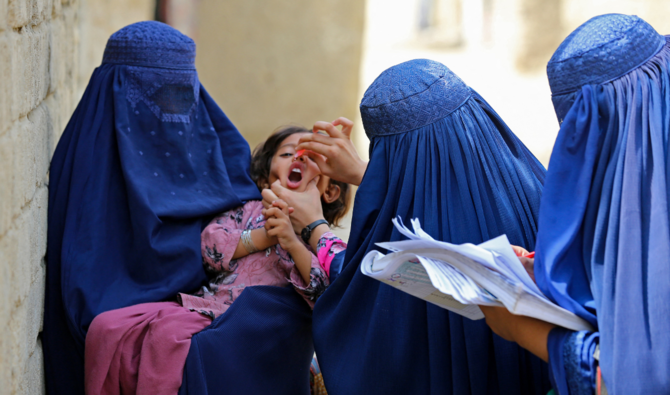
There are ongoing efforts to vaccinate enough children to eradicate polio, which remains endemic in only two countries: Afghanistan and neighboring Pakistan.
The lack of funds has also hit Save the Children, which said last week 18 health facilities supported by the charity and its partners have closed.
“Only 14 Save the Children clinics have enough funding to remain open for one more month, and without new financial support, they will be forced to close. These 32 clinics supported over 134,000 children in January alone,” the charity said.
In addition, Afghanistan suffers one of the world’s highest maternal mortality ratios of 638 per 100,000 live births.
This is likely to worsen due to the US funding cuts, with the UN forecasting an additional 1,200 maternal deaths between now and 2028.
Malnutrition is also widespread in the country, which is facing economic, humanitarian and climate crises after being battered by four decades of war.
Ten percent of children under five are malnourished and 45 percent are stunted, the UN says.

WHO says 80 percent of Afghanistan operations risk shutdown by June
Short Url
https://arab.news/2kdav
WHO says 80 percent of Afghanistan operations risk shutdown by June
- The UN health agency has been sounding the alarm since US President Donald Trump signed an executive order withdrawing the US from the agency
- This pullout and the end of Washington’s contributions put at risk the global measles surveillance network, which until now has been entirely funded by US
Trump suspends green card lottery program that let Brown University, MIT shootings suspect into US
President Donald Trump suspended the green card lottery program on Thursday that allowed the suspect in the Brown University and MIT shootings to come to the United States.
Homeland Security Secretary Kristi Noem said in a post on the social platform X that, at Trump’s direction, she is ordering the United States Citizenship and Immigration Services to pause the program.
“This heinous individual should never have been allowed in our country,” she said of the suspect, Portuguese national Claudio Neves Valente.
Neves Valente, 48, is suspected in the shootings at Brown University that killed two students and wounded nine others, and the killing of an MIT professor. He was found dead Thursday evening from a self-inflicted gunshot wound, officials said.
Neves Valente had studied at Brown on a student visa beginning in 2000, according to an affidavit from a Providence police detective. In 2017, he was issued a diversity immigrant visa and months later obtained legal permanent residence status, according to the affidavit. It was not immediately clear where he was between taking a leave of absence from the school in 2001 and getting the visa in 2017.
The diversity visa program makes up to 50,000 green cards available each year by lottery to people from countries that are little represented in the US, many of them in Africa. The lottery was created by Congress, and the move is almost certain to invite legal challenges.
Nearly 20 million people applied for the 2025 visa lottery, with more than 131,000 selected when including spouses with the winners. After winning, they must undergo vetting to win admission to the United States. Portuguese citizens won only 38 slots.
Lottery winners are invited to apply for a green card. They are interviewed at consulates and subject to the same requirements and vetting as other green-card applicants.
Trump has long opposed the diversity visa lottery. Noem’s announcement is the latest example of using tragedy to advance immigration policy goals. After an Afghan man was identified as the gunman in a fatal attack on National Guard members in November, Trump’s administration imposed sweeping rules against immigration from Afghanistan and other counties.
While pursuing mass deportation, Trump has sought to limit or eliminate avenues to legal immigration. He has not been deterred if they are enshrined in law, like the diversity visa lottery, or the Constitution, as with a right to citizenship for anyone born on US soil. The Supreme Court recently agreed to hear his challenge to birthright citizenship.
Homeland Security Secretary Kristi Noem said in a post on the social platform X that, at Trump’s direction, she is ordering the United States Citizenship and Immigration Services to pause the program.
“This heinous individual should never have been allowed in our country,” she said of the suspect, Portuguese national Claudio Neves Valente.
Neves Valente, 48, is suspected in the shootings at Brown University that killed two students and wounded nine others, and the killing of an MIT professor. He was found dead Thursday evening from a self-inflicted gunshot wound, officials said.
Neves Valente had studied at Brown on a student visa beginning in 2000, according to an affidavit from a Providence police detective. In 2017, he was issued a diversity immigrant visa and months later obtained legal permanent residence status, according to the affidavit. It was not immediately clear where he was between taking a leave of absence from the school in 2001 and getting the visa in 2017.
The diversity visa program makes up to 50,000 green cards available each year by lottery to people from countries that are little represented in the US, many of them in Africa. The lottery was created by Congress, and the move is almost certain to invite legal challenges.
Nearly 20 million people applied for the 2025 visa lottery, with more than 131,000 selected when including spouses with the winners. After winning, they must undergo vetting to win admission to the United States. Portuguese citizens won only 38 slots.
Lottery winners are invited to apply for a green card. They are interviewed at consulates and subject to the same requirements and vetting as other green-card applicants.
Trump has long opposed the diversity visa lottery. Noem’s announcement is the latest example of using tragedy to advance immigration policy goals. After an Afghan man was identified as the gunman in a fatal attack on National Guard members in November, Trump’s administration imposed sweeping rules against immigration from Afghanistan and other counties.
While pursuing mass deportation, Trump has sought to limit or eliminate avenues to legal immigration. He has not been deterred if they are enshrined in law, like the diversity visa lottery, or the Constitution, as with a right to citizenship for anyone born on US soil. The Supreme Court recently agreed to hear his challenge to birthright citizenship.
© 2025 SAUDI RESEARCH & PUBLISHING COMPANY, All Rights Reserved And subject to Terms of Use Agreement.


