

Qatar’s inflation drops 1.15% as key costs fall 

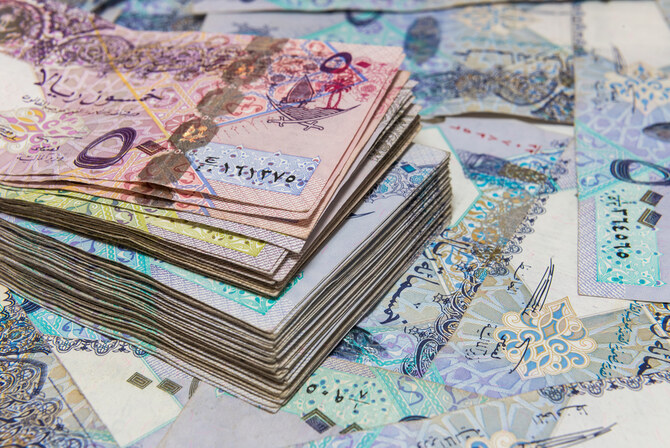
Qatar is projected to record the lowest inflation in the Gulf Cooperation Council region this year, averaging 1.4 percent. Shutterstock
Short Url
Updated 17 March 2025
Follow

Qatar’s inflation drops 1.15% as key costs fall 

  • Housing, water, electricity, and other fuels saw a slight uptick of 0.11%
  • Education costs climbed 1.70%, while health recorded a slight increase of 0.04%

RIYADH: Qatar’s inflation eased by 1.15 percent year on year in January, with the consumer price index settling at 107.45 points, driven by declines in food, housing, and transport costs, official figures showed. 

According to the National Planning Council’s latest report, the monthly CPI also dropped by 2.53 percent, primarily due to a decline in housing, water, electricity, and other fuels — which fell by 2.53 percent from December. 

The slide comes as Qatar is projected to record the lowest inflation in the Gulf Cooperation Council region this year, averaging 1.4 percent — below the GCC’s 1.9 percent and the wider Arab region’s 8.5 percent, according to Kamco Invest.

The International Monetary Fund expects Qatar’s inflation to stabilize around 2 percent over the medium term, supported by LNG expansion, public investment, and a strengthening tourism sector, according to a release in February.

The National Planning Council’s report said: “Reviewing the main changes in the CPI for the month of January 2025 compared with the previous month, findings show five categories decreased, six categories increased, and stability in one category.”


Customers make an order at the “Flat White” cafe in the Qatari capital Doha’s Tawar Mall. File/AFP (edited) 

Food and beverage prices recorded a 2.75 percent monthly drop, while recreation and culture saw the sharpest decline at 14.87 percent. Clothing and footwear prices fell by 1.13 percent, and furniture and household equipment dipped 0.77 percent. The restaurants and hotels sector also saw a slight decrease of 0.55 percent. 

Several categories recorded price increases including miscellaneous goods and services which rose by 1.93 percent, health by 0.91 percent, and transport by 0.61 percent. 

Housing, water, electricity, and other fuels saw a slight uptick of 0.11 percent, while communication and education prices remained relatively stable, with marginal increases of 0.09 percent and 0.02 percent, respectively. Tobacco prices remained unchanged. 

Year-on-year figures showed notable shifts across key sectors, with the annual CPI declining by 1.15 percent. 

The drop was mainly driven by a 5.44 percent decrease in food and beverage prices, while housing, water, electricity, and other fuels fell by 4.67 percent. 

Recreation and culture recorded a decline of 4.29 percent, followed by restaurants and hotels, which dropped by 1.82 percent. 

Furniture and household equipment fell by 1.73 percent, while transport costs were down by 1.01 percent. 

Miscellaneous goods and services rose 7.92 percent, communication saw an increase of 18.68 percent, and clothing and footwear rose 1.91 percent. 

Education costs climbed 1.70 percent, while health recorded a slight increase of 0.04 percent. 

The CPI excluding housing, water, electricity, and other fuels stood at 111.76 points in January, reflecting a monthly decline of 3.09 percent and an annual drop of 1.80 percent. 

Despite the minor downward adjustments across multiple sectors, the council emphasized that consumer prices remain stable, with inflation largely contained within expected levels. 


Saudi Arabia needs local talent to build modern financial oversight, minister says 

Updated 6 sec ago
Follow

Saudi Arabia needs local talent to build modern financial oversight, minister says 

RIYADH: Saudi Arabia must invest in national talent alongside regulatory reforms to build a modern financial oversight system, Finance Minister Mohammed Al-Jadaan said. 

Speaking at the Financial Oversight Forum, Al-Jadaan said developing an effective oversight framework requires sustained investment in human capabilities through training and development programs.  

This aligns with Saudi Arabia’s broader efforts to build future-ready skills, including the launch of the National Skills Platform in April to equip the workforce with capabilities aligned with global trends. 

It also comes as the Kingdom’s financial ecosystem reached a record SR1 trillion ($267 billion) in locally managed assets in 2024, marking a key milestone in its transformation under Vision 2030.  

“Institutions don't advance through systems alone, but also through the culture of their employees,” Al-Jadaan said during his speech. 

During the forum, the minister said the Financial Control System represents a fundamental shift in oversight methodology, strengthening the legislative framework governing financial operations in government entities through a more flexible and comprehensive model focused on protecting public funds, Argaam reported. 

He added that the new system enhances technical oversight by leveraging government financial systems and data to support continuous monitoring, while also enabling early detection and effective management of risks. 

Al-Jadaan said Saudi Arabia continues to make significant progress toward the objectives of Vision 2030, with public finance management and oversight serving as a cornerstone for improving the efficiency and sustainability of government performance. 

He also emphasized the vital role played by the General Auditing Bureau, noting its professional efforts to develop oversight practices and raise levels of financial discipline, contributing to integrated oversight and more efficient public spending. 

In a post on X, the minister said: “I was pleased to participate in the Financial Oversight Forum organized by the General Auditing Bureau, which reflects the importance of developing the financial oversight system to protect public funds and enhance governance and financial discipline, thereby supporting the sustainability of public finances and aligning with the objectives of Saudi Vision 2030.”  

He added: “I also commend the bureau’s pivotal role and its professional efforts in developing oversight practices, including this forum.”