


SANAA: The leader of Yemen’s Iran-backed Houthi rebels on Sunday called for a “million-strong” march of defiance after deadly US strikes hit the capital, Sanaa, and other areas.
“I call on our dear people to go out tomorrow on the anniversary of the Battle of Badr in a million-strong march in Sanaa and the rest of the governorates,” Abdulmalik Al-Houthi said in a televised address, referring to a celebrated military victory by the Prophet Muhammad.
In the speech aired Sunday night, Abdul-Malik Al-Houthi, warned: “We will confront escalation with escalation.”
“We will respond to the American enemy in its raids, in its attacks, with missile strikes, by targeting its aircraft carrier, its warships, its ships,the secretive Houthi leader said. “However, we also still have escalation options. If it continues its aggression, we will move to additional escalation options.”
He did not elaborate.
Hours after Al-Houthi's speech, the Yemeni militia claimed responsibility on Monday for a second attack on an American aircraft carrier group in 24 hours, calling it retaliation for US strikes.
A spokesperson for the group said “for the second time in 24 hours” Houthi fighters launched missiles and drones at the USS Harry S. Truman and several of its warships in the northern Red Sea.
The announcement came a few hours after the Houthi-affiliated Al Masirah TV early on Monday reported that the US launched two strikes targeting Hodeidah, a port city in western Yemen controlled by the Houthis.
Hodeidah has served as a launching pad for Houthi attacks on commercial vessels passing through Bab Al-Mandab Strait, which connects the Red Sea to the Gulf of Aden and the Indian Ocean.
The US military has yet to make any statement regarding the reported strikes on Hodeidah.
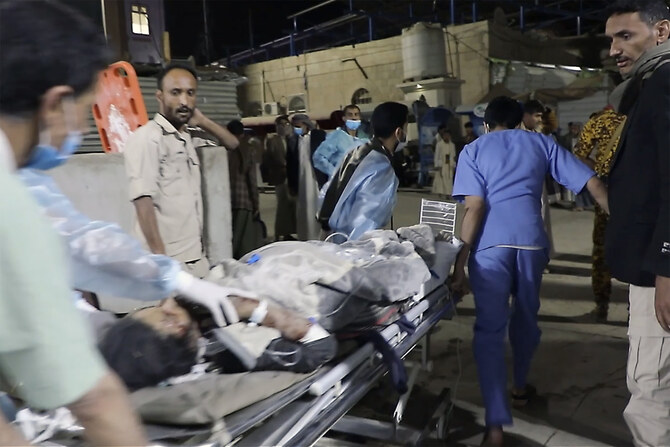
On Sunday, the Houthi-run Health Ministry said the overnight US strikes killed at least 53 people, including five women and two children, and wounded almost 100 in the capital of Sanaa and other provinces, including Saada, the rebels’ stronghold on the border with Saudi Arabia.
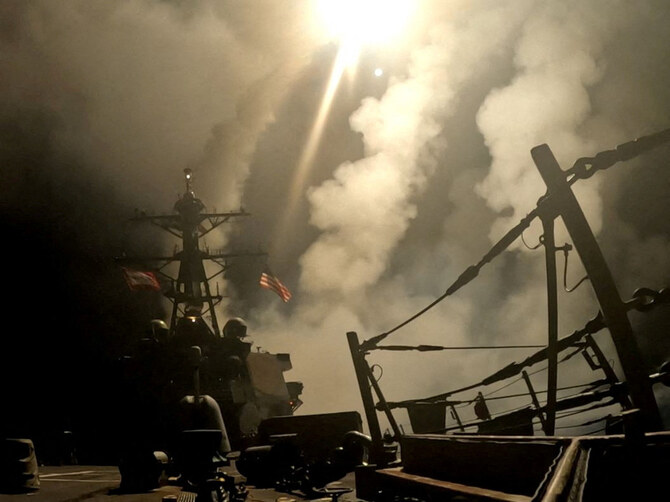
The overnight airstrikes were one of the most extensive attacks against the Houthis since the war in Gaza began in October 2023.
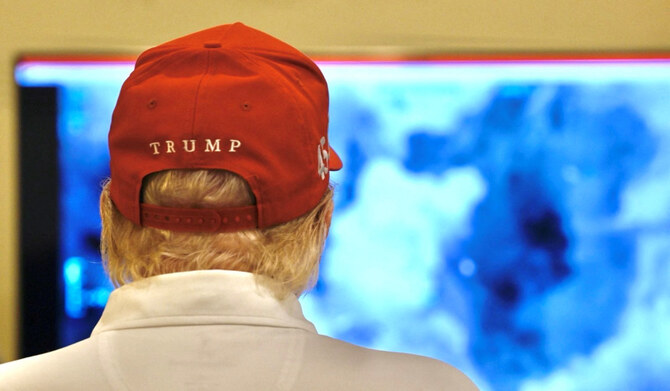
US President Donald Trump has vowed to use “overwhelming lethal force” until the Houthis cease their attacks, and warned that Tehran would be held “fully accountable” for their actions.
“We’re not going to have these people controlling which ships can go through and which ones cannot. And so your question is, how long will this go on? It will go on until they no longer have the capability to do that,” Secretary of State Marco Rubio told CBS on Sunday. He said these are not the one-off retaliation strikes the Biden administration carried out after Houthi attacks.
The Houthis have repeatedly targeted international shipping in the Red Sea, sinking two vessels, in what they call acts of solidarity with the Palestinians in Gaza, where Israel has been at war with Hamas, another Iranian ally.
Rubio said that over the past 18 months the Houthis had attacked the US Navy “directly” 174 times and targeted commercial shipping 145 times using “guided precision anti-ship weaponry.”
The attacks sparked the most serious combat the US Navy had seen since World War II.
Call for restraint
Amid the bellicose statements from both sides, the spokesperson for UN Secretary-General Antonio Guterres in a statement called for “utmost restraint and a cessation of all military activities,” while warning of the “grave risks” to the dire humanitarian situation in Yemen, the Arab world’s poorest nation.
On Sunday, the head of Iran’s paramilitary Revolutionary Guard, Gen. Hossein Salami, denied his country was involved in the Houthis’ attacks, saying it “plays no role in setting the national or operational policies” of the militant groups it is allied with across the region, according to state-run TV.
Iran’s Foreign Minister Abbas Araghchi, writing on X, urged the US to halt its airstrikes and said Washington cannot dictate Iran’s foreign policy.
The US and others have long accused Iran of providing military aid to the rebels. The US Navy has seized Iranian-made missile parts and other weaponry it said was bound for the Houthis.
The United States, Israel and Britain previously hit Houthi-held areas in Yemen, but the new operation was conducted solely by the US It was the first strike on the Houthis under the second Trump administration.
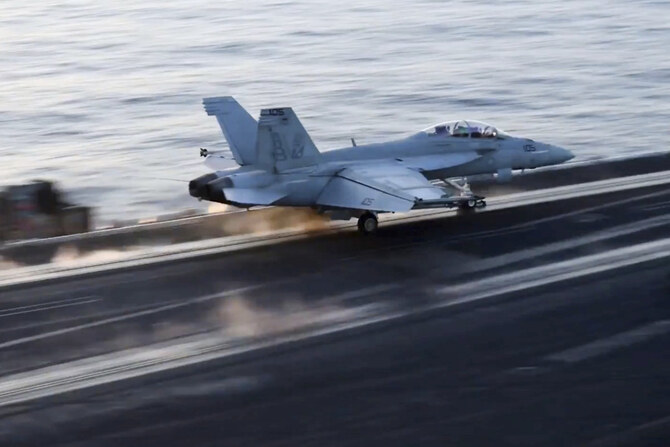
The USS Harry S. Truman carrier strike group, which includes the carrier, three Navy destroyers and one cruiser, is in the Red Sea and was part of the mission. The USS Georgia cruise missile submarine has also been operating in the region.
– with AFP and AP


