

Where We Are Going Today: ‘Bab Al-Bahr’ at Ritz-Carlton in Jeddah

1 / 6
Photo/Supplied
2 / 6
Photo/Supplied
3 / 6
Photo/Supplied
4 / 6
Photo/Supplied
5 / 6
Photo/Supplied
6 / 6
Photo/Supplied
Short Url
Updated 16 March 2025
Follow

Where We Are Going Today: ‘Bab Al-Bahr’ at Ritz-Carlton in Jeddah

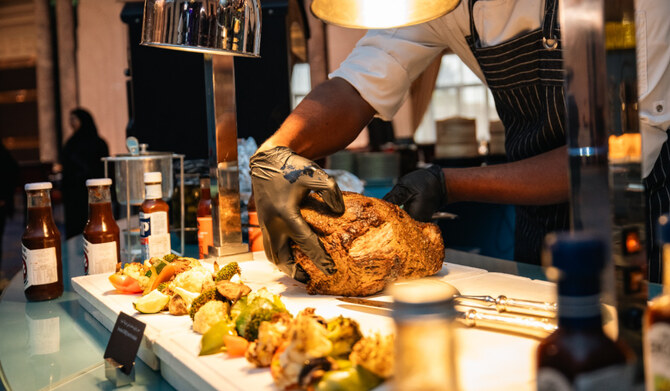
The Bab Al-Bahr tent at the Ritz-Carlton in Jeddah offers a curated iftar experience boasting a selection of traditional Arabian and international dishes.

Guests are welcomed with dates to follow the traditional breaking of fast. The meal begins with a warm bowl of oats soup, followed by a cold mezze spread featuring hummus, mutabal, fattoush, and moussaka.

Freshly prepared cheese and zaatar fatayer and flavorful chicken shawarma were standout options among the hot mezze.

The traditional foul with tameez had great flavor, although the bread could have been served warmer.

For the main course, a mixed grill selection included meat kebabs, shish taouk, and steaks, alongside lamb mandi, chicken kabsa, and fried hamour fish.

The pasta station offered white and red sauce options, while the butter chicken provided an additional international touch.

The steamed bao buns with a meat filling were a highlight, offering a soft, well-balanced texture.

Desserts included fresh fruit, Arabic sweets like baklava and luqaimat, and indulgent options such as umm ali, sticky toffee pudding, and kunafa served with nuts.

A chocolate fountain with marshmallows and fruit added a playful touch.

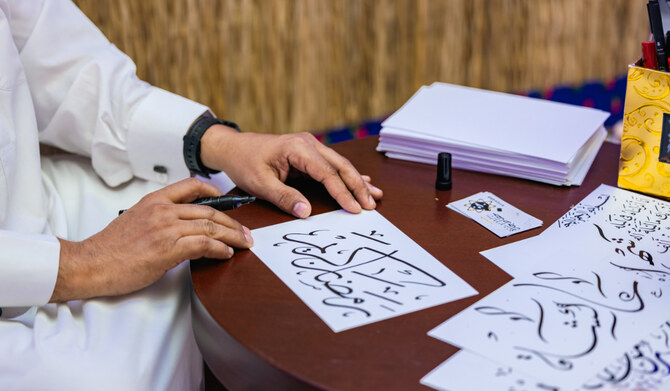
Live Ramadan programming, Arabic coffee service, and henna artists enhanced the cultural atmosphere.

A dedicated kids’ corner and an ice cream station featuring flavors like vanilla, chocolate, karak, and Vimto provided something for younger guests.

Available from sunset to 8 p.m. until the end of Ramadan, the iftar cost before VAT is SR345 ($92) per person and SR200 for children under the age of 12.


 Recipes for Success: Chef Aniket Chatterjee offers advice and a mutton curry recipe 

Updated 29 January 2026
Follow

 Recipes for Success: Chef Aniket Chatterjee offers advice and a mutton curry recipe 

DUBAI: Aniket Chatterjee — currently chef de cuisine at Atrangi by Ritu Dalmia in Dubai — says his cooking is shaped as much by memory and personal history as it is by technique.  

Working closely with celebrity chef and restaurateur Dalmia, Chatterjee has developed a style that looks at Indian food not through trends, he says, but through stories — from home kitchens and street food to lesser-known regional traditions. 

Chatterjee has developed a style that looks at Indian food not through trends, he says, but through stories. (Supplied)

Many of his dishes at Atrangi are contemporary adaptations of familiar Indian flavors and everyday recipes. His approach reflects how Indian cuisine in Dubai, and beyond, is shifting, with more diners interested in regional cooking, comfort food and the stories behind where dishes come from, he tells Arab News.  

When you started out, what was the most common mistake you made?  

I put a lot of stress and pressure on myself, which was leading to my passion getting depleted.  

What’s your top tip for amateur chefs? 

Always cook with intuition and intent. Cooking depends a lot on your mindset. Once you start cooking not because someone wants to eat, but because you want to feed them, that’s a game changer.  

   What one ingredient can instantly improve any dish? 

Simple: salt. Seasoning is key. Someone once said: “The difference between good food and great food is a pinch of salt,” and I strongly believe that. And love, of course. 

When you go out to eat, do you find yourself critiquing the food?  

Obviously it’s a mechanism, after working for so many years, that I try to analyze anything that I eat. But it’s just for understanding or inspiration purposes. I do believe in giving feedback because I genuinely want the restaurant or the cook to be better.  

What’s the most common issue that you find in other restaurants? 

The thing that ticks me off is anything which starts with “viral.” I’m out. I don’t like it when restaurants follow trends and don’t do what they are actually capable of doing or love to do.  

What’s your favorite cuisine or dish? 

I love Japanese food. It’s simple yet complex. But my favorite dish changes weekly. It is like that one song that you listen to on a loop and then you get sick of it. I do the same with food. Last week it was mandi with haneeth ribs — the fat, the freshness from the tomato, rice and laban is so beautifully balanced. This week, it’s mostly ramen.  

What’s your go-to dish if you have to cook something quickly at home? 

I love to make a nice bowl of pasta. Usually, back home, in my pantry, we always have the ingredients, because even my mom loves it. It’s usually a nice simple tomato and basil spaghetti with some fresh mozzarella or a ragu or an aglio e olio.  

What customer behavior most annoys you? 

When they tell us they are allergic to something but later turns out they just don’t like the particular thing. That has happened multiple times.  

What’s your favorite dish to cook and why? 

A nice spicy curry — chicken or lamb. It’s therapeutic. Making curry, for me, is the most beautiful thing in the world. It’s very complex and layered, and it’s completely based on understanding, not a recipe. 

What’s the most difficult dish for you to get right?  

It’s not a dish, it’s two ingredients: doodhi (bottle gourd) and karela (bitter gourd). I absolutely despised both those vegetables with all my heart, until I took on a challenge to work around it. It worked out and I have had a lot of my fellow haters end up liking both. 

As a head chef, what are you like? Are you a disciplinarian? Or are you more laid back? 

I don’t like shouting; I feel that’s a very weak approach to leading a team. You have to be calm and composed. I’m a firm believer in energies and that it transpires into the food, so I don’t want a stressful work environment and having fun in the kitchen is mandatory. Of course, there are some non-negotiables, and that’s where the discipline kicks in. 

Chef Aniket’s lazy Sunday mutton curry  

Chef Aniket’s lazy Sunday mutton curry . (Supplied)

(serves 4)  

Ingredients 

Marination: 

 Mutton or lamb curry cut – 600g 
Mutton or lamb fat (preferably in cubes) – 100g 
Full fat yoghurt – 50g 
Red onion (sliced) – 450g 
Ginger and garlic paste – 80g 
Coriander stems (whole) – 15g 
Mustard oil – 30ml 
Kashmiri red chilli powder – 16g 
Turmeric powder – 8g 
Coriander powder – 14g 
Roasted cumin powder – 14g 
Black salt – to taste 

Garam masala:  

 Cumin – 8g 
Cinnamon – 4g 
Cloves – 2g 
Green cardamom – 6g 
Black cardamom – 2g 
Bay leaf – 2 pcs 
Whole dried red chilli – 1 pc 
Black pepper – 3g 
Fennel seeds – 6g 

For the tempering: 
Mustard oil – 80ml 
Whole dried red chilli – 2 to 3 pcs 
Bay leaf – 2 to 3 pcs 
Black pepper (whole) – 6g 
Cinnamon sticks – 2 to 3 pcs 

Instructions:  

Take a bowl and combine all the ingredients listed under marination. Let it sit for at least three hours, preferably overnight in the fridge. 

For the spice mix, combine all the ingredients listed under garam masala in a cold non-stick pan and slowly bring to heat. Toss the spices as they warm so they roast evenly without burning. Once cooled, blend into a coarse powder. 

Take a pressure cooker and add the mustard oil from the tempering. Once hot, add the dry spices and saute for a minute. 

Add the marinated mutton or lamb directly into the oil. The marinade will have released some water, so separate it and add only the meat, onions and fat first. This helps the meat and onions sear and caramelize properly. 

Once browned, add the remaining marinade liquid and cook for another 10 to 15 minutes. Cover and cook for two whistles plus 30 minutes for mutton, or two  whistles plus 15 minutes for lamb. Let it rest for 15 to 20 minutes until the steam releases naturally. 

Once the meat is tender, adjust the consistency and seasoning to taste. 

Turn off the heat and add one tablespoon of the garam masala. At this point, add one tablespoon clarified butter or ghee, julienned ginger (5 g), lemon juice to taste and a pinch of sugar.  

Finish with plenty of fresh chopped coriander and serve hot with rice or parathas.