CAIRO: Hamas said Saturday it will only release an American-Israeli and the bodies of four other hostages if Israel implements their ceasefire agreement, calling it an “exceptional deal” aimed at getting the truce back on track.
A senior Hamas official said long-delayed talks over the ceasefire’s second phase would need to begin the day of the release and last no longer than 50 days. Israel would also need to stop barring the entry of humanitarian aid and withdraw from a strategic corridor along Gaza’s border with Egypt.
Hamas would also demand the release of more Palestinian prisoners in exchange for hostages, said the official, who spoke on condition of anonymity to discuss the closed-door talks.
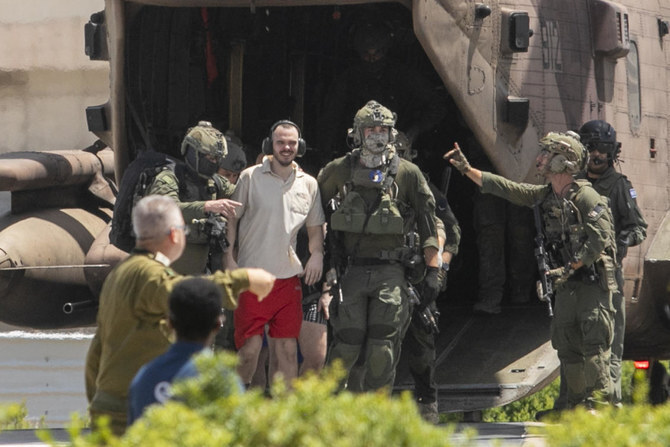
Edan Alexander, 21, who grew up in Tenafly, New Jersey, was abducted from his military base during Hamas’ Oct. 7, 2023, attack that ignited the war, and is the last living American citizen held in Gaza. Hamas still has a total of 59 hostages, 35 of whom are believed to be dead.
Two Israeli airstrikes in the northern town of Beit Lahiya near the border killed at least nine people, according to Gaza’s Health Ministry.
Fares Awad, a local health official, identified one of the dead as local reporter Mahmoud Islim, who was operating a drone.
The Israeli military said it struck two people operating a drone that it said posed a threat to soldiers in the area. It said it launched another strike at a group of people who came to collect the drone equipment. The army identified all of those targeted as suspected militants, without providing evidence.
There has been no major fighting since the ceasefire took hold on Jan. 19, but Israeli strikes have killed dozens of Palestinians who the military said had entered unauthorized areas, engaged in militant activities or otherwise violated the truce.
Israel has cast doubt on Hamas’ offer
There was no immediate comment on Hamas’ offer from Israel, where government offices were closed for the weekly Sabbath. Prime Minister Benjamin Netanyahu’s office on Friday accused Hamas of “psychological warfare” after the initial offer, before the militant group spelled out the conditions.
The United States said it presented on Wednesday a proposal to extend the ceasefire a few more weeks as the sides negotiate a permanent truce. It said Hamas was claiming flexibility in public while privately making “entirely impractical” demands.
Negotiations continued in Egypt after senior Hamas leader Khalil Al-Hayya arrived in Cairo on Friday. Egypt and Qatar served as key mediators with Hamas in reaching the ceasefire and have continued to host talks aimed at getting it back on track.
Under the ceasefire agreement reached in January, Israel and Hamas were to begin negotiations over a second phase — in which Hamas would release all the remaining hostages in exchange for a lasting truce — in early February, but so far only preparatory talks have been held.
After the first phase ended at the beginning of this month, Israel said it had agreed to a new US proposal in which Hamas would release half the remaining hostages in return for a vague commitment to negotiate a lasting ceasefire. Hamas rejected that offer, accusing Israel of backtracking on the signed agreement and trying to sabotage the truce.
Palestinian official says no fuel left for water wells
Israel has barred the delivery of food, fuel and other supplies to Gaza’s roughly 2 million Palestinians, and cut electricity to the territory, to pressure Hamas to accept the new proposal.
The city of Rafah, on the Gaza-Egypt border, said it could no longer provide fuel needed to pump water from dozens of wells across the city.
Ahmed Al-Sufi, head of the municipality, said fuel shortages caused by the Israeli siege have forced it to “suspend essential services, threatening the lives of thousands and exacerbating the health and environmental crisis.”
The first phase of the truce saw the release of 25 Israeli hostages and the bodies of eight more in exchange for nearly 2,000 Palestinian prisoners. Israeli forces pulled back to a buffer zone along Gaza’s border and allowed a surge of humanitarian aid.
An Israeli official said last month that Israel will not withdraw from the so-called Philadelphi corridor, along the Gaza-Egypt border, as called for in the ceasefire agreement. Israel has cited the need to combat weapons smuggling.


![]()

Hamas says it will only release American-Israeli hostage if truce agreement is implemented
Short Url
https://arab.news/puxfj
Hamas says it will only release American-Israeli hostage if truce agreement is implemented
- A senior Hamas official said long-delayed talks over the ceasefire’s second phase would need to begin the day of the release and last no longer than 50 days
- Hamas would also demand the release of more Palestinian prisoners in exchange for hostages


Latest updates


© 2026 SAUDI RESEARCH & PUBLISHING COMPANY, All Rights Reserved And subject to Terms of Use Agreement.