

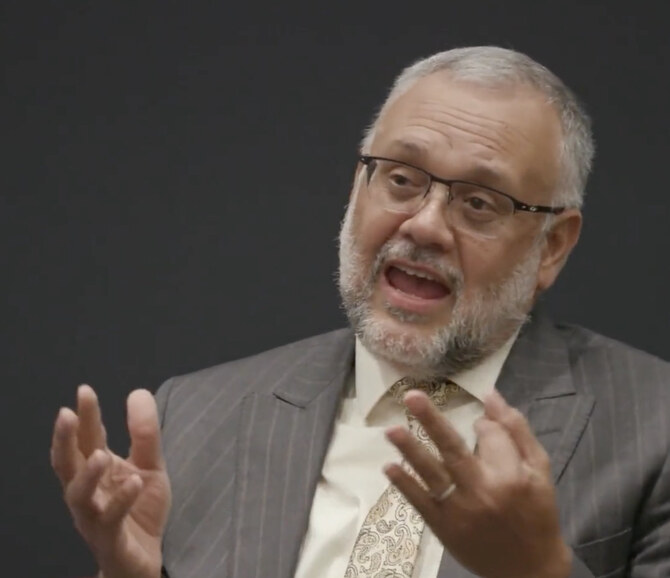
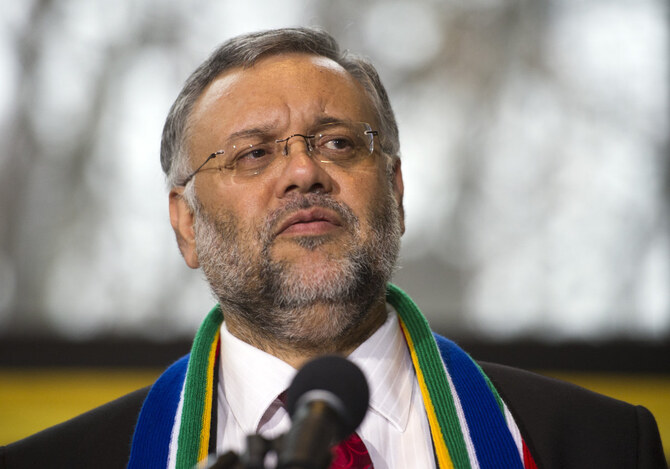

WASHINGTON: Secretary of State Marco Rubio said Friday that South Africa’s ambassador to the United States “is no longer welcome” in the country.
Rubio, in a post on X, accused Ebrahim Rasool of being a “race-baiting politician” who hates President Donald Trump and declared him “persona non grata.” He didn’t give further reasoning.
The State Department did not have additional details, and it was unclear whether the ambassador was even in the US at the time the decision was made. Rubio posted as he was flying back to Washington from a Group of 7 foreign ministers in Quebec.
It is highly unusual for the US to expel a foreign ambassador, although lower-ranking diplomats are more frequently targeted with persona non grata status.
At the height of US-Russia diplomatic expulsions during the Cold War and then again over Russia’s 2014 annexation of Crimea, allegations of interference in the 2016 election and the Skripal poisoning case in Britain, neither Washington nor Moscow saw fit to expel the respective ambassadors.
It comes after Trump signed an executive order that cut aid and assistance to the Black-led South African government. In the order, Trump said South Africa’s Afrikaners, who are descendants of mainly Dutch colonial settlers, were being targeted by a new law that allows the government to expropriate private land.
The South African government has denied its new law is tied to race and says Trump’s claims over the country and the law have been full of misinformation and distortions.
Phone calls to the South African Embassy seeking comment, made at the end of the work day, were not answered.
Rasool previously served as his country’s ambassador to the US from 2010 to 2015 before returning this year.
As a child, he and his family were evicted from a Cape Town neighborhood designated for whites. Rasool became an active anti-apartheid campaigner, serving time in prison and proudly identifying as a comrade of the country’s first post-apartheid president, Nelson Mandela. He later became a politician in Mandela’s African National Congress political party.
Trump said land was being expropriated from Afrikaners — which the order referred to as “racially disfavored landowners” — when no land has been taken under the law.
Trump also announced a plan to offer Afrikaners refugee status in the US. They are only one part of South Africa’s white minority.
The Expropriation Act was signed into law by South African President Cyril Ramaphosa earlier this year and allows the government to take land in specific instances where it is not being used, or where it would be in the public interest if it is redistributed.
It aims to address some of the wrongs of South Africa’s racist apartheid era, when Black people had land taken away from them and were forced to live in areas designated for non-whites.
Elon Musk, a close Trump ally and head of Trump’s Department of Government Efficiency, has highlighted that law in social media posts and cast it as a threat to South Africa’s white minority. Musk grew up in South Africa.


