

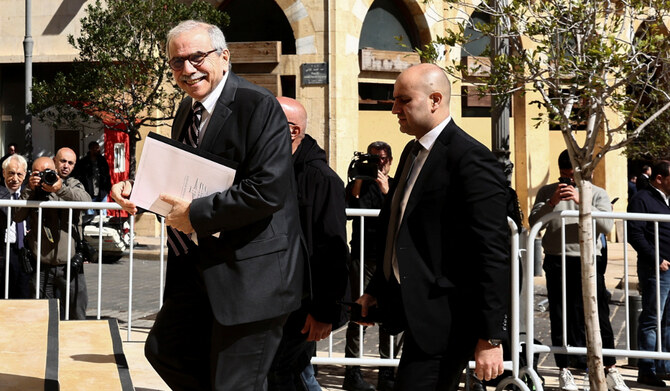

BEIRUT: Lebanon’s Prime Minister Nawaf Salam said on Friday the government’s top priority is to restore confidence in the country by prioritizing social policies and economic reforms.
The remarks came at an expanded meeting at the Grand Serail, Salam’s official residence, on social safety nets in Lebanon, under the theme “The Next Phase of Reform.”
The event, organized by Social Affairs Minister Haneen Sayed, drew numerous diplomats and officials from UN-affiliated agencies.
FASTFACT
Health Minister Rakan Nasreddine introduced the ‘Aqwa’ program in collaboration with UNICEF. It provide support for children who were injured during the recent war in southern Lebanon.
Salam underscored Lebanon’s profound ongoing social crisis, saying stability could not be maintained without addressing social issues.
He said poverty rates were already high before the recent war between Israel and Hezbollah, reaching a nationwide 44 percent.
Young children are the most vulnerable, with their poverty rates surging to unprecedented levels.
The prime minister added that food insecurity and limited access to healthcare remain significant risks.
In a statement, his government committed to establishing a comprehensive social protection system and to increase social spending.
According to the proposals, the government — through the Ministry of Social Affairs — will implement the National Social Protection Strategy. This involves strengthening social safety nets, including for those in poverty and needing disability support programs.
The government said it aims to ensure adequate healthcare coverage for the most vulnerable through primary healthcare centers, secure the minimum educational requirements for children and adolescents in public schools and vocational institutions, and support the poor in integrating into the labor market through economic inclusion programs.
Salam, who previously pledged that his government was committed to implementing reforms, reiterated on Friday his desire first to enact change in the National Social Security Fund.
“We are committed to ensuring the highest levels of transparency and accountability in our programs,” he said.
Currently, social assistance covers only 55 percent of Lebanon’s poor.
Approximately 800,000 Lebanese, or 166,000 families, receive support through the Aman program.
Around 20,000 people with disabilities benefit from a cash allowance program, and approximately 170,000 people receive emergency cash assistance.
Social Affairs Minister Sayed stated that her ministry aims to “expand direct cash support, strengthen ties with social services, build institutional capacity and infrastructure, and enhance coordination and system alignment.”
She added: “Due to the rising poverty rates following the recent war, the poor are facing severe food insecurity, malnutrition, and limited access to healthcare.
“Children under the age of 5 are at the greatest risk, suffering from alarmingly high poverty rates and receiving the least coverage through social safety nets.”
Under the slogan “The government’s commitment to increasing social protection spending from the state budget,” Sayyed announced the launch of the reform workshop in collaboration with the prime minister’s office.
Her ministry will also activate the Social Safety Net Task Force to enhance collaboration among ministries and partners, improve internal systems, and upgrade development service centers.
It will also propose a Social Safety Nets Law to ensure the long-term viability of the reform efforts.
In a related move, Health Minister Rakan Nasreddine introduced the “Aqwa” program (Arabic for “stronger”) in collaboration with UNICEF.
This program aims to provide support and care for children who were injured during the recent war in southern Lebanon.
It will be implemented in partnership with the International Network for Aid Relief and Assistance and the Ghassan Abu Sittah Children’s Fund.
According to the Health Ministry, around 1,500 children have sustained severe and moderate injuries, many of whom require reconstructive surgeries and ongoing mental healthcare.
Nasreddine emphasized the immense suffering of these children, highlighting both the number and the severity of their injuries.
He underscored that the launch of the program is a testament to the government’s unwavering commitment to rebuilding everything that the war has destroyed, both in terms of infrastructure and human lives.
“The program goes beyond traditional surgical interventions to encompass mental health services, physical therapy, and reconstructive surgeries, among other critical care for children under 18,” he added.
At the end of last February, UNICEF released a report revealing the devastating impact of the recent war on children, which affected almost every aspect of their lives. Many urgently require support to heal, rebuild their lives, and cope with the lasting effects of this conflict, the UN body said.


