Caribbean leaders this week rejected US accusations of Cuban labor exploitation after the United States announced it will restrict the visas of officials tied to a Cuban government program that sends medics abroad.
The US announced the measure late last month, arguing that the labor export programs run by Cuba’s government, which include many medics, “enrich the Cuban regime.” It further argued that those involved are complicit in the “exploitation and forced labor of Cuban workers.”
Cuba’s leaders, however, reject the US stance as Secretary of State Marco Rubio’s “personal agenda... based on falsehoods” and said the measure could affect millions of health care beneficiaries.
Rubio is the son of Cuban immigrants who fled the island to Florida, where President Donald Trump’s top diplomat would later win a Senate seat.
Since Cuba’s 1959 revolution, its medics have been dispatched to countries around the world, treating diseases that wreak havoc on poor countries, from cholera in Haiti to Ebola in West Africa. The program is also a key source of hard cash as the island nation endures its latest deep economic crisis.
Cuba says a decades-long US embargo, opposed by the vast majority of the United Nations, is the key driver of the crisis.
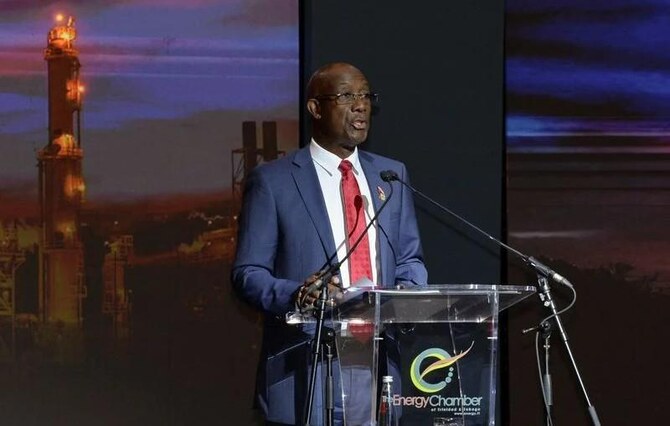
“Out of the blue now, we have been called human traffickers because we hire technical people who we pay top dollar,” said Trinidad and Tobago Prime Minister Keith Rowley at a hospital event.
Rowley added that he was prepared to lose his US visa.
Saint Vincent and the Grenadines Prime Minister Ralph Gonsalves noted at least 60 people in the small island nation are on a Cuban-run haemodialysis program used to treat kidney failure.
“If the Cubans are not there, we may not be able to run the service,” he said, adding Cuban personnel are paid the same as locals. “I will prefer to lose my visa than to have 60 poor and working people die.”
Last week, Jamaican Foreign Minister Kamina Johnson Smith told reporters that her government views Cuban medics as important.
“Their presence here is of importance to our health care system,” she said, pointing to 400 doctors, nurses and medical technicians currently working in the country.
In a social media post, Bahamian Foreign Minister Fred Mitchell also vouched for the program, saying his government “follows all international best practices in the recruitment of labor.”

Defiant Caribbean leaders dismiss trafficking accusations as US targets Cuba’s doctor diplomacy
Short Url
https://arab.news/g8sgc
Defiant Caribbean leaders dismiss trafficking accusations as US targets Cuba’s doctor diplomacy
- Trinidad and Tobago PM Keith Rowley: ‘Out of the blue now, we have been called human traffickers because we hire technical people who we pay top dollar’
- Jamaican FM Kamina Johnson Smith: ‘Their (Cuban medics) presence here is of importance to our health care system’
Taiwan says China deploys warships in ‘military operations’
TAIPEI: Taiwan said Friday that China had deployed warships for “military operations” stretching hundreds of kilometers from the Yellow Sea to the South China Sea, posing a “threat” to the region.
Beijing, which claims self-ruled Taiwan as part of its territory, neither confirmed nor denied the maneuvers.
Taiwan’s defense ministry and other security agencies were monitoring China’s activities and had a “complete grasp of the situation,” presidential office spokeswoman Karen Kuo told reporters.
She did not say how many Chinese ships were involved in the deployment, but a security source told AFP the number was “significant.” The source spoke on condition of anonymity because they were not authorized to speak to the media.
The operations were not limited to the Taiwan Strait, but extended from the southern Yellow Sea, to the East China Sea near the disputed Diaoyu Islands and on into the South China Sea and even the Western Pacific, Kuo said.
“This indeed poses a threat and impact on the Indo-Pacific and the entire region,” she said.
Taiwan urged China to “exercise restraint,” Kuo said, adding: “We are also confident that we can handle this matter well.”
Neither China’s armed forces nor state media have announced any increased military activity in the region where Taiwan said Chinese ships had been detected.
Beijing’s foreign ministry did not answer directly when asked if the military was amassing a large number of naval vessels in those waters.
“I want to emphasize that China has consistently followed a defensive policy,” spokesman Lin Jian told a regular press briefing.
“The Chinese navy and coast guard strictly operate in relevant waters according to Chinese domestic law and international law,” Lin said.
He urged “relevant parties” not to “overreact or... engage in groundless hype.”
China has refused to rule out using force to take Taiwan, and also claims contentious sovereignty over nearly all of the South China Sea.
Taiwan’s intelligence chief Tsai Ming-yen said Wednesday that October to December was the “peak season” for China’s “annual evaluation exercises.”
There was a possibility that China’s ruling Communist Party could turn seemingly routine military activities into drills targeting Taiwan, Tsai warned.
Beijing, which claims self-ruled Taiwan as part of its territory, neither confirmed nor denied the maneuvers.
Taiwan’s defense ministry and other security agencies were monitoring China’s activities and had a “complete grasp of the situation,” presidential office spokeswoman Karen Kuo told reporters.
She did not say how many Chinese ships were involved in the deployment, but a security source told AFP the number was “significant.” The source spoke on condition of anonymity because they were not authorized to speak to the media.
The operations were not limited to the Taiwan Strait, but extended from the southern Yellow Sea, to the East China Sea near the disputed Diaoyu Islands and on into the South China Sea and even the Western Pacific, Kuo said.
“This indeed poses a threat and impact on the Indo-Pacific and the entire region,” she said.
Taiwan urged China to “exercise restraint,” Kuo said, adding: “We are also confident that we can handle this matter well.”
Neither China’s armed forces nor state media have announced any increased military activity in the region where Taiwan said Chinese ships had been detected.
Beijing’s foreign ministry did not answer directly when asked if the military was amassing a large number of naval vessels in those waters.
“I want to emphasize that China has consistently followed a defensive policy,” spokesman Lin Jian told a regular press briefing.
“The Chinese navy and coast guard strictly operate in relevant waters according to Chinese domestic law and international law,” Lin said.
He urged “relevant parties” not to “overreact or... engage in groundless hype.”
China has refused to rule out using force to take Taiwan, and also claims contentious sovereignty over nearly all of the South China Sea.
Taiwan’s intelligence chief Tsai Ming-yen said Wednesday that October to December was the “peak season” for China’s “annual evaluation exercises.”
There was a possibility that China’s ruling Communist Party could turn seemingly routine military activities into drills targeting Taiwan, Tsai warned.
© 2025 SAUDI RESEARCH & PUBLISHING COMPANY, All Rights Reserved And subject to Terms of Use Agreement.


