

Egypt secures $1.2bn IMF disbursement amid reforms

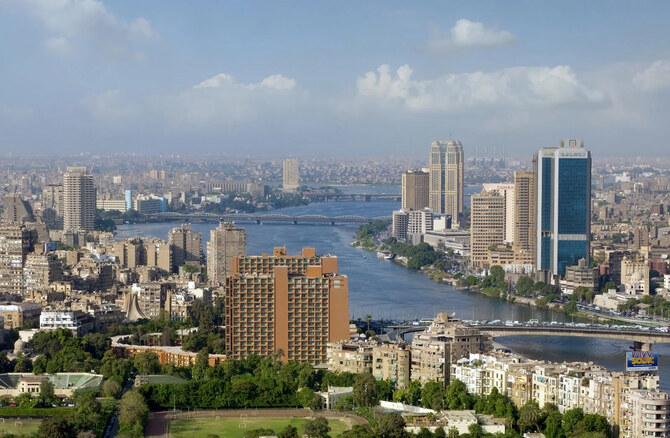
Egypt continues to face significant fiscal challenges, including high debt levels and substantial financing needs. File
Short Url
Updated 12 March 2025
Follow

Egypt secures $1.2bn IMF disbursement amid reforms

  • Cairo tackles fiscal hurdles with strategic reforms, international support

RIYADH: Egypt has secured a $1.2 billion disbursement from the International Monetary Fund following the completion of the fourth review of its economic reform program.

This disbursement, approved by the IMF’s Executive Board under the Extended Fund Facility, brings Egypt’s total funding under the program to approximately $3.2 billion.

In addition, the IMF has approved a $1.3 billion arrangement under the Resilience and Sustainability Facility to support Egypt’s climate-related reforms.

The 46-month EFF arrangement, which was initially approved in December 2022, is designed to promote macroeconomic stability and drive structural reforms to support sustainable growth. The IMF has acknowledged Egypt’s progress in stabilizing its economy, despite external challenges such as regional conflicts and trade disruptions.

“Since March 2024, the authorities have made considerable progress in stabilizing the economy and rebuilding market confidence despite a challenging external environment,” said Nigel Clarke, deputy managing director and chair of the IMF executive board.  

Macroeconomic indicators show a mixed recovery for Egypt. Gross domestic product growth, which slowed to 2.4 percent in the fiscal year 2023-24 from 3.8 percent the previous year, rebounded to 3.5 percent in the first quarter of the fiscal year 2024-25.

Inflation, which had surged in recent years, has been gradually moderating since September 2023, alleviating some pressure on household incomes.

Meanwhile, the government achieved a primary fiscal surplus of 2.5 percent of GDP in 2023-24, marking a one-percentage-point improvement from the previous year. This was primarily driven by expenditure controls, which helped offset weaker domestic revenue performance.

Despite several improvements, Egypt continues to face significant fiscal challenges, including high debt levels and substantial financing needs. The country’s current account deficit widened to 5.4 percent of GDP in 2023-24, largely due to a $6 billion drop in Suez Canal receipts in 2024, caused by trade disruptions in the Red Sea.

However, remittances from Egyptian workers abroad and strong tourism revenues have provided crucial foreign exchange inflows.

To ensure fiscal sustainability, the IMF has recommended that Egypt expand its tax base, streamline tax incentives, and improve compliance. As IMF spokesperson Clarke noted, “Broadening the tax base, streamlining tax incentives, and enhancing compliance are essential to creating fiscal space for priority development and social needs.”

Additionally, the IMF stressed the importance of a comprehensive debt management strategy, which includes deepening the domestic debt market and enhancing fiscal transparency, particularly concerning off-budget entities.

In response to external challenges, the Egyptian government has adjusted its medium-term fiscal targets.


Saudi-French cooperation to localize veterinary vaccine manufacturing

Updated 17 February 2026
Follow

Saudi-French cooperation to localize veterinary vaccine manufacturing

RIYADH: In the presence of sector leaders, the National Livestock and Fisheries Development Program signed a memorandum of understanding with French company Ceva under the patronage of Minister of Environment, Water and Agriculture Abdulrahman bin Abdulmohsen Al-Fadhli, who also chairs the program’s board.

The agreement aims to localize vaccine manufacturing, transfer technology and technical expertise, and expand the industrial and commercial production of veterinary vaccines across the Kingdom.

According to the MoU, the two parties will work to achieve high efficiency in mass production scale-up and establish a clear path for sustainable commercial operation that meets the needs of the local and national market, as well as strengthen the biosecurity and food security system.

The MoU also includes the development and modernization of messenger RNA vaccine technologies, along with joint research and development of a Middle East Respiratory Syndrome vaccine for camels. This involves designing, evaluating, and developing vaccines specifically tailored to combat the virus.

The agreement also covers the development of a rabies vaccine and related solutions, as well as supporting national efforts to control the disease through vaccine provision, capacity building, and the implementation of integrated prevention strategies.

The collaboration between the program and Ceva aims to meet the needs of the poultry vaccine market in the Kingdom, currently estimated at around SR750 million ($199 million).

The company will work to cover approximately 30 percent of this market with an initial investment of around SR250 million.

With continued government support for poultry projects and increased production in the sector, the market is expected to grow at a rate exceeding 10 percent annually, reaching approximately SR1.25 billion by 2030.

The addition of the world’s leading poultry vaccine manufacturer to Biotech Park highlights the program’s key role in developing new industries within the livestock and fisheries sector.

It also highlights the program’s commitment to building international partnerships with global companies, organizations, research centers, and universities to support advanced biotechnology industries and attract high-quality investments. It also seeks to create new economic sectors based on biotechnology, enhance veterinary health security, and support the sustainable economic development of the livestock sector, as well as empower national and emerging companies and provide advanced research and industrial infrastructure.

This will solidify the Kingdom’s position as a global hub for biotechnology industries and the development of national capabilities.

Ceva is the first international partner to join Biotech Park, the future veterinary biotechnology city launched by the program in Dhurma Governorate. The city is the world’s first specialized and fully integrated hub for veterinary biotechnology, serving as a benchmark for sector development and a platform supporting markets across the Kingdom, the Gulf, the Middle East, Africa and beyond.

The signing of Ceva is a significant step, given its position as the world’s leading manufacturer of poultry vaccines and medicines, and one of the most prominent international companies in the field of biotechnology.

The MoU aims to localize the veterinary vaccine industry, ensuring its compatibility with the strains of poultry diseases prevalent in Saudi Arabia. This includes the transfer of technology and technical expertise from Ceva, along with the implementation of specialized training programs to guarantee that manufacturing facilities comply with international Good Manufacturing Practice standards.