

Saudi Arabia top contributor as Pakistan remittances grow 38.6 percent year-on-year

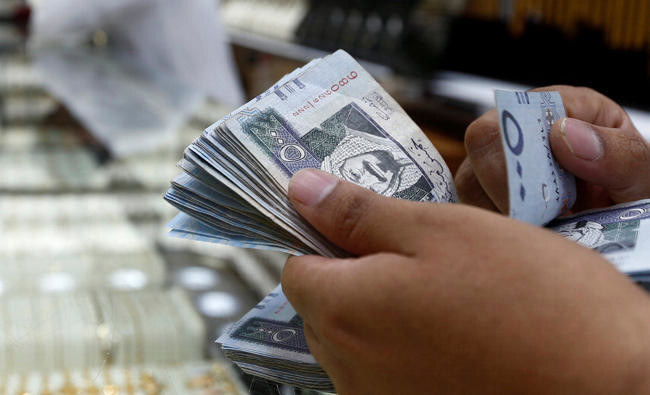
A man counts Saudi Riyal banknotes in Riyadh, Saudi Arabia, in this October 18, 2017 photo. (Reuters/ file)
Short Url
Updated 10 March 2025
Follow

Saudi Arabia top contributor as Pakistan remittances grow 38.6 percent year-on-year

  • In Feb. 2025, Pakistan received highest inflows from Saudi Arabia, $744.4 million, followed by UAE, which contributed $652.2 million
  • Among factors driving up remittances are reforms to curb illegal foreign exchange trading and incentives implemented by central bank 

ISLAMABAD: Pakistan recorded year-on-year growth of 38.6 percent in remittances with inflows of $3.1 billion in February, the central bank said on Monday, with the highest contributions coming from Saudi Arabia and the UAE.

Remittances are a lifeline for Pakistan’s cash-strapped economy, playing a critical role in stabilizing foreign exchange reserves and supporting balance of payments. 

“Workers’ remittances recorded an inflow of $3.1 billion during February 2025,” the State Bank of Pakistan (SBP) said in a press release. “In terms of growth, remittances increased by 38.6 percent and 3.8 percent on year-on-year and month-on-month basis respectively.”

In February 2025, Pakistan received its highest inflows from Saudi Arabia, $744.4 million, followed by the UAE, which contributed $652.2 million. Remittances received from the United Kingdom and the United States stood at $501.8 million and $309.4 million respectively.

“Cumulatively, with an inflow of $24 billion, workers’ remittances increased by 32.5 percent during July to February, FY25 compared to $18.1 billion received during July to February FY24,” the central bank added.

Among factors driving an increase in remittances are reforms that have curbed illegal foreign exchange trading and incentives implemented by the State Bank of Pakistan. Decreased global inflation rates have encouraged Pakistani migrants to send more money back home. 

Families in Pakistan are also relying more on financial support from relatives working abroad due to inflation at home. 


EU, Pakistan sign €60 million loan agreement for clean drinking water in Karachi

Updated 17 December 2025
Follow

EU, Pakistan sign €60 million loan agreement for clean drinking water in Karachi

  • Project will finance rehabilitation, construction of water treatment facilities in Karachi city, says European Investment Bank
  • As per a report in 2023, 90 percent of water samples collected from various places in city was deemed unfit for drinking

ISLAMABAD: The European Investment Bank (EIB) and Pakistan’s government on Wednesday signed a €60 million loan agreement, the first between the two sides in a decade, to support the delivery of clean drinking water in Karachi, the EU said in a statement. 

The Karachi Water Infrastructure Framework, approved in August this year by the EIB, will finance the rehabilitation and construction of water treatment facilities in Pakistan’s most populous city of Karachi to increase safe water supply and improve water security. 

The agreement was signed between the two sides at the sidelines of the 15th Pak-EU Joint Commission in Brussels, state broadcaster Radio Pakistan reported. 

“Today, the @EIB signed its first loan agreement with Pakistan in a decade: a €60 million loan supporting the delivery of clean drinking water for #Karachi,” the EU said on social media platform X. 

Radio Pakistan said the agreement reflects Pakistan’s commitment to modernize essential urban services and promote climate-resilient infrastructure.

“The declaration demonstrates the continued momentum in Pakistan-EU cooperation and highlights shared priorities in sustainable development, public service delivery, and climate and environmental resilience,” it said. 

Karachi has a chronic clean drinking water problem. As per a Karachi Water and Sewerage Corporation (KWSC) study conducted in 2023, 90 percent of water from samples collected from various places in the city was deemed unsafe for drinking purposes, contaminated with E. coli, coliform bacteria, and other harmful pathogens. 

The problem has forced most residents of the city to get their water through drilled motor-operated wells (known as ‘bores’), even as groundwater in the coastal city tends to be salty and unfit for human consumption.

Other options for residents include either buying unfiltered water from private water tanker operators, who fill up at a network of legal and illegal water hydrants across the city, or buying it from reverse osmosis plants that they visit to fill up bottles or have delivered to their homes.

The EU provides Pakistan about €100 million annually in grants for development and cooperation. This includes efforts to achieve green inclusive growth, increase education and employment skills, promote good governance, human rights, rule of law and ensure sustainable management of natural resources.