ISLAMABAD: Pakistan’s National Food Security Minister Rana Tanveer Hussain on Sunday asked authorities to ensure timely sale of stored wheat to avoid financial losses to the country and to benefit farmers and consumers, ahead of the arrival of new crop.
Hussain issued the directives while presiding over a meeting to review wheat reserves, management strategies, and the selling process to avoid any future crises.
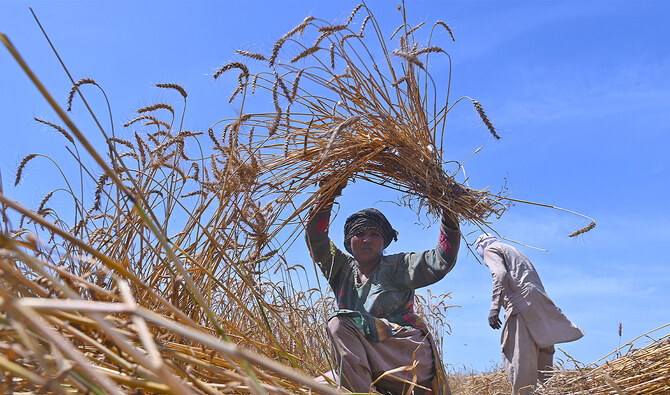
In Pakistan, wheat crop is planted in mid-December and the harvest usually begins in March, with the majority of the crop harvested between April and early June.
Last year, farmers in Pakistan held several protests over lower wheat prices due to the import of excess amounts of the commodity that flooded local markets.
“There would be zero tolerance for any delays in the wheat sale process as prolonged storage could impact the quality of wheat and lead to financial losses for the national treasury,” Hussain was quoted as saying by the government’s Press Information Department (PID).
Agriculture is the backbone of Pakistan’s economy and constitutes its largest sector. According to the Pakistan Bureau of Statistics (PBS), agriculture contributes about 24 percent of the Gross Domestic Product (GDP) and accounts for half of the employed labor force in the country.
However, the prices of wheat last year dropped significantly in Pakistan and were much below the government’s support price of Rs3,900 ($14) per 40-kilogram bag.
During Sunday’s meeting, Pakistan Agricultural Storage & Services Corporation (PASSCO) officials informed the minister they had strengthened coordination with different agencies and provincial authorities to accelerate the sale of wheat.
“Various measures have been implemented to ensure transparency in the wheat sale process, benefiting both farmers and consumers,” they were quoted as saying.
Hussain instructed PASSCO officials to devise effective policies to address administrative and financial challenges, ensuring smooth operations in the future, according to the PID. He reaffirmed the government’s commitment to agricultural development, food security, and farmers’ welfare.


![]()

Pakistan minister urges timely sale of stored wheat to avoid financial losses, benefit farmers
Short Url
https://arab.news/6mw55
Pakistan minister urges timely sale of stored wheat to avoid financial losses, benefit farmers
- In Pakistan, the wheat crop is planted in mid-December and the majority of the crop is harvested between April and early June
- Pakistani farmers last year held several protests over lower wheat prices due to the import of excess wheat that flooded markets
Latest updates


© 2026 SAUDI RESEARCH & PUBLISHING COMPANY, All Rights Reserved And subject to Terms of Use Agreement.