- Syria’s neighbors fear that the country’s pulverized economy and internal tensions could impact their own stability
- Ministers were critical of what they said was foreign intervention in the region after Israeli troops conducted military operations in southern Syria
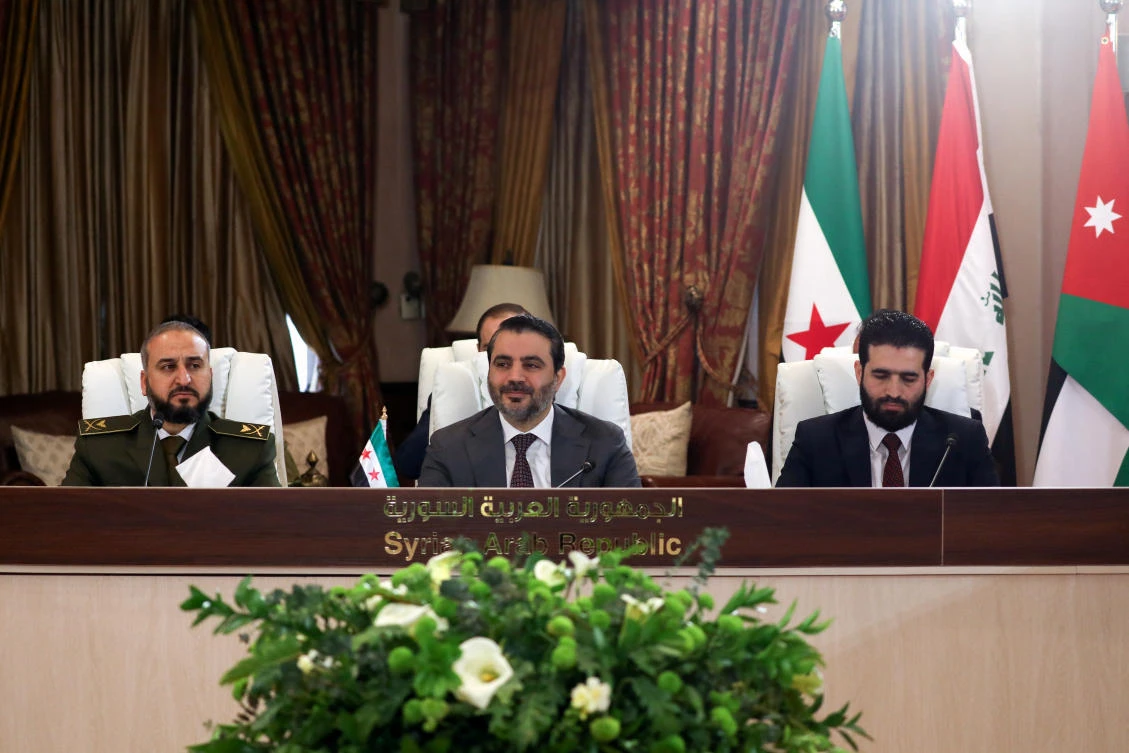
AMMAN: Syria’s top diplomat and his counterparts from neighboring countries Sunday called for the lifting of Western-led sanctions on Syria and post-war reconciliation.
The foreign ministers of Turkiye, Iraq, Jordan and Lebanon made their remarks alongside Syrian Foreign Minister Asaad Hassan Al-Shibani following a meeting in the Jordanian capital Amman.
It comes following days of clashes between Syrian security forces and insurgents of the minority Alawite community loyal to the deposed Bashar Assad government in Syria’s coastal province. Some rights groups say the fighting has killed hundreds. The Associated Press could not independently verify those numbers.
The United States and Europe have been hesitant to lift sanctions on Syria before there is a clear political transition that is democratic and inclusive of Syria’s minorities and civil society. At the same time, the country desperately needs money to rebuild after years of war and pull millions out of poverty. The United Nations estimates that some 90 percent of Syria’s population lives in poverty.
“We are protecting all components of the Syrian people, and we do not discriminate between them. We will not allow the repetition of the tragedies of the Syrian people,” said Al-Shibani.
Syria’s new authorities under President Ahmad Al-Sharaa have struggled to convince the United States and Europe to lift sanctions to start rebuilding the country after 13 years of war and reconcile with the Kurds in the northeast and Druze in the south to exert state authority across the country.
Syria’s neighbors fear that the country’s pulverized economy and internal tensions could impact their own stability.
“Stability in Syria requires dialogue with the country’s various components,” said Iraqi Foreign Minister Fouad Hussein at a joint news conference.
The foreign ministers were critical of what they said was foreign intervention in the region after Israeli troops conducted military operations in southern Syria and seized a UN buffer zone that divides Syria from the Golan Heights, which Israel seized and annexed in 1967. On Sunday, the Israeli commanding officers visited and assessed the buffer zone.
Turkish Foreign Minister Fidan welcomed the “historic” meeting and called for cooperation to decrease tension in Syria, and said he alongside others will work against sleeper cells belonging to the extremist Daesh group and affiliates of the outlawed Kurdistan Workers’ Party in Syria and Iraq.
“This is a regional problem. Regardless of our ideals we should all combat IS as well as the PKK, they are both terrorist entities,” he added.
Iraq’s foreign minister warned that Daesh sleeper cells are growing in numbers.
“We need to take the initiative first in exchanging views and information about (the Daesh group’s) latest operations and especially their expansion not only on the Syrian borders with Iraq and Jordan but also their expansion in the Syrian land,” said Hussein.