TEL AVIV: Israel cut off the electricity supply to Gaza, officials said Sunday, affecting a desalination plant producing drinking water for part of the arid territory. Hamas called it part of Israel’s “starvation policy.”
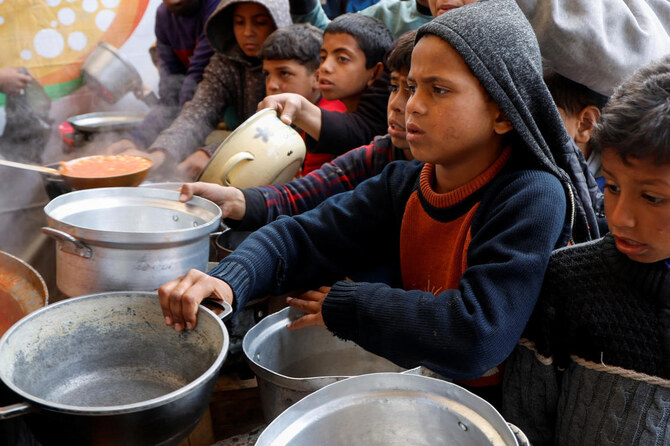
Israel last week suspended supplies of goods to the territory of more than 2 million Palestinians, an echo of the siege it imposed in the earliest days of the war.
Israel is pressing the militant group to accept an extension of the first phase of their ceasefire. That phase ended last weekend. Israel wants Hamas to release half of the remaining hostages in return for a promise to negotiate a lasting truce.
Hamas instead wants to start negotiations on the ceasefire’s more difficult second phase, which would see the release of remaining hostages from Gaza, the withdrawal of Israeli forces and a lasting peace. Hamas is believed to have 24 living hostages and the bodies of 35 others.
The militant group — which has warned that discontinuing supplies would affect the hostages — said Sunday that it wrapped up the latest round of ceasefire talks with Egyptian mediators without changes to its position.
Israel has said it would send a delegation to Qatar on Monday in an effort to “advance” the negotiations.
Israel had warned when it stopped all supplies that water and electricity could be next. The letter from Israel’s energy minister to the Israel Electric Corporation tells it to stop selling power to Gaza.
The territory and its infrastructure have been largely devastated, and most facilities, including hospitals, now use generators. Hamas spokesman Hazem Qassam said that Israel has “practically” cut off electricity since the war began and called the latest decision part of Israel’s “starvation policy, in clear disregard for all international laws and norms.”
The desalination plant was providing 18,000 cubic meters of water per day for central Gaza’s Deir Al-Balah area, according to Gisha, an Israeli organization dedicated to protecting Palestinians’ right to freedom of movement. Executive director Tania Hary said that it’s expected to run on generators and produce around 2,500 cubic meters per day, about the amount in an Olympic swimming pool.
Israel’s restrictions on fuel entering Gaza have a larger impact, Hary said, and water shortages are a looming issue, because fuel is needed for distribution trucks.
Israel has faced sharp criticism over suspending supplies.
“Any denial of the entry of the necessities of life for civilians may amount to collective punishment,” the UN human rights office said Friday.
The International Criminal Court said there was reason to believe Israel had used “starvation as a method of warfare” when it issued an arrest warrant for Prime Minister Benjamin Netanyahu last year. The allegation is central to South Africa’s case at the International Court of Justice accusing Israel of genocide.
Israel has denied the accusations, saying it has allowed in enough aid and blaming shortages on what it called the United Nations’ inability to distribute it. It also accused Hamas of siphoning off aid.
The leader of the Iranian-backed Houthis in Yemen, Abdul Malik Al-Houthi, warned Friday that attacks against Israel-linked vessels off Yemen would resume within four days if aid doesn’t resume to Gaza. The Houthis described their earlier attacks as solidarity with Palestinians there.
The ceasefire has paused the deadliest and most destructive fighting ever between Israel and Hamas, sparked by the Hamas-led attack on southern Israel on Oct. 7, 2023. The first phase allowed the return of 25 living hostages and the remains of eight others in exchange for the release of nearly 2,000 Palestinian prisoners.
Israeli forces have withdrawn to buffer zones inside Gaza, hundreds of thousands of displaced Palestinians have returned to northern Gaza and hundreds of trucks of aid entered per day until Israel suspended supplies.
US envoy describes talks with Hamas
The White House on Wednesday made the surprise confirmation of direct US talks with Hamas.
On Sunday, envoy Adam Boehler told Israeli broadcaster Kan that Hamas has suggested a truce of five to 10 years while it would disarm. The militant group has previously called disarming unacceptable.
A senior Hamas official, speaking on condition of anonymity to discuss contacts with the US, said that the group had expressed its longstanding position that it would lay down its arms in return for a “fair and just solution” that includes an independent Palestinian state.
Boehler also told CNN that “I think you could see something like a long-term truce, where we forgive prisoners, where Hamas lays down their arms, where they agree they’re not part of the political party going forward. I think that’s a reality. It’s real close.”
When asked if he would speak with the militant group again, Boehler replied, “You never know.”
He added: “I think something could come together within weeks,” and expressed hope for a deal that would see all hostages released, not only American ones. Boehler has said four of the five American hostages in Gaza are dead, with Edan Alexander alive.
Hamas on Sunday didn’t mention the talks, but reiterated its support for a proposal for the establishment of an independent committee of technocrats to run Gaza until Palestinians hold presidential and legislative elections.
Hamas’ attack in October 2023 killed around 1,200 people, mostly civilians, inside Israel and took 251 people hostage. Most have been released in ceasefire agreements or other arrangements.
Israel’s military offensive has killed more than 48,000 Palestinians in Gaza, mostly women and children, according to Gaza’s Health Ministry, which doesn’t say how many of the dead were militants.
With the cutoff of supplies to Gaza, Palestinians are reporting sharp price increases for dwindling items during the Muslim holy month of Ramadan.
“Since the ceasefire began, the situation has improved a little. But before that, the situation was very bad,” said Fares Al-Qeisi in the southern city of Khan Younis. “I swear to God, one could not satisfy their hunger.”


![]()

Israel cuts off electricity supply to Gaza, affecting desalination plant producing drinking water
Short Url
https://arab.news/2phnc
Israel cuts off electricity supply to Gaza, affecting desalination plant producing drinking water
- Hamas spokesman called the latest decision part of Israel’s “starvation policy, in clear disregard for all international laws and norms”


Latest updates


© 2026 SAUDI RESEARCH & PUBLISHING COMPANY, All Rights Reserved And subject to Terms of Use Agreement.