

CAIRO: An Israeli airstrike killed two Palestinians in Rafah in the southern Gaza Strip on Saturday, medical sources said, as mediators pushed ahead with talks to extend a shaky 42-day ceasefire agreed in January between Israel and Hamas.
The Israeli military said its aircraft struck a drone that crossed from Israel into southern Gaza and “several suspects” who tried to collect it in what appeared to be a botched smuggling attempt.
The strike comes one day after an Israeli drone strike killed two people in Gaza on Friday.
The Israeli military said it attacked a group of suspected militants operating near its troops in northern Gaza and planting an explosive device in the ground.
The fresh attacks come as a delegation from Hamas engages in ceasefire talks in Cairo with Egyptian mediators who have been helping facilitate the discussions along with officials from Qatar, aiming to proceed to the next stage of the deal, which could open the way to ending the war.
Hamas said there are “positive indicators” over the possible start of negotiations for the second phase of the ceasefire deal.
“We affirm our readiness to engage in the second-phase negotiations in a way that meets the demands of our people, and we call for intensified efforts to aid the Gaza Strip and lift the blockade on our suffering people,” the group’s spokesman, Abdel-Latif Al-Qanoua, said in a statement.
The Gaza ceasefire deal that took effect in January calls for the remaining 59 hostages in Hamas captivity to be freed in a second phase, during which final plans would be negotiated for an end to the war.
The first phase of the ceasefire ended last week, and Israel has since imposed a total blockade on all goods entering the enclave, demanding that Hamas free remaining hostages without beginning the negotiations to end the Gaza war.
Fighting has been halted since Jan. 19 and Hamas has released 33 Israeli hostages and five Thais for some 2,000 Palestinian prisoners and detainees.
Israeli authorities believe fewer than half of the remaining 59 hostages are still alive.
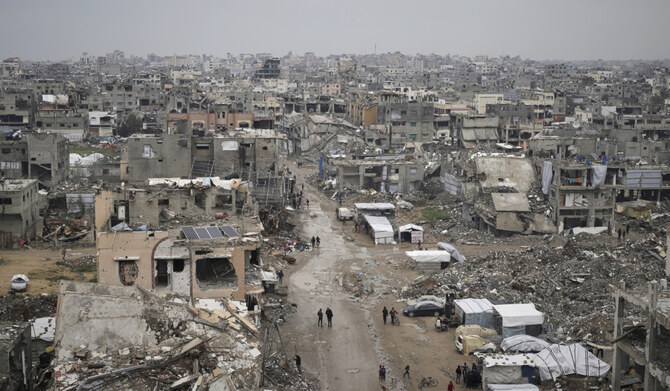
Israel’s assault on the enclave has killed more than 48,000 Palestinians, according to Gaza health authorities.
It has also internally displaced nearly Gaza’s entire population and led to accusations of genocide and war crimes that Israel denies.
Hamas on Saturday accused Israel of “committing the war crime of collective punishment” by halting aid to Gaza for a seventh day, saying it also impacted Israeli hostages still held there.
A Hamas statement said Israeli Prime Minister Benjamin Netanyahu’s government was “committing the war crime of collective punishment against over 2 million Palestinian civilians through starvation and the deprivation of basic life necessities for the seventh consecutive day.”
“The repercussions of such crime extend beyond our people in Gaza to include the occupation’s prisoners (hostages) held by the resistance, who are also affected by the lack of food, medicine and healthcare.”
The Palestinian movement said that Netanyahu “bears full responsibility” for the consequences of the aid block and accused him of “indifference” toward the hostages held in Gaza.
A group of UN human rights experts has said that Israel is again “weaponizing starvation” in Gaza by blocking the entry of humanitarian aid.
“As the occupying power, Israel is always obliged to ensure sufficient food, medical supplies and other relief services,” the experts said on Thursday.