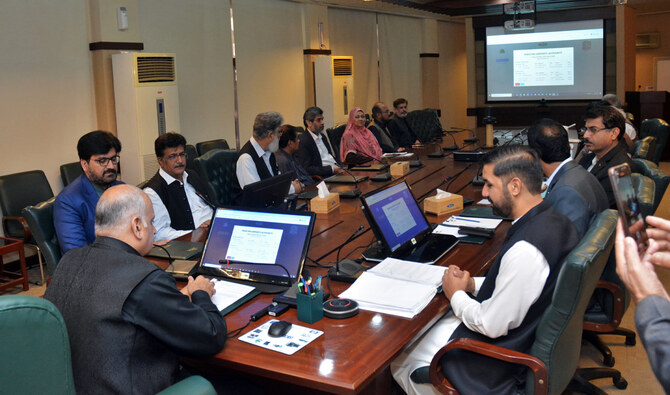
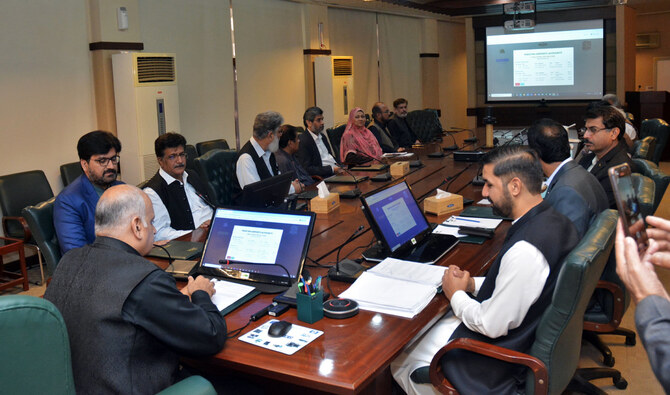
KARACHI: The Pakistan Airports Authority (PAA) said on Friday it conducted an electronic balloting at its Karachi headquarters to select employees for this year’s Hajj pilgrimage.
The PAA, a government body overseeing airport operations, joins other Pakistani governmental organizations, including security forces, who facilitate Hajj participation for their staff.
Such initiatives enable employees to fulfill their religious obligations without financial strain.
“The Director of Human Resources announced the names of the successful candidates selected through e-Balloting,” the PAA said in a statement.
“On this occasion, the Director General congratulated the selected employees and assured that the number of successful candidates would be increased in the future,” it added.
Hajj, an annual Islamic pilgrimage to Makkah, holds profound significance for Muslims worldwide, symbolizing unity and devotion. In countries like Pakistan, many save for years to undertake this spiritual journey.
This year, Hajj is expected to commence in late June 2025.
Pakistan’s government has introduced new measures to assist pilgrims financially, including installment payment options and a sponsorship scheme for overseas Pakistanis.

Pakistan Airports Authority holds e-balloting to select employees for Hajj
https://arab.news/vxjv4
Pakistan Airports Authority holds e-balloting to select employees for Hajj
- Government agencies, including the armed forces, facilitate Hajj participation for their staff
- The initiative enables employee to fulfill their religious obligations without financial strain
Pakistan says Afghan forces opened ‘unprovoked’ border fire, warns of retaliation
- Incident follows Pakistan’s weekend strikes on TTP and Daesh targets inside Afghanistan
- Escalation threatens fragile ceasefire along 2,600-km frontier linking South and Central Asia
ISLAMABAD: Pakistan on Tuesday accused Afghan Taliban forces of opening “unprovoked” fire along their shared border and warned that any further aggression would draw a swift response.
The latest exchange comes amid sharply rising tensions between the two neighbors following Pakistan’s weekend strikes targeting what it described as Tehreek-e-Taliban Pakistan (TTP) and Daesh militant camps inside Afghanistan. Kabul said the strikes killed civilians and condemned them as violations of its sovereignty, vowing to respond.
Cross-border violence has intensified since Pakistan blamed recent suicide bombings in Islamabad, Bajaur and Bannu on militants it says are based in Afghanistan. Islamabad maintains that militant safe havens across the border are driving a surge in attacks inside Pakistan, a charge Kabul denies.
Mosharraf Zaidi, Prime Minister Shehbaz Sharif’s spokesperson for foreign media, said Afghan forces opened fire near the Torkham border crossing and Tirah Valley in Pakistan’s northwest.
“Pakistan’s security forces responded immediately and effectively silencing the Taliban aggression,” he told Arab News. “Any further provocation will be responded to immediately and severely, god willing. Pakistan will continue to protect its citizens and guard its territorial integrity.”
The incident marks the second major escalation in less than a year. Similar Pakistani strikes last year triggered weeklong clashes before Qatar, Turkiye and other regional actors mediated a tenuous ceasefire in October.
The 2,600-kilometer (1,600-mile) frontier, a key trade and transit corridor linking Pakistan to landlocked Afghanistan and onward to Central Asia, has faced repeated closures amid tensions, disrupting commerce and humanitarian movement. Trade between the two nations has remained closed since October.
Analysts warn that sustained military exchanges risk undermining diplomatic efforts to stabilize ties, including a Saudi-mediated initiative earlier this month that secured the release of three Pakistani soldiers.
Separately on Tuesday, Prime Minister Sharif discussed the situation in Afghanistan with Qatar’s Deputy Prime Minister Sheikh Saoud Al-Thani during talks in Doha, according to a statement from Sharif’s office. Both sides emphasized dialogue and de-escalation to promote regional stability.