
KARACHI: Financial experts on Thursday remained divided over whether the International Monetary Fund’s (IMF) ongoing first review of Pakistan’s $7 billion bailout program will lead to the central bank increasing or decreasing the interest rate next week.
The central bank’s Monetary Policy Committee (MPC) is set to meet and review the interest rate on Mar. 10. The development takes place as a delegation of the IMF is reviewing Pakistan’s economic performance in Islamabad under its $7 billion Extended Fund Facility program.
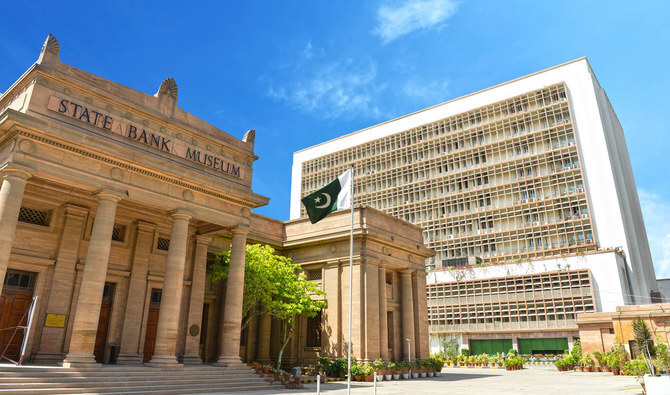
The State Bank of Pakistan (SBP) has reduced borrowing rates by a cumulative 1,000 basis points since June 2024 to 12 percent to spur economic growth. Shankar Talreja, director of research at brokerage firm Topline Securities, told Arab News he expected the central bank to maintain the interest rate at 12 percent and not introduce a further cut.
“We expect the central bank to remain prudent and observe the status quo in upcoming meeting,” Talreja told Arab News.
Talreja explained that since Pakistan is facing a revenue shortfall and to achieve the desired tax-to-GDP ratio, the IMF can push the government to impose additional tax measures. These in turn can lead to inflation which would cause the SBP to maintain the interest rate at 12 percent rather than slash it further.
The IMF has expressed concern over Pakistan facing a revenue shortfall of about Rs600 billion in this fiscal year.
The international lender wants cash-strapped Pakistan to increase its revenues by scrapping energy subsidies and imposing taxes on agriculture, real estate and retail sectors.
Talreja said the anticipated tax measures may bring pause to the interest rate easing cycle “for a few months.”
He said certain tax measures were already outlined in the IMF’s detailed report, such as the increase in advance income tax on imports of machinery, withholding tax on supplies and increase in federal excise duty on sugary drinks.
“Any shortfall over and above Rs500 billion will trigger additional tax measures to be taken by the government in its new budget for the financial year 2026,” Talreja explained.
A majority of market participants said they expected a rate cut ranging from 50 basis points to 150 basis points, a survey conducted by Topline Securities said last week.
The Federation of Pakistan Chambers of Commerce and Industry (FPCCI), Pakistan’s top trade body, on Wednesday called for a 500-basis-point (bps) cut in the policy rate. The body said businesses remained dissatisfied with monetary policy and demanded a cut due to easing inflation.
Muhammad Waqas Ghani, head of research at JS Global Capital Ltd., disagreed with Talreja. He said the IMF can set a lower tax target for Pakistan, which would not trigger further inflation.
“We believe that the IMF review and the miss in tax collection targets will not impact the SBP’s decision,” Ghani told Arab News.
Pakistan’s macroeconomic indicators have gradually improved since it secured the IMF bailout last summer. The country’s consumer price index (CPI) inflation rate, maintaining a downward trend on Monday, hit a more than 9-year low at 1.51 percent year-on-year in February.
If the IMF approves the first review of the loan, the country is in line to receive about $1 billion as the second installment of the loan package.