

Pakistan’s internet industry body seeks reforms amid digital connectivity crisis

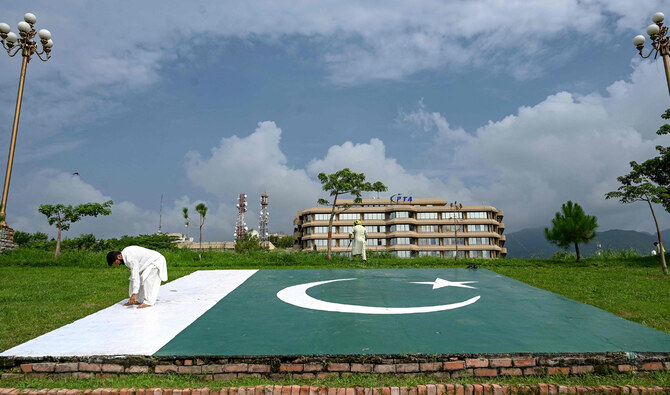
People work near the Pakistan Telecommunication Authority (PTA) headquarters building in Islamabad on August 16, 2024. (AFP/File)
Short Url
Updated 01 March 2025
Follow

Pakistan’s internet industry body seeks reforms amid digital connectivity crisis

  • Internet service providers’ association says only two operators are controlling Pakistan’s digital connectivity
  • It seeks a second internet gateway in Gwadar, asks regulators to negotiate bandwidth in local currency

KARACHI: Pakistan’s ongoing internet crisis, marked by soaring costs and sluggish speeds, stems from structural issues in which two operators control the gateway to global connectivity, the country’s internet service providers’ association said this week.

Pakistan is heavily reliant on digital connectivity for economic growth. However, the Wireless and Internet Service Providers Association of Pakistan (WISPAP) said in a statement users were getting an average speed of just 20-30 megabits per second (Mbps), which was significantly lower than that of countries like Bangladesh in the region where speeds reach 50 Mbps, despite Pakistanis paying nearly twice as much for the service.

WISPAP warned against the “near-duopoly” of Pakistan Telecommunication Company Limited (PTCL) and Transworld Associates (TWA), saying it had led to monopolistic pricing, restricting competition and keeping internet services expensive and inefficient.

Its assertion comes as Africa-1, a new undersea cable system, recently landed in Pakistan, promising additional bandwidth, though the association said it would only benefit the two existing gatekeepers of global connectivity.

“Ban gatekeepers from overcharging or locking out rivals,” the statement prepared on Tuesday quoted Shahzad Arshad, WISPAP chairman, as saying. “Fair rules mean fair rates.”

Pakistan’s internet infrastructure is centered around Karachi, where PTCL and TWA manage the country’s seven undersea fiber-optic cable connections and two smaller overland links.

Arshad noted the lack of competition allows these operators to set high prices for bandwidth, which internet service providers (ISPs) must purchase before distributing internet services to consumers.

WISPAP also proposed policy recommendations, including creating a second internet gateway in Gwadar, saying it would reduce broadband costs by 30 percent in five years.

“Invite new operators, local or foreign, with tax breaks,” its chairman suggested. “PTCL and TWA will have to fight for customers, not just cash them out.”

Additionally, the group urged regulators to follow Malaysia’s model of negotiating bandwidth in local currency, shielding ISPs from volatile exchange rates.

“Cut the dollar leash, and ISPs save 20% overnight,” Arshad said. “That’s cheaper Wi-Fi for every household.”

Pakistan’s internet crisis has far-reaching consequences for businesses, impacting sectors such as e-commerce, fintech and freelancing. The country’s freelance industry, which generated $1.2 billion in 2024, is particularly vulnerable to unreliable connectivity.

WISPAP estimates that affordable, high-speed internet could double freelancing revenue to $2.5 billion by 2030, while also bringing 10 million more Pakistanis online.


Pakistan warns of heavy rain, snowfall and landslide risks in northern districts from today

Updated 5 sec ago
Follow

Pakistan warns of heavy rain, snowfall and landslide risks in northern districts from today

  • Khyber Pakhtunkhwa says snowfall can make roads slippery in tourist resorts like Naran, Kaghan and Kalam
  • Provincial authorities warn tourists and travelers to avoid unnecessary movement during the weather spell

PESHAWAR: The Provincial Disaster Management Authority (PDMA) of Pakistan’s Khyber Pakhtunkhwa warned Friday heavy rains and snowfall expected from today through Dec. 15 could trigger landslides, road closures and hazardous travel conditions across the northern districts.

The alert follows forecasts of widespread precipitation in the province’s mountainous regions, where steep slopes and winter road conditions routinely heighten the risk of disruption.

Dense fog is also expected in the plains, including Peshawar, Mardan, Nowshera and Swabi, potentially affecting visibility and slowing motorway traffic.

“The Provincial Disaster Management Authority has issued alerts to all relevant departments to take advance precautionary measures,” the agency said.

It warned that snowfall could make roads slippery in areas such as Naran, Kaghan, Kalam and Jabba, while heavy rain and snow “may increase the risk of landsliding.”

Residents living close to rivers, streams and seasonal water channels were advised to remain vigilant.

Rain and snowfall are also forecast in Chitral, Dir, Swat, Shangla, Kohistan, Mansehra, Abbottabad, Galyat, Haripur, Buner, Mohmand, Khyber, Orakzai, Kurram and North and South Waziristan.

Tourists and travelers were urged to avoid unnecessary movement during the weather spell. Daytime temperatures are expected to fall sharply as the cold system intensifies.

Local administrations have also been instructed to keep drainage systems active ahead of the expected rainfall.

Pakistan has faced a series of extreme-weather emergencies in recent years — from devastating floods in 2022 to recurring droughts and record heatwaves — despite contributing less than one percent to global carbon emissions.

Officials say climate volatility has made mountainous regions more prone to landslides and flash floods, highlighting the importance of early warnings and local preparedness.