KARACHI: Hutchison Ports, a subsidiary of Hong Kong conglomerate CK Hutchison Holdings Limited, plans to invest $1 billion in Pakistan to improve its port infrastructure, the Pakistani finance ministry said on Thursday.
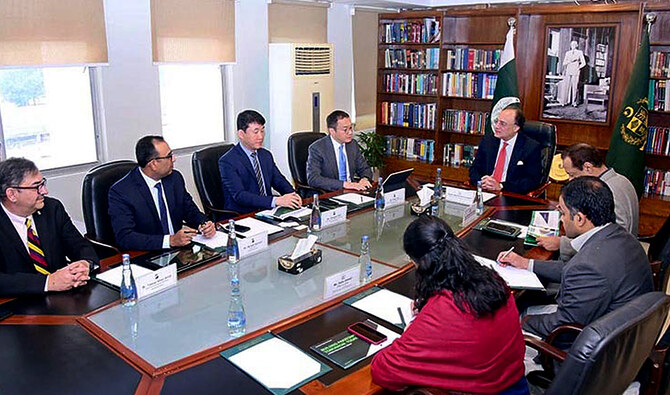
The statement came after a delegation of Hutchison Ports, led by its Middle East & Africa Managing Director Andy Tsoi, met Pakistan Finance Minister Muhammad Aurangzeb and briefed him about the firm’s 25-year presence in Pakistan.
Hutchison Ports has been operating two terminals, HPKICT and HPSAPT, in Pakistan and has contributed more than Rs225 billion ($804 million) in government revenues and provided employment to a workforce of 5,000 individuals, according to the port operator.
During the meeting with Aurangzeb, Hutchison Ports delegates presented their upcoming investment plan, aimed at upgrading their existing terminals to enhance operational efficiency, logistics connectivity, and automation.
“The investment includes infrastructure development, road improvements to facilitate efficient cargo movement, modernization of HPKICT into a cutting-edge automated terminal, and the development of a 52-hectare logistics park to enhance trade connectivity,” the Pakistani finance ministry said.
“The delegation highlighted that their investment is expected to generate at least USD 4 billion in revenue over the next 25 years through royalty, rent, and tax contributions.”
The automation upgrades will include remote quay cranes, electric trucks and digitalized gate operations, alongside training programs for maritime professionals in port operations, management and artificial intelligence (AI) applications, according to the statement.
Finance Minister Aurangzeb appreciated Hutchison Ports’ commitment to Pakistan’s maritime sector and acknowledged their significant role in boosting trade and economic activity.
“He reaffirmed the government’s support for strategic investments that contribute to Pakistan’s economic growth and infrastructure development,” the finance ministry said.
The development comes amid Pakistan’s efforts to boost trade and seek international partnerships to expand its maritime activities.
On January 22, South Korean shipping company, HMM, launched the India North Europe Express (INX) weekly shipping service in Pakistan, providing the South Asian country direct access to Europe.
The service, launched in collaboration with Ocean Network Express (ONE) container liner and Pakistan’s United Marine Agencies (UMA), will ensure timely and efficient delivery of Pakistani goods to the destined European ports and beyond, according to HMM.
Prior to that, Dubai-based logistics giant DP World, in collaboration with Pakistan’s National Logistics Corporation, launched in Jan. a feeder service to transport shipping containers from Dubai to Karachi, Pakistani state media reported. Pakistani officials and DP World have also finalized terms for a freight corridor project from Karachi Port to the Pipri Marshalling yard in southern Pakistan.
Pakistan is currently on a tricky path to economic recovery since avoiding a default in June 2023. The South Asian country last year secured a new $7 billion loan from the International Monetary Fund (IMF) and has been actively pursuing trade and investment opportunities to put the economy back on track.


![]()

Hong Kong conglomerate plans to invest $1 billion in Pakistan to upgrade port infrastructure
Short Url
https://arab.news/v9srb
Hong Kong conglomerate plans to invest $1 billion in Pakistan to upgrade port infrastructure
- The development comes amid Pakistan’s efforts to boost trade and seek international partnerships to expand its maritime activities
- Hutchison Ports investment is expected to generate at least $4 billion in revenue over the next 25 years through royalty, rent and taxes
Latest updates



Recommended


© 2026 SAUDI RESEARCH & PUBLISHING COMPANY, All Rights Reserved And subject to Terms of Use Agreement.